

























































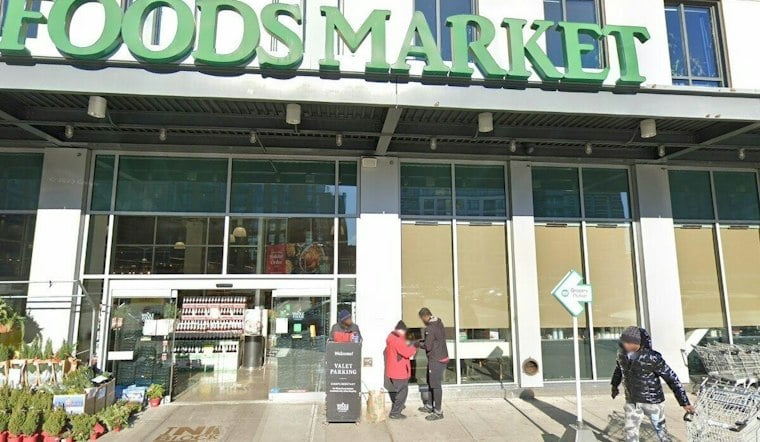
A rare Belgian goat cheese sold at Whole Foods Market has been pulled from shelves in seven states after a store employee discovered its scale labels failed to warn shoppers about a hidden egg protein. The recall covers Fromagerie Coop de Méan Cabricharme cheese sold across 18 stores in Arizona, California, Connecticut, Massachusetts, New Jersey, New York, and Rhode Island.
According to a recall notice published by the U.S. Food and Drug Administration on Monday, November 9, 2026, a store team member noticed that scale labels for the cheese failed to declare egg lysozyme, an egg white protein. The cheese in question, sold under the PLU 54670, is a washed-rind, unpasteurized goat's milk product described by Janet Fletcher's Planet Cheese as an artisan specialty made by the La Fermière de Méan cooperative in Ardennes, Belgium, known for its orange rind and pungent, Trappist-style flavor. The cheese was cut and plastic-wrapped by the pound at stores and sold with Whole Foods scale labels.
What Shoppers Need to Know
No illnesses have been associated with the affected product, per the FDA notice. The recall applies to Fromagerie Coop de Méan Cabricharme Raw Milk cheese aged 60 days, PLU 57953, sold in California, Connecticut, Massachusetts, New Jersey, New York, and Rhode Island, with best-by dates running through October 7, 2026, as reported by Parade.
Whole Foods is telling customers to destroy the product or bring it back to the place of purchase with a receipt for a full refund. The retailer has set up a consumer question line at 1-844-936-8255, answering calls Monday through Friday from 7 a.m. to 10 p.m. Central Time and weekends from 8 a.m. to 6 p.m., per Parade's report.
Why Egg Shows Up in Cheese at All
Egg lysozyme is an enzyme drawn from hen egg whites that cheesemakers add to milk to stop “late blowing,” a defect caused by bacterial gas production during aging that leaves cheese cracked, gassy, and off-flavored, according to the National Institutes of Health, as detailed in research hosted by the National Institutes of Health. Because the ingredient is derived from eggs, federal law requires it to be clearly disclosed on any packaged food label.
Under the Food Allergen Labeling and Consumer Protection Act of 2004, all FDA-regulated packaged foods must list ingredients derived from eggs using recognized allergen terms or in a “Contains” statement. The FDA's Class I category is reserved for situations with a high probability of serious or life-threatening health consequences, according to Food Safety Magazine.
A Familiar Problem at the Cheese Counter
This isn't the first time an undeclared egg protein has slipped through Whole Foods' in-store cheese labeling. In September 2022, the grocer issued a similar multi-state recall across 54 northeastern stores for Zerto Fontal cheese, also due to undeclared egg lysozyme on scale labels — though that earlier case was only caught after a customer reported falling ill, unlike this year's recall, which staff identified before any reports of illness.
The repeat incident underscores a broader pattern. Undeclared allergens were the single leading cause of U.S. food recalls in 2025, accounting for nearly 39 percent of all recall events tracked by the FDA and USDA, according to a summary of federal data published by Statista. Milk and egg were among the allergens most frequently left off labels in last year's recalls.
Egg allergy is far from rare among the population most at risk. It affects roughly 1.3 percent of U.S. children under age five and nearly 1 percent of older children, making it the second most common pediatric food allergen nationwide, per data from Food Allergy Research & Education. For those individuals, accidental exposure to hidden egg proteins can trigger severe reactions or life-threatening anaphylaxis.
Whole Foods Market, identified in the FDA notice as being in Austin, Texas, directs corporate media inquiries through Amazon's public relations office, according to the FDA notice. Anyone who purchased the affected Cabricharme cheese is urged to check the PLU and best-by date before consuming it, and to contact Whole Foods with any questions about the refund process.



