

























































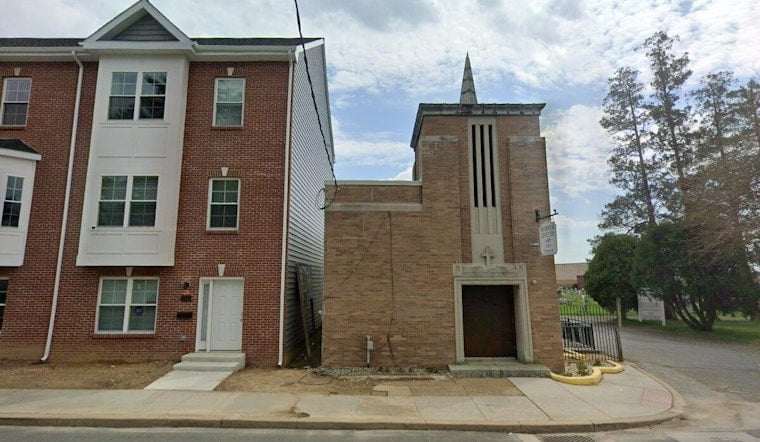
Skeletal remains found in Wilmington's Sellers Park back in June 2011 have finally been identified — and the answer traces back more than a century, to a woman who died in 1907. New Castle County Police say the bones belong to Hannah Graham Kleitz, who was 29 when she died of a medical illness, and whose Riverview Cemetery grave was unlawfully broken into and desecrated in 2002.
According to FOX 29 Philadelphia, a relative of Kleitz's told detectives that her mausoleum and grave at Riverview Cemetery had been unlawfully accessed in 2002, and police say remains similar to those later found at Sellers Park were removed from her grave around that time. The partial skeletal remains and skull were discovered off Edgemoor Road on June 5, 2011, and a forensic anthropological examination at the time determined they belonged to a white woman estimated to be somewhere between 25 and 50 years old. For years, investigators were unable to determine who she was.
Early in the investigation, according to DNA Solves, forensic anthropologists noted long, dark brown hair arranged in a single braid and distinctive gold dental restorations in the front teeth — physical details that served as the primary identifiers before advanced DNA testing became available. Officers responding to the initial search also recovered a pair of blue shorts near the skull and bones, though investigators were never able to confirm whether the clothing was actually connected to the remains.
Facial Reconstruction and a Cold Case Squad
By 2019, the New Castle County Police Cold Case Squad had obtained a 3D scan of the skull and worked with Professor Joe Mullins of George Mason University to build a facial reconstruction sculpture meant to spark public leads, the same account notes. Case details were also logged into the National Missing and Unidentified Persons System under accession number NamUs UP8827, with the extracted DNA profile uploaded to CODIS so investigators could cross-reference it against other databases.
The real breakthrough didn't come until investigators sought additional testing through forensic investigative genetic genealogy. In May 2021, evidence was submitted to Othram's Texas laboratory to extract DNA and build a SNP profile using Forensic-Grade Genome Sequencing, with supplemental testing supported by Bode Technology in Virginia, per the same DNA Solves account. That genetic work eventually gave police the material they needed to chase down a family tree.
A Genealogical Match Nearly Fifteen Years Later
The forensic genetic genealogy research that finally unlocked the connection was led by Detective Steve Smugeresky of the Montgomery County Police Department in Maryland, according to the New Castle County Division of Police. Investigators identified a potential family connection through a genealogical tree in January, and used a DNA comparison to positively identify Hannah Graham Kleitz. Police entered the remains' DNA profile into national databases as part of the effort, ultimately confirming a match to a woman who had died more than a century earlier.
With the identification confirmed, investigators exhumed remains from Riverview Cemetery as part of the process of reuniting Kleitz. On August 27, her family, investigators and others gathered at Riverview Cemetery to reunite her remains and return them to her mausoleum. Police said the work brought closure to Kleitz's family, though public releases have not specified who desecrated the mausoleum in 2002 or exactly how remains ended up in Sellers Park.
Local Businesses Return to Finish What They Started
Two local businesses that helped during Kleitz's original reinterment after the 2002 desecration was discovered — Mealey's Funeral Home and Masonry and Concrete Inc. — voluntarily returned in August to assist police with the exhumation and final reunification, according to the New Castle County Division of Police. It's a detail that underscores just how long this case has lingered in the community, with the same local firms bookending both the discovery of the desecration and its eventual resolution decades later.
The Cemetery Where It Began
Riverview Cemetery, the 42-acre burial ground where Kleitz's grave was disturbed, has its own storied history. Founded in 1872 by 18 fraternal lodges of the Knights of Pythias and Independent Order of Odd Fellows, the cemetery features Delaware's first community mausoleum, built in 1917, and was added to the National Register of Historic Places in July 2012, according to the Delaware Public Archives. The non-profit Friends of Historic Riverview Cemetery, Inc. assumed ownership of the site in January 2009, after decades of mismanagement, neglect and vandalism had taken a toll on the historic grounds.
Under Title 11 of the Delaware Code, desecration of a burial place is prohibited under Section 1340, while Section 1332 defines abusing a corpse as a Class A misdemeanor punishable by up to one year in prison, per Delaware Code Online. No charges related to the 2002 desecration have been detailed in police releases, and who was responsible for disturbing Kleitz's grave remains an open question in the case.





