

























































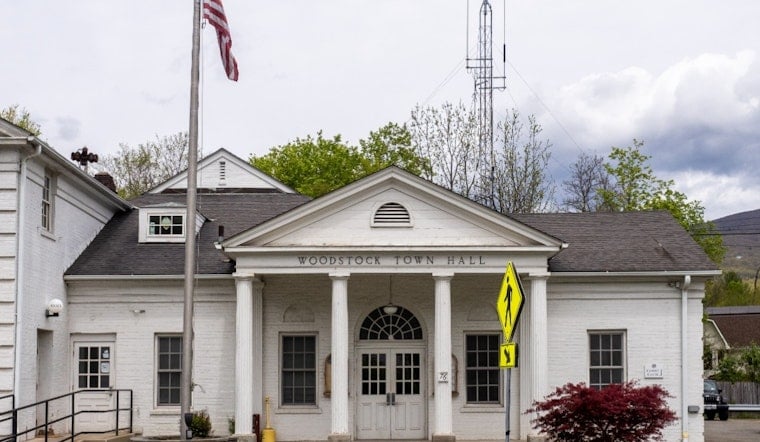
A Level 3 sex offender hired as a town laborer for the Town of Woodstock has resigned his job, closing out a monthslong standoff that pitted the town supervisor against his own board, split the community, and drew in the county district attorney. Michael Innello's resignation takes effect Friday, September 11, after he accepted employment elsewhere.
Innello was convicted in 2020 of sexually abusing an unconscious or physically helpless person, along with possessing a sexual performance by a child involving an 11-year-old girl, according to Hudson Valley One. He served just over four years of a five-year prison sentence before his release to parole supervision in December 2024, and he will remain under parole supervision through 2034. Sex-offender supervision levels are also discussed.
Woodstock Town Board approved Innello as a part-time laborer in March 2025 on the recommendation of Supervisor Bill McKenna, who did not tell the board about Innello's sex-offender status. McKenna has defended that omission by pointing to the town's 2014 “ban the box” resolution, which removed felony-conviction questions from initial job applications, as reported by Hudson Valley One. McKenna has argued that there were no legal grounds for termination and that board members failed to ask about Innello, according to the same outlet.
A Promotion, Then a Pool Complaint
Innello was promoted to full-time laborer in June 2025. The following month, concerns arose after he worked at the town summer-camp pool while children were present for orientation, prompting community members to raise concerns about him working near children.
The board voted 3-0 on July 22, 2025 to fire Innello after learning his Level 3 status had not been disclosed, with members Anula Courtis, Bennet Ratcliff, and Maria-Elena Conte voting in favor, while Laura Ricci and McKenna abstained, according to Radio Catskill. Days later, McKenna reinstated Innello and refused to file the civil service termination paperwork, according to the dossier record of events. Ratcliff argued that McKenna lacked authority to veto the resolution, and Courtis and Ratcliff delivered the termination paperwork to the Ulster County personnel department.
Union Rules and a Standoff Over Legal Authority
Complicating the board's push to remove him, Innello was still within a six-month probationary period, with its end date described inconsistently as August or September. He was employed in a unionized position at an hourly wage of $21.35, and union contract protections became a central argument McKenna cited against immediate termination, as detailed by WAMC. A spending freeze that McKenna implemented might have limited the board's access to HR consultants or attorneys.
The board's legal authority to rehire Innello was disputed after McKenna reinstated him following the termination vote. Despite performing his job duties competently according to all accounts, Innello's presence remained a flashpoint, particularly after he was seen operating a weed trimmer near the Route 375 bridge over the Millstream.
Parole Boundaries and Community Backlash
The school-proximity incident prompted questions about Innello's parole boundaries and conditions. Dossier sourcing notes conflicting characterizations of whether his parole conditions barred him from living within 1,000 feet of a school, with one account asserting the restriction and another disputing it.
Public anger was evident at the July 22, 2025 meeting, where people carried signs and called for McKenna to resign, according to Chronogram Magazine. The dispute remained contentious as residents pressed for action.
A Political Backdrop and a Quiet Exit
The controversy unfolded as McKenna, serving his fifth term as supervisor, opted not to seek re-election, while Courtis campaigned for the supervisor post in the November 2025 election. Even amid the standoff, McKenna maintained that Innello deserved a second chance and was a good employee.
With Innello having accepted employment elsewhere, his resignation takes effect Friday, September 11. The episode leaves unresolved questions about how municipal hiring protocols, transparency expectations, and state parole supervision frameworks intersect when a small town becomes the last line of oversight.




