

























































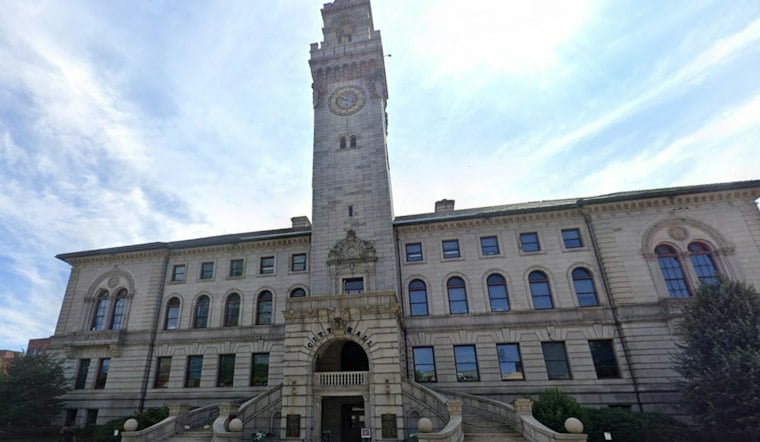
Worcester officials are asking the City Council to approve an ordinance banning unauthorized camping on public property, pairing 72-hour eviction notices with $25-per-day fines for anyone who stays put after being told to leave. The proposal, part of a broader plan the city calls Disrupting the Cycle, arrives as Worcester's shelters hold a combined 197 beds for an unsheltered population that outreach workers say still outpaces available space.
The City Council is set to review the ordinance Tuesday, according to MassLive. The proposed rules would ban camping, sleeping or lying on public property, and would also bar people from using cars, campers and recreational vehicles as living spaces on public ways or in public parking lots for more than 24 consecutive hours. The ban covers streets, sidewalks and bike paths, and the city says it must conduct outreach and offer shelter services before clearing any campsite.
Worcester Department of Health and Human Services Commissioner Seema Dixit wrote in a memo that encampments pose risks to public safety, health, the environment and community well-being, per the same report. Dixit's memo frames the ordinance as one piece of a larger strategy that also includes maximizing shelter capacity, strengthening community partnerships to expand housing options, and creating a real-time dashboard showing shelter-bed availability.
What the Ordinance Would Actually Do
Under the proposal, the city would give a 72-hour notice before clearing an encampment. People who remain after that notice to vacate could face a $25 fine for each day of the violation. The framework leans on legal ground laid by the U.S. Supreme Court's 2024 ruling in City of Grants Pass v. Johnson, which found 6-3 that municipal bans on outdoor camping do not violate the Eighth Amendment's prohibition on cruel and unusual punishment, according to This Week in Worcester. That decision reversed years of prior federal rulings that had barred cities from enforcing sleeping bans unless shelter space was guaranteed.
Worcester has been here before. In 2015, a federal judge struck down two of the city's anti-panhandling ordinances after an ACLU lawsuit, Thayer v. City of Worcester, and the city ultimately paid $475,000 in court-ordered legal fees, per the ACLU of Massachusetts. Those overturned 2013 rules had established 20-foot buffer zones around ATMs and bus stops and banned solicitation on traffic medians. Since the Grants Pass ruling, half of Massachusetts' 10 largest cities — including Brockton, Fall River and Lowell — have enacted or proposed their own public camping prohibitions, with Brockton authorizing monetary fines for violations, according to a report cited by WGBH.
City Manager Defends the Approach
City Manager Eric Batista wrote in a letter that unhoused people should not have to live in conditions exposing them to harsh weather and crime. Batista said being unhoused is not a crime and will not be treated as such, adding that the ordinance is meant to strengthen outreach, connection to services and voluntary compliance rather than punish people outright.
Officials point to Worcester's 2026 Point in Time count, which identified 1,187 homeless individuals — a 56% decrease from the city's 2025 count of 2,862. Batista described the count as a single, isolated data point rather than a definitive measure of the city's overall homelessness trend. That caveat carries weight: the Central Massachusetts Housing Alliance recorded a higher county-wide peak of 3,110 homeless individuals in January 2025, a discrepancy noted by This Week in Worcester, since the annual count captures only a single-night snapshot of sheltered and unsheltered people across Worcester County.
Rising housing costs, increases to the cost of living, substance use disorders and mental health challenges all continue to exacerbate homelessness in the city, per the memo. Worcester had briefly supported all homeless individuals whenever applicable back in 2011, but the city failed to maintain that functional zero status, a benchmark meaning homelessness in a community becomes rare and brief.
Encampments Straining City Services
The scale of the problem shows up in Worcester's 311 data: the system logged 7,000 recorded service requests related to encampments between 2022 and 2025, accounting for 70% of all recorded requests in that span. Worcester currently operates four permanent, year-round shelters with a combined capacity of 197 beds for unsheltered individuals as of this month. Last winter, the city added 136 temporary beds once those permanent shelters reached capacity.
Seasonal shelters serve as short-term emergency interventions during extreme cold or heat, while overflow shelters — often located in hotels or temporary facilities — are utilized once permanent shelters fill up. To expand shelter capacity going forward, the city says it could draw on emergency solutions grants, opioid settlement funds, HOME-ARP funding managed through the Division of Housing and Neighborhood Development, Division of Public Health funding, community development block grants, health foundation funding and philanthropic partner support.
Housing Supply Remains the Bigger Obstacle
Even with shelter expansion, Worcester's underlying housing math is grim. The city's rental vacancy rate sits at just 2.9%, average monthly rent runs $1,775, and more than half of renters are considered cost-burdened, according to Worcester Community Housing Resources. Those numbers help explain why people who exit shelters often struggle to find anywhere stable to land.
Some permanent solutions are already underway. Worcester Community Housing Resources and Eliot Community Human Services bought the former Quality Inn on Oriol Drive for $10.8 million in August 2023, with plans to convert it into 90 units of permanent supportive housing featuring 24/7 clinical wraparound services, according to the Worcester Business Journal. The site has served in the meantime as a low-barrier, 36-bed winter overflow shelter while construction plans are phased in.
The city has also made targeted progress on its most entrenched cases. Worcester reduced its chronically homeless population from 184 people in January 2022 to 163 by March 2024, even as it served 593 non-chronically homeless individuals in that single month, per The Worcester Guardian. But the same outlet found that homelessness among Worcester residents 65 and older jumped 29.41% between 2018 and 2022, a sign that low fixed incomes combined with rising rents are pushing more older adults into housing insecurity.
The Worcester Housing Authority has also tried housing-first approaches directly. In October 2023 it launched A Place to Live at 38 Lewis Street, creating 24 fully furnished micro-studio apartments with 24/7 staffing — what the authority describes as New England's first housing authority-developed permanent supportive housing facility for chronically unhoused individuals. And this year, the state awarded $2.3 million in Commercial Conversion Tax Credit funds to redevelop the historic Clark Block building into 48 apartments, setting aside five units for households earning up to 60% of area median income, part of a wider push Hoodline has previously covered across the state's commercial conversion program.



