

























































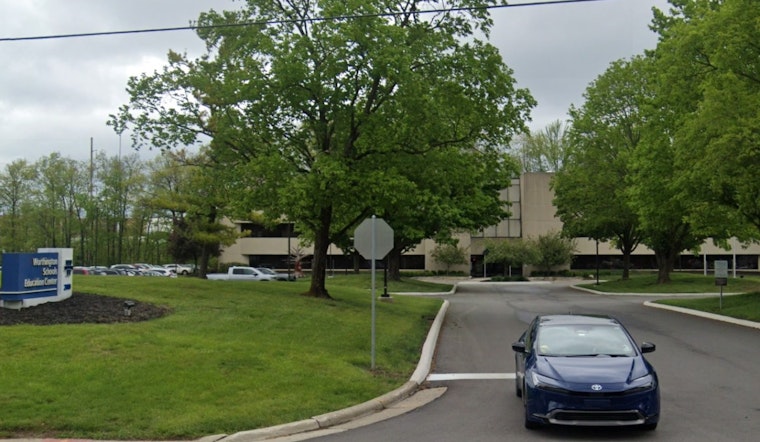
Worthington City Schools is ending its contract with Flock Safety early, pulling license plate reader cameras from the entrances of four schools after deciding the technology's benefits no longer outweigh the risk of eroding public trust. The district confirmed the move on Tuesday, the same day neighboring Olentangy Local Schools quietly canceled its own Flock contract, according to seed facts drawn from district records.
The cameras, installed in 2024 at Thomas Worthington High School, Worthington Kilbourne High School, Linworth Experiential Program and Worthington Academy, recorded license plates and identifying details of vehicles passing through main entrances, as reported by the Columbus Dispatch. Superintendent Trent Bowers said the district kept the data internally and collected only license plate information, characterizing the system as “a nice extra for the district” rather than a core safety tool, per the Dispatch's reporting. Flock, which owns the cameras, is expected to remove the devices within a commercially reasonable timeframe — typically a few weeks — and the district said the early termination comes at no additional cost.
A Regional Pattern Emerges
Olentangy's same-day cancellation was confirmed by WOSU 89.7 NPR News, underscoring that Worthington's exit wasn't an isolated decision but part of a broader shift among central Ohio's largest suburban districts. In its September 1 statement, Worthington noted that neighboring districts including Dublin, Westerville and Hilliard have never used Flock cameras on their campuses at all. The district operates 728 internal security cameras across its facilities and plans to install more standard cameras while adjusting the angles of existing ones to keep entrance and exit coverage intact — without capturing vehicle location data going forward.
Bowers said the cameras' limited benefits were not worth the potential loss of public trust in the schools, a rationale the district tied directly to its September 1 statement. The original 2024 installation cost $35,000, with $30,000 covered by an Ohio school safety grant, and the district had renewed its Flock contract for two more years as recently as March 2025 before reversing course.
Columbus Audit Fueled Local Backlash
The reversal follows a July 2026 audit of the Columbus Division of Police, requested by City Council members, which found the city's Flock network had been queried up to 15,577 times for potential immigration enforcement purposes since 2023, according to WYSO. The audit's findings indicated that use of the city's license plate data for federal immigration enforcement violated city law, prompting Mayor Andrew Ginther to order an end to statewide data sharing. Columbus city leaders subsequently removed the city's data from the nationwide Flock network, locked out communities known to cooperate with ICE, and added new data guardrails, though police have said ICE did not directly access the system — federal queries reportedly occurred through shared regional networks instead.
Columbus City Council member Emmanuel Remy has said he plans to introduce legislation on the city's use of Flock cameras by the end of September. That comes even as Columbus police leadership defended the technology at an August hearing, telling officials that Flock alerts helped investigators solve roughly 60% of the city's 2025 homicides, according to WOSU's earlier reporting. Chief Elaine Bryant has argued that removing the cameras would reduce crime clearance rates, setting up a tension between law enforcement's crime-fighting case and the privacy concerns now driving school districts away from the technology.
Misuse Cases and a National Reckoning
Local trust in the systems took another hit in July when two Reynoldsburg Police officers resigned ahead of internal misconduct interviews after audits found they made dozens of unauthorized personal searches on the suburban Columbus agency's Flock camera system, 10TV reported. Internal records showed one of the officers had searched a former domestic partner's plate 46 times. Under Ohio Revised Code Section 2913.04, knowingly accessing or disseminating information from state law enforcement databases beyond authorized scope is a fifth-degree felony.
The concerns extend well beyond central Ohio. A February 2026 national investigation by The 74 and The Guardian found that law enforcement agencies nationwide conducted hundreds of thousands of searches on school-mounted Flock cameras, including more than 600 immigration-related queries targeting school camera data in a single month, according to The Guardian. Data logs reviewed in that investigation showed out-of-state agencies running lookups on school camera feeds without those districts' knowledge. Facing mounting pressure, Flock Safety announced on August 13 that it would shrink its default data retention window from 30 days to 7 days for non-evidence scans, with the ACLU noting that roughly 90% of police searches happen within the first week anyway.
Colleges Still Betting On the Technology
Not every institution is retreating. While K-12 districts across central Ohio reconsider automated license plate readers, major universities including Ohio State University — which began using ALPRs in 2021 — and Case Western Reserve University in Cleveland continue to operate camera networks on their campuses, according to reporting from Signal Statewide. That divide highlights how the public school backlash has not yet reshaped policy across all of Ohio's education institutions.
Worthington's move adds to a growing list of local governments and school systems nationwide pulling back from Flock contracts amid similar trust concerns, a trend Hoodline has tracked elsewhere. For now, Worthington families will see more conventional security cameras at school entrances, repositioned to watch doorways rather than license plates, as the district works to rebuild confidence without walking away from campus security altogether.





