

























































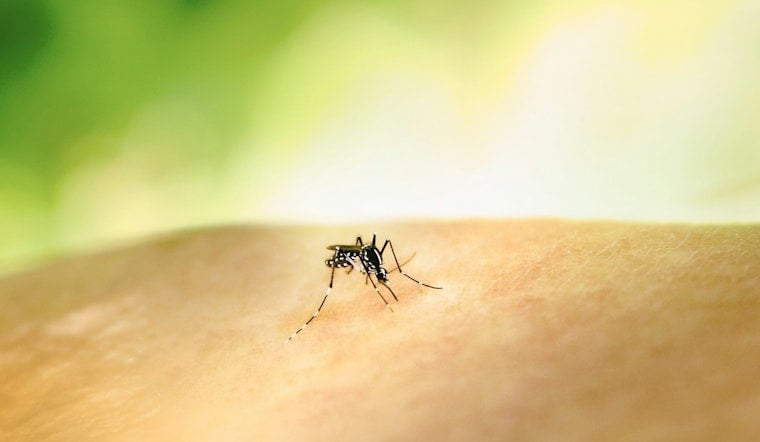
A Yonkers resident has tested positive for West Nile virus, marking Westchester County's first confirmed human case of the 2026 season, officials said. The resident had recently traveled outside the county, and health officials are now working to determine whether the exposure happened during that trip or closer to home.
Westchester County Health Commissioner Dr. Sherlita Amler confirmed the case, as reported by Gothamist. Amler urged residents to take precautions against mosquito bites as the county works with the patient to pin down where the infection likely occurred. The news arrives roughly a month after mosquito surveillance already flagged trouble in the county: Westchester detected its first West Nile-positive mosquito pool of the season in Rye on August 6, drawn from 61 mosquito batches collected across 30 trap locations countywide, according to the Yonkers Times.
A Familiar Late-Summer Pattern
The timing tracks with recent years. Westchester's first human West Nile infections in both 2025 and 2024 also surfaced in August, including a Yonkers resident last year and residents of New Rochelle and Mount Vernon in 2024, per county health department figures. Late summer has consistently marked the county's peak period of viral risk.
Those trap sites feed into a broader surveillance system: samples are sent to a state laboratory in Albany, and when a pool comes back positive, county health staff inspect the surrounding area and apply larvicide to standing water in nearby catch basins, per the same Yonkers Times report. That kind of early detection is designed to catch viral activity in mosquitoes before it ever reaches a human patient.
Cases Mounting Across the Region
Westchester's diagnosis lands amid a wider surge across the New York metropolitan area. Just south in New York City, five human West Nile cases have been confirmed this year, with infections turning up in every borough except the Bronx, and the virus has been detected in 1,456 mosquito pools citywide, according to city data cited by Gothamist. Hoodline previously reported on NYC's first case of the season.
The virus has been active well beyond the five boroughs, too. The New York State Department of Health had already confirmed 2026 human cases in Nassau, Suffolk, and Onondaga counties before Westchester's diagnosis emerged, the agency said. On Long Island, Suffolk County health officials had confirmed 104 West Nile-positive mosquito pools, three infected dead crows, and one human infection as of Tuesday, according to Patch. Nationally, preliminary CDC surveillance counted 299 human West Nile cases across 37 states as of the same date, with 212 classified as severe neuroinvasive disease.
What the Virus Actually Does to Most People
Despite the alarming headlines every August, the clinical risk for any single mosquito bite remains low. The CDC estimates roughly 80% of infected people show no symptoms at all, about 20% develop West Nile fever with flu-like symptoms such as fever, headache, and body aches, and fewer than 1% progress to neuroinvasive complications like brain inflammation, which carry roughly a 10% fatality rate.
State health officials have flagged specific groups at greater risk of severe illness beyond the well-known threat to older adults. The New York State Department of Health issued guidance in August warning that people undergoing B-cell depleting or B-cell modulating therapies face a heightened risk of severe arboviral illness if infected. Over the past decade, New York State has recorded 574 human West Nile cases and 30 related deaths, though officials estimate most mild infections go undiagnosed and uncounted.
A Regional Disease With Deep Roots
West Nile virus is not new to the New York area. It was first detected in the Western Hemisphere in Queens in late summer 1999, during an outbreak of viral encephalitis that caused 62 human infections and seven deaths across the metropolitan region. More than a quarter-century later, the virus remains a fixture of Northeast summers, with Westchester's case following similar early-season detections this year in Rockland County mosquitoes and a confirmed human case in Massachusetts.
For now, Westchester health officials say the focus is on tracing the Yonkers resident's exposure and reminding residents to guard against bites as mosquito season winds down. Standard precautions include using EPA-registered repellent, wearing long sleeves during dawn and dusk hours, and draining standing water around homes where mosquitoes breed.





