

























































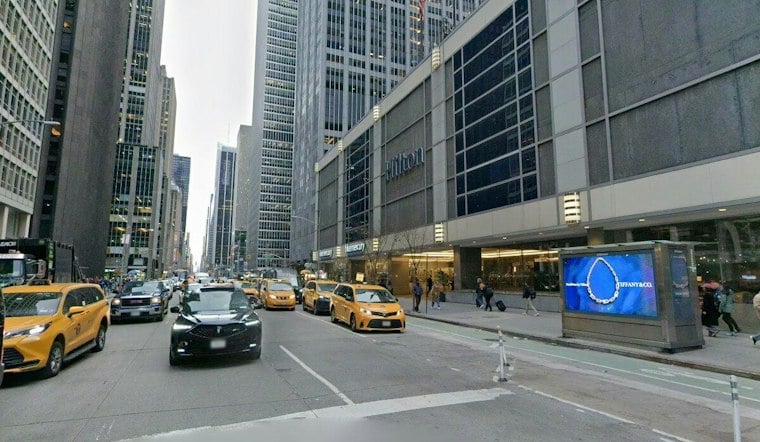
Hybrid work, cooling industrial activity and the growing role of technology were among the pressures facing commercial real estate professionals at SIOR’s 2026 Fall Event. More than 1,200 people from 21 countries gathered at the New York Hilton Midtown for the four-day event, which began Oct. 19 and marked the Society of Industrial and Office Realtors’ 85th anniversary. Former New Jersey Gov. Chris Christie and Moody’s Analytics chief economist Mark Zandi were among the keynote speakers.
The four-day program, held in the heart of Manhattan, blended professional development with broader conversations about where commercial real estate is headed, according to Connect CRE. Beyond Christie and Zandi, the event featured keynote presentations from leadership expert and author Caroline Webb and New York commercial real estate broker Bob Knakal, with sessions built around what the outlet described as a conference theme emphasizing specialized expertise, trusted relationships and adaptability.
Educational sessions throughout the week dug into the opportunities and challenges facing the industry, as commercial real estate professionals work to navigate shifting economic conditions, evolving technology and changing occupier demands, per Connect CRE's reporting. The 85th anniversary framing wasn't incidental — organizers used it to underscore values SIOR says have guided the group for eight decades and that it expects to keep driving its growth and impact in the years ahead.
A CEO Reflects on a Tremendous Success
SIOR CEO David C. Lockwood III, who led the organization through the Midtown event, called it a resounding win for the group's global membership. “The New York Fall Event was a tremendous success and brought global CRE professionals together to exchange ideas, strengthen relationships and discuss industry opportunities and challenges,” Lockwood said, according to Connect CRE's account of the gathering. He added that the event reinforced how SIOR's global community values excellence, collaboration and mutual support.
Lockwood isn't new to the organization he now runs. He told Bisnow he has been part of SIOR since 1990, holding, in his words, “just about every single role in the organization,” most recently serving as the group's global president in 2024 before stepping into the CEO post. That long institutional history has coincided with a notable membership surge — Lockwood told the outlet that SIOR grew by nearly 20% over the preceding three years, with almost 300 new members joining in 2025 alone, bringing the organization's ranks to 4,100 members spread across 52 countries and 800 cities.
Hybrid Work and Cooling Industrial Activity
Lockwood also used his conversation with Bisnow to sketch out the forces reshaping the sector his members work in daily. He described a new norm in the office world built around hybrid schedules, one that has pushed demand toward amenitized spaces designed to support collaboration, productivity and employee engagement. On the industrial side, Lockwood said activity has cooled after several years of exceptionally strong performance, pointing to tariffs, geopolitical tension and broader economic uncertainty as headwinds.
Artificial intelligence came up too, though Lockwood was careful to frame its role as additive rather than disruptive to the broker's job itself. “We do not see a world in which AI replaces the broker,” he told Bisnow, even as he acknowledged the technology is becoming embedded in day-to-day commercial real estate workflows.
SIOR’s Roots and Regional Industrial Signals
SIOR says it was founded in 1941 in response to growing demand for industrial space during World War II. Its history records that in 1986 the organization adopted the Society of Industrial and Office Realtors name and expanded membership to professionals who lease and sell office properties. Lockwood told Bisnow that SIOR had 4,100 members in 52 countries and 800 cities, reflecting the organization’s current reach. For a recent regional leasing indicator, ROI-NJ, citing a Cushman & Wakefield report, said new leasing across the New York-New Jersey-Pennsylvania corridor rose 35.6% year over year to 36.5 million square feet in the first half of 2026, the second-highest first-half total since 2021. The report also puts corridor vacancy at 8.5%, down 10 basis points year over year; it does not provide rent figures in the cited findings.
Market Data Backs Up the Optimism
The timing of SIOR's gathering lines up with research pointing to a strengthening market heading into 2026. CBRE's U.S. Real Estate Market Outlook 2026 projects commercial real estate investment activity will climb 16% next year to $562 billion, even as the firm expects annual GDP growth to slow to 2.0% amid average inflation of 2.5%. The same CBRE outlook anticipates cap rates for most property types compressing by 5 to 15 basis points.
Office leasing, a sector central to many SIOR members' businesses, is expected to keep improving in 2026 and surpass 2019 levels as large users continue returning to the market, per CBRE's research. Industrial occupiers, meanwhile, are expected to keep favoring higher-quality properties over older assets, while data-center leasing is projected to hit an all-time high even as longer power-delivery timelines constrain new supply. These market shifts echo the adaptability theme organizers wove through SIOR's own New York program.
For now, the focus remains on what played out in Midtown, where thousands of handshakes, panel discussions and one high-profile keynote lineup capped off an anniversary year SIOR says it intends to build on.




