

























































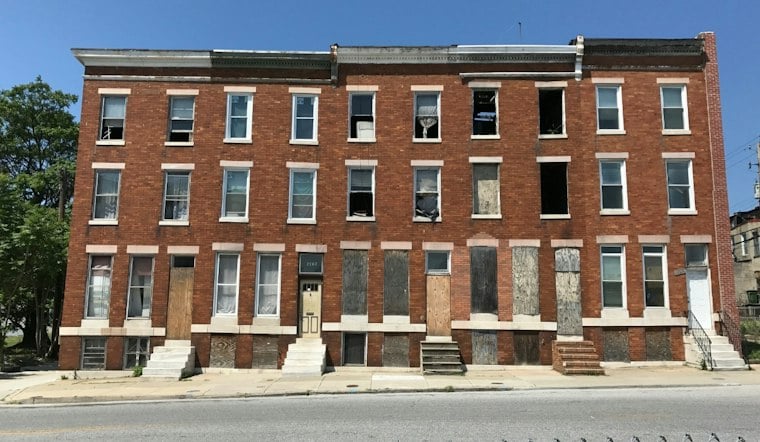
About 2,000 people packed Morning Star Baptist Church in Woodlawn on Sunday, pressing Governor Wes Moore and Republican challenger Dan Cox on vacant housing, property taxes and affordability just weeks before Maryland voters head to the polls. The crowd represented more than 100 congregations, schools and civic organizations from across Baltimore City and Baltimore County, according to the gathering's host church.
The event, organized by the faith-and-community coalition BUILD, came less than a week after Moore and Cox faced off in their only televised debate of the 2026 governor's race, held October 6 at Maryland Public Television studios in Owings Mills, where housing affordability and property tax burdens were central points of contention, as reported by NBC4 Washington. At Morning Star, according to the Baltimore Sun, Moore and Cox both addressed vacant housing, property taxes and affordability in front of the assembled crowd.
BUILD's push for specifics lands against a backdrop of recent state action. Moore signed two executive orders on October 1 establishing the Maryland Housing Innovation Incubator, aimed at modular workforce housing development, and a Permitting and Licensing Acceleration Team meant to cut state regulatory delays that have slowed residential construction, as Hoodline previously reported. The administration has framed the orders as a way to lower building costs and speed up pathways to homeownership statewide.
A Statewide Shortage Behind Baltimore's Vacant Blocks
Maryland Department of Housing and Community Development Secretary Jake Day said this month that the state has underproduced housing by roughly 8,000 units a year over the past two decades, according to States Newsroom. That persistent shortfall has squeezed statewide inventory and pushed up home prices and rents, feeding directly into the affordability complaints raised at Sunday's gathering. It is a distinct problem from Baltimore's vacancy crisis, even as both fueled the discussion in Woodlawn.
Baltimore City and the State of Maryland have committed to a $3 billion, 15-year strategy known as Reframe Baltimore and Reinvest Baltimore, designed to eliminate citywide housing vacancy. The plan is anchored by $900 million in state funds pledged under Moore and $300 million from the city, routed through a Tax Increment Financing district the city created in December 2024, per the City of Baltimore's finance office. Economic modeling commissioned for the effort, conducted by Public Financial Management, projected that tackling 65,000 vacant or at-risk properties over 15 years could generate more than $7.3 billion in economic value over 30 years through new tax revenue, job creation and restored property values, according to the Greater Baltimore Committee.
A Citywide Plan for Vacant Properties
The citywide strategy aims to address Baltimore's vacant properties.
There has been measurable, if incomplete, progress citywide in addressing vacant properties. Even so, the station reports that abandoned residential properties still generate an estimated $210 million in direct annual public costs and lost revenue, with Johns Hopkins University research cited showing that unaddressed vacants drag down surrounding property values and strain emergency response services.
New Incentives and Federal Support Enter the Mix
Maryland housing officials rolled out new Reinvest Baltimore incentives in July, committing $4.45 million in state funds to lower mortgage interest rates to as low as 3.5% for qualifying buyers purchasing redeveloped former vacant homes, according to the National Council of State Housing Agencies. The program runs through Healthy Neighborhoods and Neighborhood Housing Services of Baltimore.
Recent city housing issues have included the city's consideration of an $8.57 million downtown buyback for transitional family housing.
With the November election approaching, the Woodlawn gathering served as a test of whether either candidate would commit to concrete timelines for shrinking Baltimore's vacant housing stock. Both Moore and Cox addressed the issue before the crowd and outlined concrete financial and policy plans.





