

























































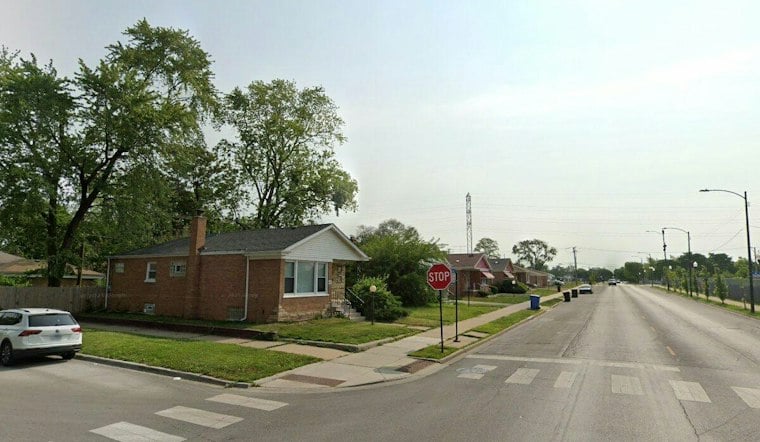
Seventy women working in the electrical industry picked up paintbrushes, drywall panels, and flooring tools on Friday at a West Pullman construction site, pushing forward an affordable housing project that organizers call one of their most ambitious yet. The work near 115th and Morgan Street marked Habitat for Humanity Chicago's 14th annual Women Build event, bringing hundreds of volunteers together this month to help raise the Maple Park Landing development.
The scene was first reported by ABC7 Chicago, whose Evelyn Holmes detailed how builders are constructing the first eight of 20 planned townhomes at the site. Four of those homes have been earmarked specifically for first-time homebuyers, according to the station's report. The project aims to raise more than $750,000 to support what organizers describe as affordable and stable housing options for people who thought homeownership was out of reach.
A Build Born From a Two-Year-Old Idea
Laura Scott, who has worked in construction for years, conceived the all-female build day after asking a colleague, Deana, about organizing a full build day for women in the electrical industry at a Habitat job site two years earlier, per the same account. On Friday, Scott said the result was 70 women in the male-dominated electrical industry building together for their community.
Deena Prescavage, also quoted in the ABC7 report, said the event highlights that women face greater difficulty becoming homeowners than men while being equally capable of construction work. The sentiment echoed throughout the day, with Ali Novinger saying the build promotes representation and mutual support among builders and future homeowners, and Blue Kelly describing the event simply as a positive day with great energy. Other participants said the build creates hope alongside the affordable housing itself.
Why Electricians, Specifically
The emphasis on electrical trade workers is not incidental. Women account for only 2.9% of working electricians in the United States, according to Bureau of Labor Statistics data, one of the starkest gender gaps in any skilled trade. Across construction field trades broadly, tradeswomen made up just 4.3% of workers in 2024, even as overall female representation in construction — including office and management roles — reached a two-decade high of 11.2%, per the Institute for Women's Policy Research.
That underrepresentation carries weight beyond symbolism. The Bureau of Labor Statistics projects electrician employment will grow nearly 9.45% over the next decade, driven by building electrification and renewable energy initiatives, according to data compiled by Data USA. Recruiting more women into the trade is increasingly framed as part of meeting that labor demand.
Housing Pressure on the Far South Side
The Maple Park Landing site sits in a neighborhood where housing stock is overwhelmingly single-family. Detached single-family homes make up 66.4% of West Pullman's housing stock, according to DePaul University's Institute for Housing Studies. Townhomes remain a rare attached-ownership option in an area dominated by standalone houses.
A related South Side PUMA had a homeownership rate of 51.6%, per Data USA.
Maple Park Landing's Multi-Unit Build
Jennifer Parks joined Habitat for Humanity Chicago in 2011. Maple Park Landing is a multi-unit development in a South Side neighborhood, with construction work expected to continue through the end of October.
The approach mirrors moves by other Habitat affiliates in the region. Earlier this month, Hoodline reported that the City of Aurora had approved funding for a separate 17-home subdivision, putting $1.2 million in federal HOME grant funds toward a Habitat for Humanity development there. Taken together, the projects suggest Chicago-area Habitat affiliates are increasingly building cohesive, multi-home communities rather than isolated single houses, a strategy aimed at stretching volunteer labor and subsidized financing further against rising construction costs.





