

























































An 80-ton boulder that had dangled above hikers' heads for more than a century finally gave way at Polar Caves Park in Rumney, New Hampshire, smashing through a wooden walkway on the final day of the attraction's 2026 season. No one was hurt when the landmark known as the Mysterious Hanging Boulder broke loose on Oct. 18, but the collapse damaged railings and cut off access to part of the trail where it fell.
The boulder had rested in that precarious, overhanging position for at least 104 years, according to MassLive. Despite its enormous bulk, it jutted out from a wall of granite in a way that let generations of visitors walk right underneath it, as New Hampshire Public Radio reported, describing the rock's weight as more than 80 tons — a figure that Fox Weather and the New York Post both put at 80 tons. Tourists regularly used the boulder as a backdrop for photos or ducked beneath it for shade, a popularity that made it one of the park's signature features.
When the boulder finally broke free, a railing along the trail's wooden walkway was smashed to pieces, and the rock itself blocked access to the rest of the path, according to the Boston Globe. The timing meant the damage came just as the park was closing its gates for the season, sparing it from colliding with the walkway used by thousands of visitors each year during peak operating months.
A Century-Old Attraction Carved by Ice Age Glaciers
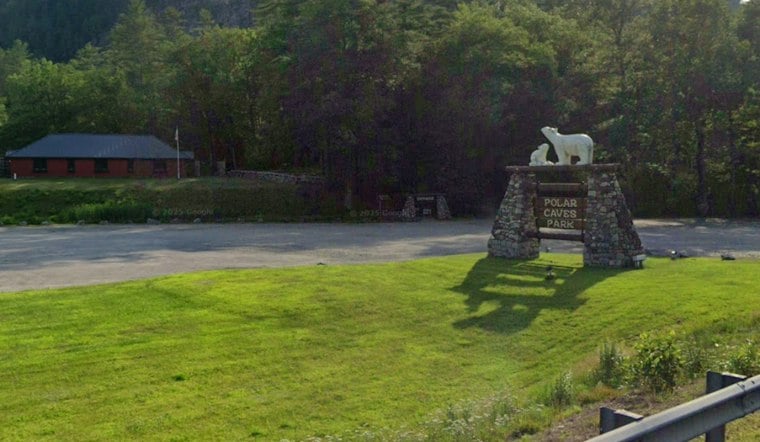
Polar Caves opened in 1922 and consists of nine glacial granite boulder caves tucked into New Hampshire's White Mountains, alongside nature trails, a boulder maze, an animal park with fallow deer and a gem-mining sluice. The caves themselves were formed during the last ice age, when a continental glacier swept across New Hampshire and left massive granite boulders scattered across the landscape — the same geological forces that eventually produced the hanging boulder that towered over the trail for generations.
Polar Caves said it remains committed to preserving the site as a safe destination for guests and employees, and that it would use the offseason to assess the damage and determine next steps before reopening. Park officials said they look forward to welcoming everyone back for the 2027 season.
Geologists Point to Slow Weathering, Not a Single Cause
No official report has pinned down exactly what caused the boulder to finally let go after sitting in place for more than a hundred years. But a geologist cited by NHPR said it was probably more of a gradual buildup of instability than any single dramatic event that pushed it over the edge, guessing the rock had reached a tipping point after thousands of years of exposure to wind, rain and shifting temperatures. The Globe similarly reported that a combination of wind and rain eroding the support beneath the boulder, along with freeze-thaw cycles, may have played a role in weakening it over time.
The collapse echoes another famous New Hampshire rock formation's demise. The Old Man of the Mountain, the granite profile that once jutted from Cannon Mountain, tumbled down in a rock slide on May 3, 2003, a collapse the Globe noted was likewise attributed to apparent natural geological forces rather than any single triggering event.
What Comes Next for the Park
For now, Polar Caves is closed for the winter, leaving the damaged walkway and trail section to wait out the offseason before any repairs begin. The park's pledge to reassess the site and return for a new season next year is the clearest word yet on its plans, though the scope of repairs needed to restore full trail access has not been detailed.





