

























































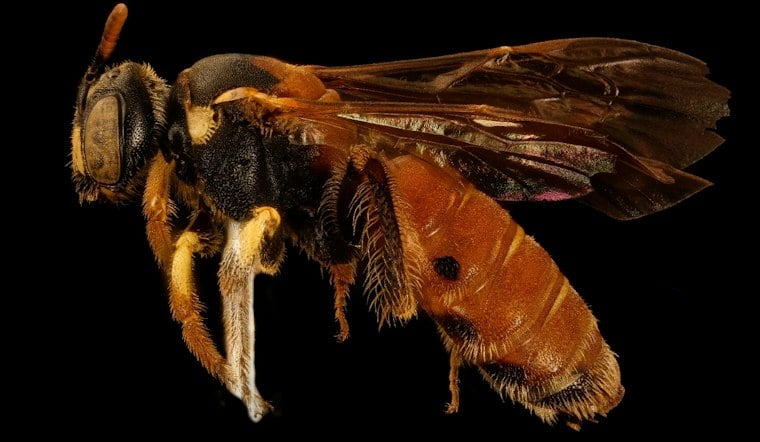
A bee species that hadn't been documented in Virginia for roughly a century has turned up on private property in Isle of Wight County, where a field zoologist spotted the rare, ground-nesting insect visiting its favorite flower. The discovery of Protandrena abdominalis marks a striking reappearance for a creature long thought to have slipped out of the Commonwealth's record books.
According to WAVY.com, the rare bee was found on private land in Isle of Wight County, and had not been seen in the Commonwealth for about a century before this discovery. The outlet reports that Protandrena abdominalis is a rare, ground-nesting bee associated with sandy soils, and that it specializes on horsemint flowers for pollen.
The rediscovery followed a sighting of Protandrena abdominalis visiting its host plant.
A Second Sighting Followed Days Later
A Second Sighting Followed Days Later Less than a week after the Isle of Wight find, the same species was discovered again, this time at Chub Sandhills Natural Area Preserve in Sussex County on Aug. 26, 2026, the same account notes. The bee was first found during a survey of private property; later finds were at natural area preserves.
The bee's apparent devotion to horsemint lines up with what plant researchers have documented elsewhere. The North Carolina Extension Gardener Plant Toolbox lists Protandrena abdominalis among the specialized bees supported by plants in the Monarda genus, alongside Dufourea monarda and Perdita gerhardi, noting that horsemint itself attracts bees, butterflies and hummingbirds.
A Pattern Seen Beyond Virginia
The tight bond between this bee and its host plant isn't unique to Virginia. A U.S. Geological Survey image record describes a red Protandrena abdominalis collected on spotted beebalm, noting that the species seems to collect pollen almost exclusively from that plant or close relatives, according to the U.S. Geological Survey.
Virginia is home to more than 460 native bee species, a scale that underscores how easily a specialist like Protandrena abdominalis could go undetected for decades. The Virginia Department of Conservation and Recreation notes that its Natural Heritage Program is involved in studying the state's native bee populations, while the Virginia Department of Forestry points out that ground-nesting bees remain far less familiar to most people than bumblebees, even though they play a similar pollinating role.
A Specialized Bee
Protandrena abdominalis specializes on horsemint, a plant that attracts bees, butterflies and hummingbirds. The bee had not been documented in Virginia for about a century before it was found on private land.





