

























































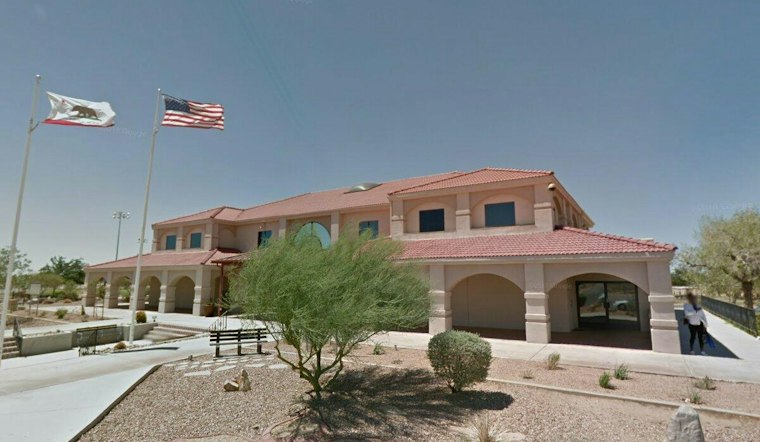
Adelanto's city council voted 4-1 on Oct. 14 to approve an amended operating agreement with Barona Adelanto Energy LLC, a company jointly owned by the city and Nineteen Thirty-Two LLC, after weeks of resident pushback over transparency and financial risk. The deal gives Adelanto a 49% ownership stake in the new energy company, while Nineteen Thirty-Two LLC holds the remaining 51%. Councilmember Stevevonna Evans cast the lone dissenting vote.
The agreement, reported by Inland Empire Community News, establishes the company's ownership, management and framework for future infrastructure projects, including possible data centers and battery-storage facilities. Barona Adelanto Energy was organized under tribal law through a Barona Tribal Council resolution and will be governed by a five-member board, with Nineteen Thirty-Two LLC appointing three representatives and the city appointing two. The council approved Adam Reyes and Brandon Banegas as Adelanto's representatives on that board, though some residents questioned their qualifications for the role, according to the same report.
Complicating the council's review was the revelation that the agreement had already been signed once before, on July 25, 2026, by Jessie Flores — without council approval. City Attorney Todd O. Litfin acknowledged that Flores lacked the authority to approve the agreement at that time, per Inland Empire Community News. Litfin also recommended removing a provision, Section 8.4, that would have made Adelanto solely responsible for covering the company's net losses, and the council struck that section before voting.
Residents Say They Were Shut Out of the Process
In a post-vote interview, Diana Esmeralda said she had spent weeks attending meetings and felt residents weren't being heard, criticizing what she described as a recurring lack of public input and questioning why the city pursued a tribal partnership instead of expanding its existing public utility authority. “I feel that the community has done a lot of hard work,” she said.
Destiny Llamas also raised concerns about information surrounding the agreement and warned of water scarcity and potential environmental effects from future data centers and battery-storage sites. “I personally just feel like we need more transparency,” she said, adding: “We're being lied to — they're doing backdoor tribe deals.” Evans, who voted against the deal, argued the board structure left the city without real leverage. “If Barona appoints their three members from the tribe, there is absolutely nobody that is not affiliated with Barona to act in the best interest of Adelanto,” she said. Evans told reporters after the vote that the agreement left too many questions unanswered, and separately said the project should have gone to a public workshop first.
Council Majority Points to Adelanto's Power Squeeze
Mayor Gabriel Reyes, who spoke to residents at the Oct. 14 meeting, defended the partnership as a way to address Adelanto's energy needs and encourage economic development. Mayor Pro Tem Daniel Ramos, who also attended, argued that further delays would postpone infrastructure upgrades the city needs and cited Southern California Edison's slow response to Adelanto's energy requests as a reason not to wait. Councilmember Angelo Meza attended the meeting as well. Reyes and Ramos did not respond to Inland Empire Community News's request for comment before that outlet's story published.
The frustration over Edison's response times has a documented basis. In town hall materials, the utility has said it cannot begin planning or constructing new distribution facilities based solely on a city's forecast or a developer's initial outreach, and that it strives to complete engineering studies within 35 business days once a formal request is filed, according to city and Southern California Edison town hall documents. Separately, Edison has told the Adelanto council that the city's electricity demand rose from roughly 29 MVA in 2016 to about 63 MVA in 2024, according to Citizen Portal.
No Project Has Been Approved Yet
The agreement itself does not approve construction or design of any specific project — it sets up the corporate and governance framework under which future proposals, including data centers or battery storage, could eventually move forward. That distinction echoes a separate fight already playing out in Adelanto: the city's Planning Commission voted 3-2 in August against a proposed zoning amendment that would have allowed data centers and related energy facilities, though that vote was advisory only. Even under a zoning framework, the outlet has reported, no specific data center would be automatically approved — each project would still require its own discretionary approval and environmental review.
Adelanto's power struggles are not new. A 2017 report from the Victor Valley Daily Press described city officials exploring city-owned power, temporary generators and alternative energy sources to meet industrial demand, and a 2017 presentation to the city floated a local-control power acquisition model from the California Choice Energy Authority. Water has been a flashpoint too — in December 2025, residents told the council about brown, cloudy or foul-smelling tap water, prompting the city to offer qualifying residents home filtration systems, Inland Empire Community News has reported.
The Bigger Data-Center Picture
Llamas's concerns about water and power use tie into a broader statewide trend. A CalMatters analysis found that California data centers nearly doubled their electricity use and carbon emissions between 2019 and 2023, with on-site water consumption more than doubling over the same period — rising from about 1,078 acre-feet to 2,302 acre-feet. Statewide electricity demand from data centers hit an estimated 10.8 terawatt-hours in 2023, up from 5.5 terawatt-hours in 2019, and could climb as high as 25 terawatt-hours by 2028, enough to power roughly 2.4 million U.S. homes, according to CalMatters. The Next 10 and UC Riverside report's authors recommended uniform reporting and local monitoring of data centers' energy and water use.
The California Energy Commission, meanwhile, has pointed to tribal microgrids as tools that can reduce greenhouse-gas emissions, support grid reliability and expand distributed generation, noting that tribes across the state are leading partnerships with California on such projects, per the commission's tribal microgrid program page. Whether Adelanto's new partnership with Barona Adelanto Energy follows that model, or leads to an actual data center or battery-storage project, remains to be seen — the vote did not approve construction or design of any specific project.




