

























































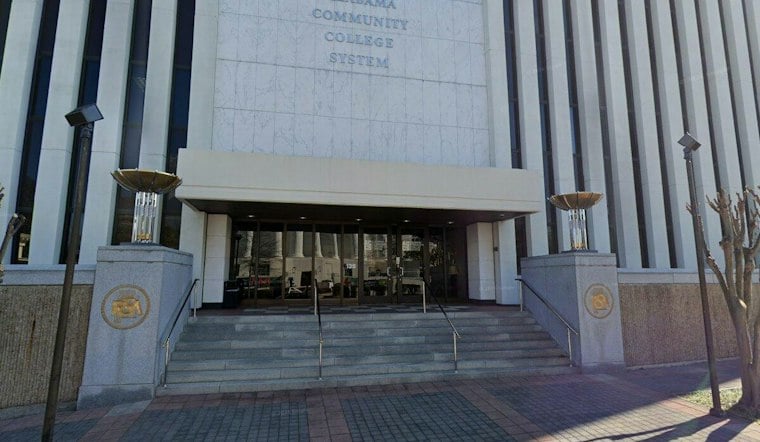
Alabama Governor Kay Ivey awarded 34 new rural health grants worth nearly $55 million Thursday, funneling fresh federal dollars into hospitals, ambulance services, and colleges across the state's rural counties. The money is the second major installment of a five-year, $203.4 million federal award meant to prop up rural medical care that remains under severe financial strain statewide.
The largest single grant of the round, $20.6 million, went to the Alabama Community College System to train rural EMTs, nurses, and allied health workers, according to Yellowhammer News. The Alabama School of Healthcare Sciences, a residential high school in Demopolis, received $7.27 million for its program, while the Greene County Health System in Eutaw was awarded four separate grants totaling $3.9 million for cancer detection, emergency care, a paramedic treat-in-place service, and a regional training center. Thursday's awards closed out year one of the program with 172 grants worth nearly $200 million, the outlet reported, following an earlier round in August 2026 when Ivey announced the first 138 rural health grants worth more than $144 million.
Where the Money Is Going
Several university and hospital systems picked up smaller but targeted awards in this round. The University of Alabama at Birmingham received $3.44 million to expand statewide emergency care coordination for trauma, stroke, and cardiac conditions, while the University of Alabama was awarded $1.76 million to build rural treat-in-place infrastructure across 13 counties. Separately, Greene County Health System received $2.28 million to establish a rural cancer detection and early diagnosis network spanning five counties, and the Sylacauga Healthcare Authority got $1.89 million to install a permanent PET/CT scanner and hire a nurse navigator. The Health Care Authority of the City of Huntsville received $450,000 for two rapid response vehicles serving Lawrence, Marion, and Winston counties, and the South Central Alabama Mental Health Board was granted $840,000 to build a coordinated rural healthcare network across four counties.
Eight rural health grants in total will launch treat-in-place programs totaling $5.3 million statewide. These programs allow paramedics to treat eligible patients at their location rather than transporting them to distant emergency rooms, a model designed to ease rural ER crowding and keep ambulances available for true emergencies, as Healthcare Innovation explains. Rural emergency response in Alabama has long been hampered by long transit distances, where local EMS units are frequently tied up ferrying non-emergency patients to hospitals far from home.
A Federal Program Born From a Contested Law
The funding flows from Section 71401 of the One Big Beautiful Bill Act, a $50 billion federal Rural Health Transformation Program that the Centers for Medicare & Medicaid Services is distributing at $10 billion a year through FY2030, according to Medicaid.gov. Half of that money is split evenly among all 50 states, with the rest allocated based on state needs and project plans, and states are not required to put up matching funds. President Donald Trump signed the bill into law on July 4, 2025, after the U.S. Senate passed it by a 51-50 vote with Vice President JD Vance breaking the tie, and the U.S. House approved it 218-214.
Alabama's $203.4 million first-year grant, secured in December 2025, ranked 24th among all states, with totals ranging from $147 million for New Jersey, Connecticut, and Rhode Island up to $281 million for Texas. CMS Administrator Mehmet Oz said the program helps states develop locally driven solutions to improve rural access to high-quality care, and he discussed Alabama's award with U.S. Rep. Robert Aderholt in September 2026. U.S. Sen. Tommy Tuberville said President Trump has been a champion for rural America, and U.S. Rep. Gary Palmer, who proposed folding the rural health fund into the Working Family Tax Cuts Act, said the investment is making a real difference for communities across Alabama. U.S. Sens. Katie Britt and Tommy Tuberville backed the Senate amendment that added the rural health fund to the bill.
Democrats Warn of a Larger Medicaid Trade-Off
Not every Alabama lawmaker is celebrating. Democrats in Congress voted against the One Big Beautiful Bill, and U.S. Reps. Terri Sewell and Shomari Figures both opposed it as well. Sewell has warned that families in rural Alabama could lose access to their nearest hospital, while Figures has said the law is bad for Alabama and America. Their concerns track with a broader national debate: a KFF analysis estimated that the law would cut federal Medicaid spending by $911 billion. A KFF analysis cited separately estimates the law's Medicaid cuts in rural areas nationwide will total $137 billion over a decade, well above the $50 billion the transformation fund provides.
That tension sits atop an already precarious landscape for Alabama's rural hospitals. The Alabama Hospital Association has found that 27 of the state's 52 rural hospitals are at risk of closing, with 19 classified as facing immediate risk of shutting down within two to three years, according to EMS1. Low reimbursement rates from Medicare and private insurers are cited as primary drivers of that instability, and seven rural hospitals have already closed in the state since 2011.
The Scale of Rural Alabama's Healthcare Gap
The stakes are broad: 58 of Alabama's 67 counties are classified as rural, home to 2.12 million residents, or 42.3% of the state's population, per Alabama Department of Public Health data. Alabama faces a county maternity-care shortage, and 28% of women statewide live more than 30 minutes from a birthing hospital; among rural women, the figure is 89.8%. Alabama also ranks 49th nationally in dentist availability and 41st in overall health and wellness, according to Heartland Forward, with rural Alabamians earning 14% less in household income than urban residents and facing higher rates of chronic illness.
State lawmakers have also pursued their own fix alongside the federal grants. In April 2025, the Alabama House passed HB86 and sent it to a Senate committee; the bill proposed a rural hospital tax credit program capped at $20 million for 2026 that would let individuals and businesses claim credits for cash donations to rural medical centers, according to the Troy Messenger. The bill was modeled after a similar Georgia tax credit system and aimed to channel direct community funding to the state's 52 rural hospitals alongside the federal awards.
Building a Pipeline for Future Rural Doctors
Much of the state's longer-term strategy hinges on workforce development. The Alabama School of Healthcare Sciences, signed into law in 2024, broke ground on its permanent 10-acre Demopolis campus in October 2025, backed by a $26.4 million commitment from Bloomberg Philanthropies. The tuition-free public high school is set to open its inaugural class at a temporary campus at the University of West Alabama in Livingston this fall, ahead of the permanent campus opening in 2027.
In February 2026, the Alabama Department of Economic and Community Affairs, which administers the rural health program, briefed state lawmakers on its plan to spread the $203.4 million grant across 11 strategic initiatives, with the largest shares going to Rural Workforce at $57.9 million and Rural Health at $55.9 million, according to Alabama Reflector. Other allocations included $31.4 million for health IT and electronic records, $8.1 million for cancer digital regionalization, and $5 million for EMS treat-in-place efforts. The Centers for Medicare & Medicaid Services funds the entire program, with no state match required.





