

























































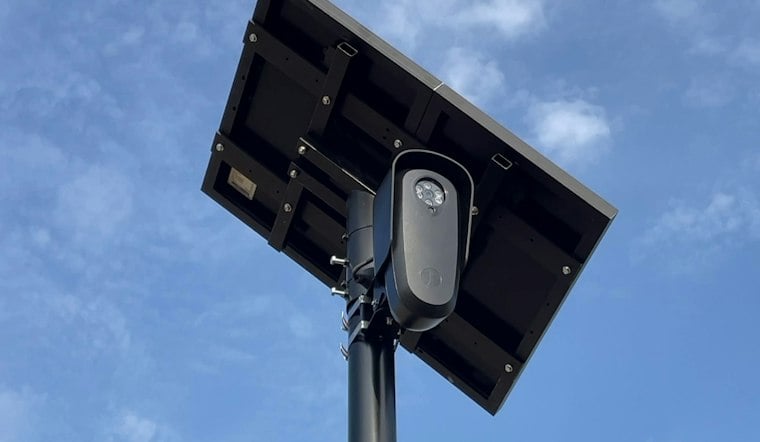
Anderson County Council unanimously approved on second reading Tuesday a measure that would bar the county from using Flock surveillance cameras, automated license plate readers and related technology — a vote that follows months of regional debate over privacy, data access and law-enforcement use of the systems. The measure still needs a public hearing and a third reading before it can take effect.
According to the Anderson Observer, the county's contracts covering 10 cameras stationed at boat ramps and parks have already expired or are about to, and the county does not plan to renew them. Councilman Greg Elgin told fellow council members that some of those cameras have already been shut down. As reported by FOX Carolina News, the proposed ordinance would end the county's contract with Flock altogether and ban the cameras from being used on county property.
Sheriff Signals Support as Scope of the Ban Takes Shape
Anderson County Sheriff Chad McBride favors the ban, the outlet's reporting states. The Sheriff's Office does not operate any Flock cameras on county roadways, though some units in the area are owned by homeowners' associations and businesses, including Lowe's, according to the same account. Under the proposed language, council-appropriated funds could no longer be used to purchase, lease, install, operate, maintain or access systems running on the Flock Safety platform, a restriction that would extend to cameras, license plate readers, software, databases, subscriptions and related services, the Anderson Observer's earlier report on the measure notes.
Importantly, the ordinance would not undo agreements already in place before it takes effect, and advancing past second reading does not make it law — a hearing and third reading still stand between the county and a final ban.
Conflicting Camera Counts Muddy the Picture
Exactly how many Flock cameras operate in Anderson County depends on who's counting. One Anderson Observer report put the county's current total at 21 cameras in operation, while The State reported that the tracking site DeFlocksc.org listed 10 cameras specifically in Anderson County. Those figures sit alongside separate data from the Atlas of Surveillance, which recorded the Anderson County Sheriff's Office running 10 Flock readers and the Anderson Police Department running 22 as of September 2025 — numbers that cover different agencies and may not be directly comparable to the council's county-level count.
Sheriff's office officials told The State that pulling the cameras would not hamper investigations, since the technology served as an investigative lead rather than a stand-in for traditional police work. That reassurance comes against the backdrop of a local controversy: two Anderson deputies resigned last month after being investigated for alleged misuse of the Flock system, per The State's reporting. Flock Safety's own data policy automatically deletes stored footage after seven days by default, the outlet added.
Anderson Police Push Back, Citing Case Results
Not every local law-enforcement voice is cheering the pullback. Anderson Police Chief Jim Stewart told WSPA that Flock technology has helped his department locate missing people, assist with homicide investigations, recover stolen vehicles and track down hit-and-run suspects. Stewart said officers face guardrails before running a search: “We have to put in a case number associated with an incident report. We have to describe exactly what crime has taken place to do that,” he told the station. The City of Anderson, separate from the county government weighing the ban, has 16 Flock cameras currently in use, the Anderson Observer reported.
Part of a Wider Upstate Reckoning
Anderson County isn't the first Upstate government to turn against Flock. Oconee County Council passed its own ordinance banning Flock cameras and other mass-surveillance systems, according to WSPA, prohibiting the use of tax dollars, property or equipment to support the technology and ultimately ending the Oconee County Sheriff's Office's use of its five cameras once the measure passed its third and final reading. In Greer, the city fired two police officers in June after determining they had used Flock cameras for personal reasons, and announced a 90-day pause of its camera system in August, as detailed by the Post and Courier.
The scrutiny extends beyond the Upstate. An NBC News review found that police departments and other officials have regularly acquired Flock surveillance technology through deals that avoided competitive bidding or fell just below spending thresholds requiring elected officials' approval, part of a pattern behind the company's rapid expansion across the country in under a decade, according to NBC News. South Carolina Attorney General Alan Wilson has also sent Flock Safety a letter asking how the company uses artificial intelligence, accesses data and handles retention policies, according to WBTV, which reported that Flock's network now spans more than 120,000 cameras across 49 states. In response to mounting criticism, Flock Safety has announced policy changes that include cutting default data retention from 30 days to seven and requiring specific case numbers for searches, per the Post and Courier's reporting.
For now, Anderson County's measure remains a work in progress. It cleared second reading unanimously, but the county has not yet held the required public hearing or taken a third and final vote that would make the ban official.





