

























































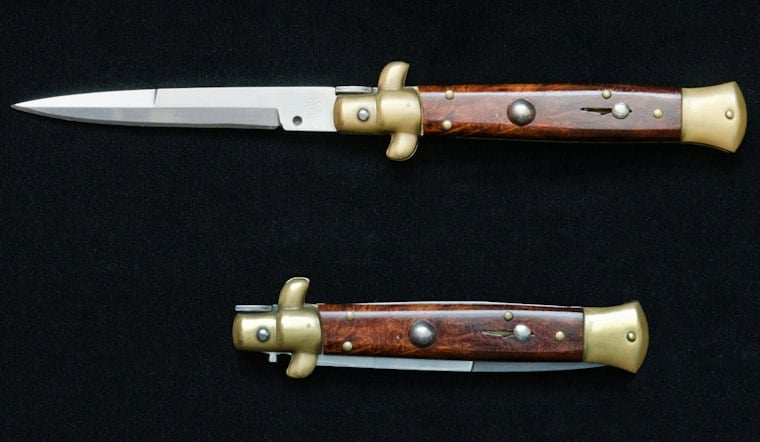
A federal appeals court has struck down the heart of the 1958 Federal Switchblade Act, ruling that the decades-old ban on manufacturing the knives for interstate sale or distribution violates the Second Amendment. The decision, issued late Wednesday by a three-judge panel, hands a major victory to gun- and knife-rights advocates who have spent years challenging weapons laws they argue conflict with the Constitution's text and history.
The ruling came from the 5th U.S. Circuit Court of Appeals, based in New Orleans, and was authored by Judge Jennifer Walker Elrod, joined by Judges Don Willett and Cory Wilson, according to Reason. All three judges were appointed by Republican presidents, as reported by the News Tribune. The panel concluded that switchblade knives are “arms” that have been “in common use” both at the nation's founding and today, per the same Reason report.
Elrod wrote that Congress adopted the switchblade law amid juvenile-delinquency hysteria aimed at keeping spring-release pocketknives away from teenagers, and that the ban conflicted with founding-era regulation of such weapons, the News Tribune reports. She also wrote that knives have been used for self-defense throughout human history, including during the American founding, and that switchblades qualify as arms people may lawfully possess for self-defense under the Second Amendment.
Government Couldn't Find a Historical Match
Under the Supreme Court's 2022 ruling, modern gun restrictions must be consistent with the nation's history and tradition of arms regulation, a standard courts have since had to apply to an expanding range of weapons cases, as explained by Courthouse News. The 5th Circuit held that this framework applies squarely to the bladed weapons covered by the Federal Switchblade Act.
Applying that test, the panel found the government's case lacking. According to Reason, the government cited nearly 200 pre-1900 statutes in its defense of the law, but the court determined that only two of them regulated bladed weapons in a way analogous to the federal ban. The Justice Department, which had defended the switchblade law by arguing it fits within the long tradition of regulating dangerous and unusual weapons, failed to identify a historical statute similar enough to the modern ban, per Elrod's opinion as described by Reason.
Knife Rights Calls It a Win, but Not the Whole Fight
The case reached the appeals court after Knife Rights appealed a trial judge's earlier rejection of its challenge to the law in Texas. Five individuals and two firearms retailers joined the group's appeal, according to the News Tribune. Knife Rights said the ruling affirms that the Second Amendment protects commonly possessed automatically opening knives, not just firearms, per its own statement on Knife Rights' website.
Still, the win has limits. The 5th Circuit upheld dismissal of a separate, facial challenge to Section 1243 of the law, which restricts the manufacture, sale and possession of switchblades in certain federal jurisdictions, including U.S. territories and tribal land, the organization notes. Plaintiffs could not challenge that provision in this case, the News Tribune reports. Knife Rights also cautions that the ruling has not yet been implemented, and that the Department of Justice may seek further review.
The Justice Department did not immediately respond to a request for comment Thursday, according to the News Tribune. The department under President Donald Trump has challenged numerous gun laws it argues violate the Second Amendment, the outlet also reports.
A Different Outcome in California
The ruling stands in contrast to a case out West. In July, the 9th U.S. Circuit Court of Appeals denied Knife Rights' petition for rehearing in its separate challenge to California's switchblade regulations, after a panel affirmed summary judgment in the state's favor on different grounds, according to court records. That panel ruled narrowly that California may constitutionally prohibit the concealed carry of switchblade knives in public.
California law makes it illegal to publicly possess or sell a switchblade, defined as a pocketknife with a blade of two inches or longer that releases automatically, while allowing possession at home, Courthouse News reported in its coverage of the case. The split outcomes underscore how unsettled the legal landscape remains for bladed weapons as courts across the country wrestle with applying the Supreme Court's historical-tradition test circuit by circuit.



