

























































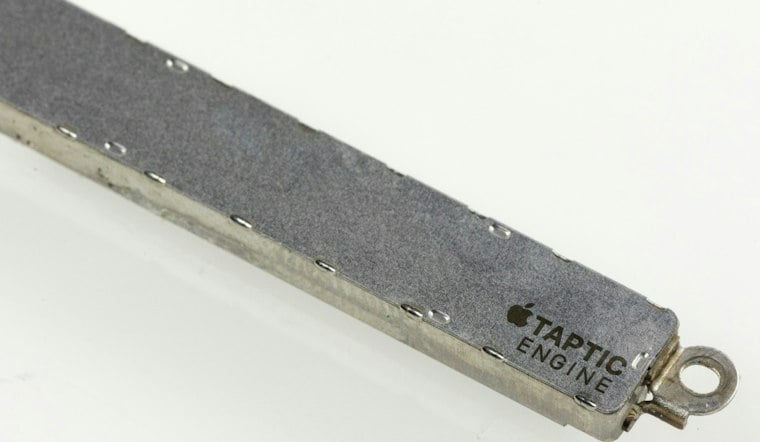
Apple has asked a federal judge in San Diego to throw out a $5.7 billion patent verdict, the largest in U.S. history by more than $3 billion, after a jury found that the Taptic Engine powering vibrations in iPhones and Apple Watches infringed two patents held by haptic-technology company Taction Technology. The company filed a motion for judgment as a matter of law or, alternatively, for a new trial on October 13.
According to Reuters, Apple told the court the verdict was untethered to evidence and that there was insufficient evidence to support the award. The case, Taction Technology, Inc. v. Apple Inc., No. 3:21-cv-00812, is playing out in the U.S. District Court for the Southern District of California, where court filings reviewed by CourtListener show Apple's motion seeking judgment as a matter of law or a new trial.
A Verdict Years in the Making
Taction, based in San Diego, filed the lawsuit against Apple in 2021, arguing the tech giant's tapping-vibration feature built into its devices relied on technology the smaller company had patented for use in headphones and gaming headsets. A jury on September 25 sided with Taction on infringement and invalidity while siding with Apple on willfulness, awarding $5,721,961,750 in damages, according to the CourtListener docket.
Apple actually won the case once before. As detailed by the law firm Wood Phillips, Apple secured summary judgment of noninfringement in 2023, only for the Federal Circuit to vacate that ruling and send the case back for trial on August 13, 2025. That reversal set the stage for the September trial that produced the record-breaking figure.
Apple Pushes Back Hard
In its new filing, Apple called the award “shocking” and “untethered to any evidence at all,” according to Law360. Taction is represented by Lance Yang of Quinn Emanuel Urquhart & Sullivan, while Apple's case has been argued by Roger Denning of Fish & Richardson, per Reuters' reporting. Taction spokespeople and attorneys did not respond to Reuters' request for comment.
Reuters also reported that Judge Todd Robinson told attorneys during proceedings he was unsure whether the figure on the verdict form reflected what the jury actually meant to award — a detail that underscores just how unsettled the final number remains. The verdict is not final because the court has not yet entered judgment, and Apple retains the option to pursue further post-trial relief and, potentially, an appeal, Wood Phillips noted.
History Isn't on Taction's Side
Even if the award stands as written, Taction may struggle to actually collect on it. Law360's analysis found that it may face an uphill battle to collect, since nearly every previous patent judgment over $1 billion was later reduced or overturned. Several other U.S. patent verdicts worth more than $1 billion have been overturned or reduced in the past, a pattern that stretches back more than a decade.
Some patent verdicts over $1 billion have later been reduced or overturned. Patent awards can be large even when an invention covers only a small part of a complex device, and courts are increasingly scrutinizing the damages theories presented to juries in high-stakes cases.
The Billion-Dollar Graveyard
The Taction verdict is more than double the $2.18 billion VLSI verdict against Intel in 2021, according to Wood Phillips. That case didn't hold up either: the law firm Steptoe detailed how the Federal Circuit agreed with Intel and vacated $1.5 billion of the jury verdict after finding flaws in the damages expert's methodology.
Other mega-verdicts tell a similar story. A 2020 jury ordered Apple to pay Caltech $838 million and chip supplier Broadcom $270 million over Wi-Fi technology, but Bloomberg Law reported the Federal Circuit later ordered a new damages trial. The same report noted that the Federal Circuit wiped out a Gilead Sciences award that had grown to $1.2 billion after enhanced damages, ruling that the underlying patent was invalid. Intel has said it will appeal its $2.18 billion loss. Steptoe also pointed to Carnegie Mellon v. Marvell, where the Federal Circuit vacated part of a damages award and an ongoing royalty back in 2015 because the royalty base improperly included chips never made, used, or imported into the United States.
For now, the fight over Apple's Taptic Engine remains squarely in Judge Robinson's courtroom in San Diego, with no indication yet of how or when he will rule on Apple's motion.




