

























































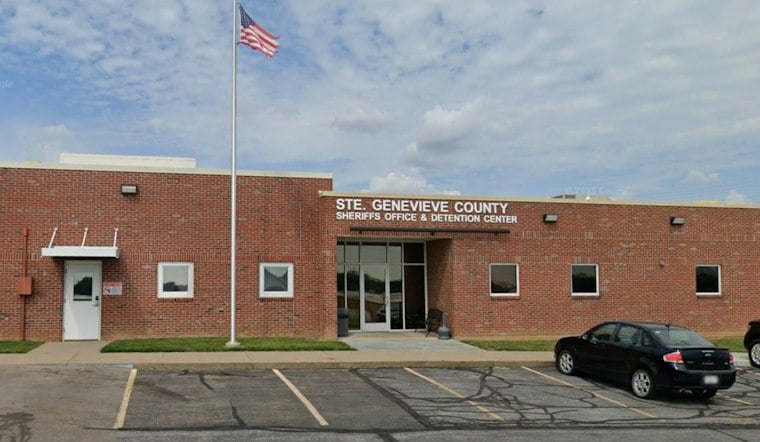
The Archdiocese of St. Louis filed a federal lawsuit Monday accusing officials at the Ste. Genevieve County Detention Center of blocking priests from hearing confessions, celebrating Mass, or delivering Communion to Catholic detainees held there under a contract with Immigration and Customs Enforcement. The suit says clergy are allowed into the jail for just one four-hour window each Monday, and even then can only speak with detainees through a glass partition using telephone handsets.
Filed in the U.S. District Court for the Eastern District of Missouri, the complaint names Archbishop Mitchell T. Rozanski and Father Chris Schroeder as plaintiffs, according to the St. Louis Review. The lawsuit details the specific restrictions being challenged and names local sheriff officials, the Department of Homeland Security, and ICE leadership as defendants. Those named include Sheriff Gary Stolzer, Major Jason Schott, and Lieutenant Andrew Johnson, who were served personally at the detention center, while Secretary Markwayne Mullin was served through the Department of Homeland Security, and Acting Director David J. Venturella and Associate Director Jennifer M. Fenton were served through ICE, as reported by First Alert 4.
Alongside the complaint, the Archdiocese also filed a motion for a preliminary injunction asking the court to immediately order the facility to stop its restrictive visitation policies while the broader case moves forward, the St. Louis Review reports. That request seeks interim relief rather than waiting for a full trial on the merits.
Why Telephone Confessions Are a Nonstarter for the Church
At the heart of the dispute is Catholic Canon Law, which strictly prohibits hearing confessions over telephone handsets or any electronic device and forbids using non-private jail phone lines that could breach the seal of confession, according to KSL. Violating the sacramental seal is considered an “excommunicable offense” under Catholic doctrine, the outlet notes. That canonical bar means the jail's glass-and-handset setup isn't simply inconvenient for visiting clergy — it makes administering the sacrament of reconciliation canonically impossible, regardless of how often priests are let in.
Archbishop Rozanski has said the majority of the roughly 150 civil immigration detainees held at the facility are Hispanic Catholics, per Reuters as cited by the same KSL report. Civil immigration detainees are held while awaiting deportation proceedings or administrative immigration hearings, which the lawsuit's backers say makes the restrictions especially burdensome for this population.
A Jail With a Troubled Recent History
The Ste. Genevieve County Detention Center began housing civil immigration detainees for ICE in mid-2025 under an Intergovernmental Service Agreement, per the St. Louis Review. ICE inspects the jail, and published ICE policy says clergy may visit detainees at any time as long as they notify the local sheriff's office in advance — but the Archdiocese's lawsuit claims ICE has failed to enforce that standard at this particular facility.
The jail has faced scrutiny before. On October 4, 2025, 34-year-old ICE detainee Leo Cruz Silva died by suicide inside the facility, prompting investigations by the Missouri State Highway Patrol and federal oversight agencies. Hoodline previously reported that ICE did not release its required death report until 125 days after the incident. Local lawmakers toured the jail in May 2026 to check conditions, and family members have separately raised concerns about conditions at the facility, according to First Alert 4.
A Regional Precedent and a National Church Priority
The St. Louis case echoes a fight near Chicago, where pastoral-care ministers can now visit the Broadview ICE facility, according to Chicago Catholic. An agreement allows daily pastoral visits at Broadview.
The U.S. Conference of Catholic Bishops has issued a statement about pastoral care for immigration detainees.
The lawsuit claims violations of the Religious Land Use and Institutionalized Persons Act, the Free Exercise Clause of the First Amendment, the federal Religious Freedom Restoration Act, and the Missouri Religious Freedom Restoration Act. The Archdiocese has said it believes the judicial system will vindicate the right to religious freedom for Catholics and all faithful people who are imprisoned, while the Church has noted that lawyers and consular officials are already permitted to visit detainees under more permissive circumstances than clergy currently face.




