

























































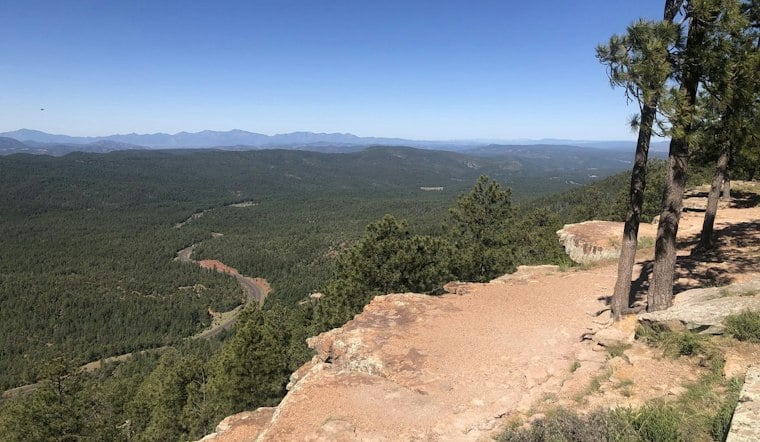
Little Green Valley Fen’s restoration was completed in April 2026, but the accounts cited here do not provide post-restoration measurements showing how the wetland’s water levels or flows have changed. The project is an upstream watershed intervention, not a documented new source of drinking water for Phoenix.
The distinction matters because Marcus Selig of the National Forest Foundation estimated that the work could return about 435 million liters of water annually to a more natural system, according to ABC15 Arizona. That is an estimate of a watershed benefit—not a measured amount delivered to Valley customers. The available accounts do not establish how much water the restored site will retain or how that might affect downstream supply.
A local repair with downstream connections
The $1.2 million project addressed erosion at the groundwater-fed fen in the Tonto National Forest near Payson. A channel had concentrated water that previously spread across the wet meadow, threatening the conditions that keep it saturated year-round. Historical road construction and peat extraction contributed to the damage, ABC15 reported.
Partners used a stage-zero, process-based approach: reshaping the landscape’s gradient and reconnecting the meadow with its floodplain so water can spread across the area and infiltrate the ground, according to the National Forest Foundation. The work covered about 70 acres, including roughly 45 acres of wetland, ABC15 reported.
The fen drains into the Tonto Creek watershed, then Roosevelt Lake and the Salt River system, which serves communities across the Valley, ABC15 reported. That connection explains the project’s regional relevance, but it does not quantify the fen’s contribution. The Salt River Project says the system that includes Roosevelt Dam delivers more than half of the Valley’s yearly water supply; that system-wide figure is not a measure of water produced by this restoration.
What restoration research can—and cannot—show
A U.S. Forest Service synthesis of wet-meadow research in the Sierra Nevada and southern Cascades reported site-specific gains in some functions, including water quality and water quantity. It also noted that broader reviews of restoration often did not demonstrate anticipated benefits. Those findings offer context for evaluating restoration, but they are not results from Little Green Valley. The Forest Service synthesis does not establish what this Arizona project will achieve.
Regional groundwater pressure is another reason to distinguish broad context from local evidence. KUNR reported in 2025 that a study using two decades of NASA satellite data found substantial groundwater loss across the Southwest. That regional finding does not describe groundwater conditions at the fen. The U.S. Geological Survey’s monitoring-network page says Arizona’s Department of Water Resources tracks groundwater levels at more than 1,450 well sites statewide, but those records do not provide post-restoration measurements for Little Green Valley.
The Tonto National Forest’s management plan says the forest produces an average of 350,000 acre-feet of water each year. That forest-wide estimate, like SRP’s Valley-wide delivery figure, cannot be used to calculate the fen project’s effect. The plan provides scale for the larger watershed, not a site-specific result.
For now, the documented case for Little Green Valley rests on restoring a damaged wetland’s natural water movement and its connection to the floodplain. Whether that work produces the projected watershed benefits remains an open question; the cited project accounts do not report measurements that answer it.





