

























































A 73-year-old man from Springdale, Arkansas is dead after the ultralight aircraft he was piloting went down near a pond in the front yard of a rural Pettis County residence Saturday evening, October 3, with his spouse nearby when the crash occurred. Bystanders pulled him from the wreckage and began CPR before first responders arrived, but he was ultimately pronounced deceased at the scene.
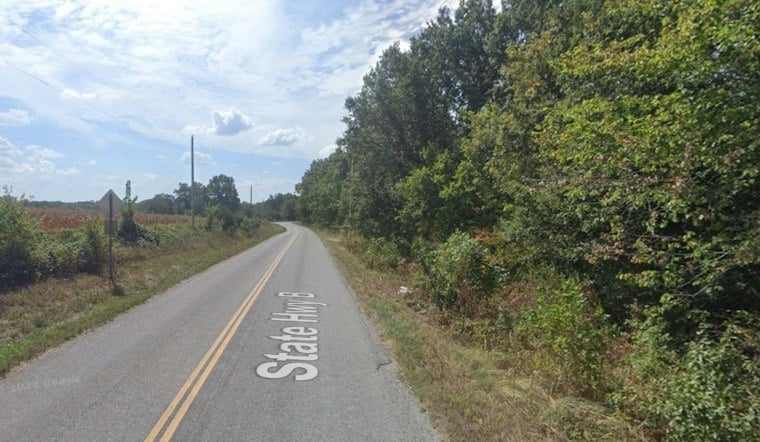
The crash happened along the 10000 block of Route B near Windsor, in a stretch of rural Pettis County close to the Henry County border, according to KMMO. Emergency crews were dispatched around 6:01 p.m. on Saturday, October 3, drawing a multi-agency response that included Windsor Fire, the Henry County Sheriff's Office, the Pettis County Ambulance District, Missouri State Highway Patrol troopers, and local deputies. As reported by ABC 17 News, Pettis County Sheriff Brad Anders shared details of the response on social media, noting that deputies, state troopers, Pettis County Fire, and other agencies all converged on the 10000 block of State Highway B.
Per the Sedalia Democrat, the pilot was identified as a 73-year-old resident of Springdale, located roughly 200 miles southwest of Pettis County in northwest Arkansas. Officials have since contacted the man's spouse and immediate family. Bystanders at the scene had already pulled him from the wreckage and started CPR in the moments before emergency crews took over.
Investigators Notify Federal Aviation Authorities
ABC 17 News reports that the Missouri State Highway Patrol took the initial report and, following standard protocol, contacted both the Federal Aviation Administration and the National Transportation Safety Board. Federal law under 49 CFR § 831.2 gives the NTSB primary statutory authority to investigate civil aviation accidents nationwide and determine probable cause, with the board typically coordinating alongside local FAA inspectors and state police during field investigations.
That federal involvement looks different for ultralight aircraft than it would for a certified plane. Under 14 CFR Part 103, single-seat ultralight operators are not required to hold a pilot's license or a medical certificate, a regulatory framework that places the burden of personal safety squarely on the individual flying. Powered ultralights covered by Part 103 are also capped at a maximum empty weight of 254 pounds, a fuel capacity of 5 U.S. gallons, and a top level-flight speed of 55 knots, or about 63 mph, under federal rules.
No Mandatory Inspections for Ultralight Craft
Because they fall under Part 103, ultralights like the one involved in Saturday's crash are exempt from FAA airworthiness certification and mandatory federal maintenance inspections, according to FAA Advisory Circular AC 103-7. That leaves pilot-operators solely responsible for evaluating their aircraft's airworthiness and performing preflight checks before every flight, a tradeoff baked into the rules governing this category of flying.
The crash occurred at a rural site near Windsor.
Pettis County is where the crash occurred.





