

























































U.S. Army soldiers stationed in Europe are preparing for a scenario commanders call Ukraine's worst day: a 24-hour window in which more than 1,500 potential targets need to be tracked and struck, and as many as 1,200 incoming missiles and drones need to be stopped. To keep pace with that volume, the Army is looking at artificial intelligence to help human analysts process the flood of sensor and network data before it overwhelms them.
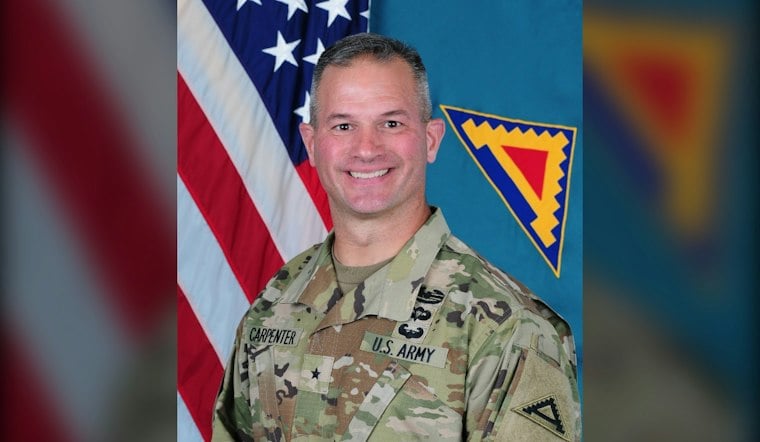
Brig. Gen. Steven P. Carpenter, who leads Multi-Domain Command Europe, has framed the problem bluntly. “Our challenge is processing and prioritizing that data, so the right shooter gets the right target at the right time,” he said, according to War on the Rocks. He has also said AI is meant to assist analysts rather than replace them, freeing them to focus on difficult targets such as dual-use facilities that require more scrutiny, per Business Insider.
Those target and threat estimates reflect what U.S. forces think Ukraine's worst day could look like, Carpenter has said, a benchmark shaped by the intensity of Russia's ongoing bombardment campaign, which has involved frequent, heavy drone and missile attacks mixing ballistic missiles, cruise missiles and one-way attack drones, per Business Insider.
A Real-World Spike in Jet-Powered Drone Attacks
The threat isn't hypothetical. Russia fired its new rapid, jet-powered drones against Ukraine every day throughout August, the first time daily use of the upgraded models showed up in Ukrainian Air Force data, according to the BBC. Ukraine's military said jet-powered drone attacks grew from 350 in June to 1,600 in July and 2,800 in August, the outlet reported.
Those upgraded drones can cruise at more than 300 mph, significantly faster than older models and well beyond the top speed of Kyiv's interceptors, the BBC reported. Russia is also striking Ukraine with complex attacks involving hundreds of drones and missiles about once a week, according to the same report — a pace that illustrates why U.S. and NATO planners are rehearsing for saturation-level threats rather than isolated strikes.
Testing the Numbers at Dynamic Front
At the February Dynamic Front exercise, commanders said forces in a large-scale European combat scenario must be able to track and strike 1,500 targets in a 24-hour period, according to Stars and Stripes. Allied forces must also be prepared to intercept between 600 and 1,200 ballistic missiles, cruise missiles and one-way attack drones every day, the outlet reported. Col. Jeff Pickler said handling that volume in large-scale combat “will require taking advantage of automation and artificial intelligence technology,” per Stars and Stripes.
Defense One reported that the Germany-based 56th Multi-Domain Command's goal during that same Dynamic Front exercise was to shoot down 600 to 1,200 ballistic missiles in a 24-hour period while also firing on 1,500 targets in that same window, according to Defense One. The outlet also reported that the Army is looking at acquiring fleets of decoy drones to misdirect enemy fires, along with more high-altitude drones capable of detecting electronic-warfare systems. Dynamic Front is expected to merge next year with the Arcane Thunder exercise to simulate electronic-warfare jamming alongside lethal munitions, Defense One reported.
A Homegrown System, Still in Beta
During a joint U.S. Army and NATO exercise in Europe this year, a homegrown AI system was used to consume and sort data, and it remained in beta testing at the time, according to Business Insider. Army officials said they aimed to test the system on a larger scale at a future exercise. The outlet reported that soldiers could use AI to analyze battlefield data and targets against a commander's objectives and other parameters, with the system able to assess available military capabilities and recommend responses — including conventional weapons strikes, electronic warfare and cyber operations.
Army officials said AI can help soldiers process large amounts of sensor and network data to deliver potential responses in combat, and that the technology can recognize patterns humans might forget or miss, per Business Insider. U.S. personnel are using new AI tools to reshape institutional processes and workflows, the outlet reported, with AI integration spanning autonomous drone and weapon features, targeting support, and agentic data-sorting systems. The Army is also incorporating AI into Next Generation Command and Control, its new warfighting system, which uses AI and machine learning to deliver real-time data on targeting, capabilities, ammunition, maintenance, intelligence and simulated enemy attacks, according to Business Insider.
Keeping a Human in the Loop
Carpenter has said AI is useful for tasks requiring speed and scale, but that humans should remain involved throughout the process. “AI is currently capable of processing large volumes of raw data. However, the challenge lies in creating adequate workflows to ensure the warfighter still validates the targeting data,” he told War on the Rocks. He has also said humans make the final decision on whether to prosecute a valid target under the law of armed conflict, according to Business Insider. Army leaders and soldiers discussed using AI to process battlefield data and support decisions while retaining human involvement at the Association of the United States Army convention in Washington, D.C., last month, per Business Insider.
NATO is pursuing a similar philosophy through its Next Generation Targeting experiment, tested during DiBaX26, where operators from SHAPE, NATO Joint Force Commands and 11 Allies take part in a live and simulated targeting scenario involving more than 6,000 simulated targets and over 100 live targets, according to NATO Allied Command Transformation. NATO says the decision to engage is always made by a person, and the effort aims to reduce the time between receiving information and making decisions by more than half. The alliance notes that forces draw on information from drones, satellites and ground sensors, but that delays moving information between systems can impede decisions amid drone swarms, missile salvos and electronic interference. The experiment is also testing whether NATO and national command-and-control systems can exchange target information across tactical, operational and strategic levels, and is developing a common data model rather than building an entirely new NATO system, according to the alliance.





