

























































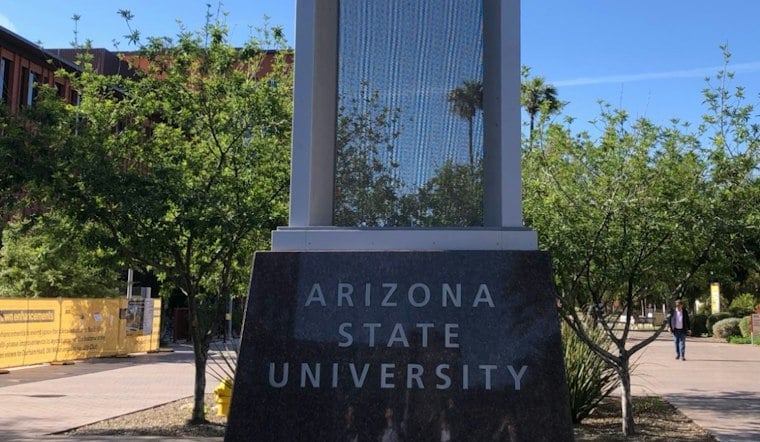
Arizona State University is teaming up with Purdue University and the University of Tennessee, Knoxville to tackle a shortage of nuclear-literate engineers, forming what the schools call the New Nuclear Academic Consortium. The partnership pairs ASU's massive engineering enrollment with Purdue reactor access and Tennessee's nuclear degree programs, resources the Tempe campus doesn't have on its own, as power companies, data centers and the federal government push for a rapid buildout of nuclear capacity.
The consortium aims to expand nuclear engineering education opportunities and help close that workforce gap, according to KJZZ. Kyle Squires, dean of ASU's Ira A. Fulton School of Engineering, said power companies, data centers and the federal government are all demanding large-scale and small modular nuclear reactor development, and that workforce capacity will become the bottleneck once demand, capital investment and policy line up, per the station's report. The urgency traces back to policy shifts under President Donald Trump, who signed executive orders aimed at quadrupling U.S. nuclear capacity over the next 25 years, the same KJZZ report states.
Since the start of Trump's second term, the federal government has also made test reactors easier to build and shortened timelines for considering new nuclear power plant license applications, according to the station's reporting. Those changes are colliding with what Arizona State University describes as a severe shortage of nuclear-literate engineers, managers and policymakers, driven in part by a workforce approaching retirement and remote project sites that demand broader systems, grid, supply-chain and safety expertise.
Borrowing What ASU Doesn't Have
Purdue already runs a nuclear engineering program and educational reactor, while the University of Tennessee, Knoxville has a nuclear engineering program, giving the consortium technical depth ASU doesn't currently possess in-house, per the same KJZZ account. Squires framed the arrangement as complementary: Purdue brings its nuclear engineering program and reactor, while Tennessee brings its nuclear engineering program, and ASU offers greater scale and reach, the station reports. ASU holds the nation's largest engineering school by enrollment and course offerings, and its Fulton School graduates thousands of mechanical, chemical and electrical engineers every year, according to KJZZ.
The consortium will allow ASU to draw on nuclear engineering resources and expertise from Purdue and Tennessee as it helps design micro-certifications in the field, per that same reporting. Those credentials are intended to equip mechanical, civil, electrical, materials and systems engineering students with nuclear fluency, according to Arizona State University's own announcement. Squires said the micro-certifications will give students nuclear engineering fluency and make them credible and employable across related industries, per KJZZ's account.
A Disputed Number and a Disputed Baseline
Exactly how many credentials ASU will roll out first is unresolved. KJZZ reports that ASU will offer two nuclear engineering certifications initially, while Arizona State University's own announcement describes a suite of three to five undergraduate micro-certificates launching this year. Neither account was reconciled against the other, and both are presented here as reported by their respective sources.
There's a similar wrinkle over ASU's existing footprint in the field. KJZZ reports that ASU has no nuclear engineering program, even as an ASU Nuclear Engineering Certificate checksheet for the 2026-2027 academic year lists an 18-credit-hour certificate through the Ira A. Fulton Schools of Engineering that includes a mentored capstone focused on nuclear power, according to ASU's degree records. That distinction between a standalone nuclear engineering degree program and a certificate offering wasn't independently resolved in available reporting.
Virtual Reactors Without the Radiation
A central piece of the partnership involves Purdue's PUR-1, the nation's first and only Nuclear Regulatory Commission facility licensed for a fully digital safety and control system, according to ASU's announcement. Purdue's fully digital reactor allows students to run nuclear experiments with no radiological risk, per KJZZ's reporting, and Purdue and ASU are now working on a project to improve virtual modeling within that system. ASU students would access Purdue's reactor remotely through ASU's Decision Theater or its Dreamscape Learn virtual reality program, the station reports.
ASU's announcement describes the same effort as a Purdue-ASU project to build high-fidelity, interactive digital twins of PUR-1, extending access to the reactor without requiring students to travel to Purdue's West Lafayette campus. The University of Tennessee, meanwhile, contributes standalone bachelor's, master's and PhD nuclear programs along with research integration into Oak Ridge National Laboratory, according to ASU's announcement. More than 150 nuclear-related companies sit within 50 miles of Knoxville, the university noted, underscoring the industry density surrounding Tennessee's program.
Room to Grow
The consortium plans to invite additional research universities to join within six to 12 months of launch, according to ANS Nuclear Newswire. ASU will consider bringing other schools into the partnership down the line as well, per KJZZ's reporting. Small modular reactors and microreactors are emerging industry-wide to meet demand for safer, more scalable nuclear technology, according to Purdue University, which also notes that Purdue contributes PUR-1 while Tennessee brings its standalone degree programs and Oak Ridge ties to the table.
The push for nuclear-trained workers extends beyond this one consortium. The U.S. Department of Energy's Nuclear Reactor Safety Training and Workforce Development Program is meant to ensure the nuclear fleet has a trained, dedicated workforce, create or expand industry-recognized safety credentials, and establish consortia addressing gaps between training needs and the current workforce, according to the U.S. Department of Energy. Separately, contractor Amentum is putting $500,000 into a nuclear scholars program over five years and plans to start its first U.S. student cohort in late 2026, according to EnergyTech.





