

























































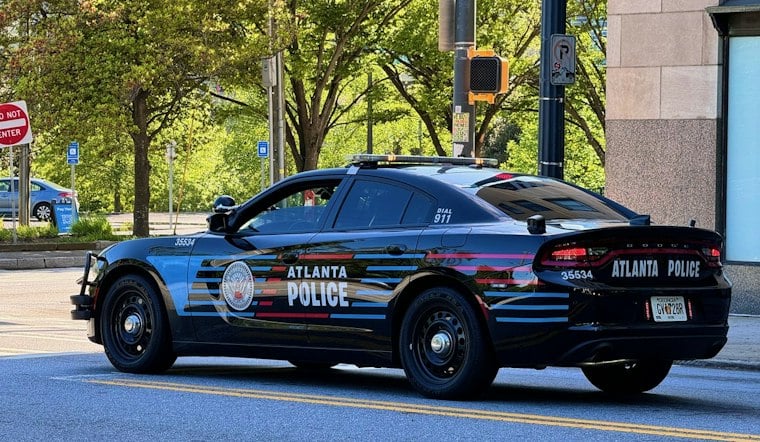
Atlanta's City Auditor's Office has found that the police department needs stricter controls to strengthen how it handles asset forfeiture, the seizure of property such as drugs, cash, guns, jewelry, electronics and vehicles connected to law enforcement operations. The office's review concluded that city policies need adjustment around recording seizures, logging items and tracking property taken by officers, and it issued eight recommendations aimed at tightening the process.
According to WSB-TV, the auditor's report found that body-worn camera procedures do not require officers to visually document each seized item for chain-of-custody purposes. The report also found that reconciliation processes do not ensure all items logged into the FileOnQ system actually reach the department's Property Control Unit, which is otherwise supposed to maintain custody of received property in compliance with inventory control procedures.
The audit additionally found that police lack easily retrievable records showing how much time officers spend working federal forfeiture cases, and that required reports are not kept in a way that's easy to retrieve once deadlines pass — with some of those reports containing inaccuracies. The report further found that interest income on federal proceeds from 2023 to 2025 was misapplied, though the station's report does not detail the scope of that misapplication.
Eight Fixes, Most Already Underway
The eight recommendations call for procedures to capture and document all high-value property at the moment of seizure, along with daily supervisor review of exception reports to flag outstanding seized items and ensure timely follow-up. Other recommendations push for proactive reporting of Justice and Treasury case contributions to APD's Asset Forfeiture Squad, centralized storage of those reports, and more accurate, complete staff reporting overall.
Additional fixes target compliance with annual-report deadlines for the Prosecuting Attorneys' Council of Georgia and the University of Georgia's Carl Vinson Institute of Government, along with timely filing of annual fiscal-year federal equitable-sharing reports. The remaining recommendations call for written procedures governing how interest income is allocated, recorded and reported between the Justice and Treasury equitable-sharing programs, plus a review of prior interest allocations and coordination with federal partners to resolve issues caused by incorrect allocation.
Per the same report, APD officials agreed with all of the auditor's recommendations, and the department has already begun implementing some of the changes. The audit itself states that all but two of the eight recommendations have been started.
How Forfeiture Works Under Current APD Policy
Atlanta Police Department policy assigns sole responsibility for preparing forfeiture actions at the federal, state and municipal level to the department's Asset Forfeiture Squad, according to the agency's standard operating procedure. During regular business hours, 8 a.m. to 4 p.m., Monday through Friday, the policy requires officers to notify the squad whenever cash of $500 or more is seized or encountered during a search, and it directs the squad to maintain tracking systems for asset-seizure cases involving joint investigations.
Under the policy relayed by WSB-TV, Atlanta police have 30 days from a seizure to request forfeiture of property for departmental use, and seized property must be reported to the district attorney's office within that same 30-day window — though the district attorney retains discretion to accept or decline a case based on its merits and value. Police reports on seized property are supposed to include a description, estimated value, the circumstances of the seizure, involved parties, related charges if any, evidence and the item's holding location.
State law sets minimum thresholds below which property generally cannot be forfeited unless it was used to facilitate a drug offense — for instance, marijuana possession may qualify for seizure above four ounces, while cocaine or another controlled substance may qualify at as little as one gram. Cash and jewelry must be valued at $500 or more to meet other forfeiture criteria, per the station's report.
A Statewide Pattern Behind the Local Findings
Atlanta's findings land against a broader statewide backdrop. Georgia agencies have generated nearly $419 million in federal equitable-sharing proceeds from the Justice and Treasury departments since 2000, and the state has seen at least $556 million in combined state and federal forfeiture revenue over that same period, according to the Institute for Justice. On average from 2019 through 2023, more than 239 Georgia agencies — an estimated 41 percent of all law enforcement agencies statewide — were certified for the federal equitable-sharing program, and four rural counties along Interstate 75 each forfeited at least 19 times as much per resident as the typical Georgia county during that same stretch.
Georgia law also requires annual forfeiture reporting: the Prosecuting Attorneys' Council of Georgia says agencies must submit their report by January 31 for the prior calendar year, and the council is required under state law to create standardized forms for reporting how forfeited assets are distributed and used, per the Prosecuting Attorneys' Council of Georgia.
The Atlanta City Council's Public Safety & Law Administration Committee is scheduled to discuss the auditor's report Tuesday at 1 p.m., alongside separate APD and Atlanta Fire Rescue reports on crime statistics and response times, WSB-TV reported. The city's broader FY27 audit plan had listed the APD asset-forfeiture review as an audit in progress, intended to assess whether appropriate procedures, controls and safeguards are in place to mitigate risks tied to asset-forfeiture activities, according to the City Auditor's Office, which had scheduled a draft for management on the matter for August 24, 2026.





