

























































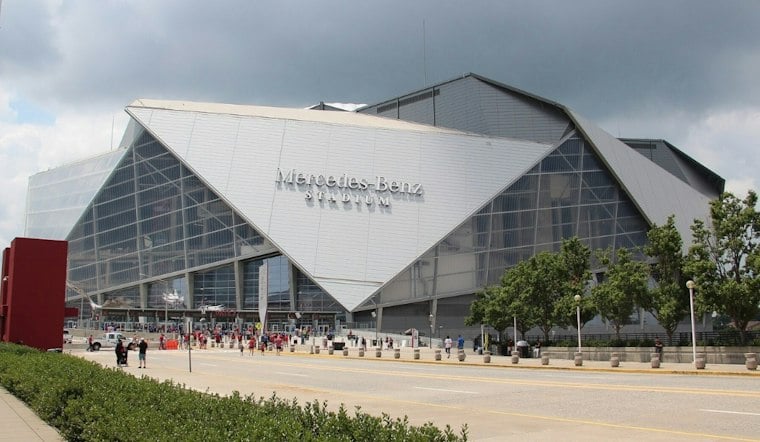
Inside Mercedes-Benz Stadium, almost nothing that comes through the gates ends up in a landfill. The home of the Atlanta Falcons and site of sold-out concerts has quietly built one of the most ambitious waste-reduction operations of any venue in the world, turning leftover food into compost, compost into vegetables, and recycled scraps into a model other stadiums now study.
A First-of-Its-Kind Certification
Mercedes-Benz Stadium became the first stadium in the world to earn TRUE Platinum certification for zero waste, a distinction tied to demonstrating that the building diverts at least 90 percent of its waste from landfills, incineration and the environment, according to Mercedes-Benz Stadium. The stadium is also LEED Platinum certified, as reported by 11Alive. The TRUE program itself requires certified projects to prove that diversion rate over a 12-month stretch while maintaining contamination controls and annual reporting, per true.gbci.org, which notes that certified projects nationwide achieve an average diversion rate of 95 percent.
Dawn Brown, a senior manager focused on sustainability at Mercedes-Benz Stadium, says the philosophy starts long before anything is thrown away. “Everything that comes into the building, we are intentional about how it exits the building,” Brown said, according to 11Alive. Stadium workers recycle or reuse nearly everything that leaves the property, and recycling and composting bins are visible to fans at every event, 11Alive reports.
From Leftovers to a Garden Full of Vegetables
Much of what the stadium throws away doesn't stay waste for long. According to 11Alive, the stadium turns much of its waste into compost, which helps grow food in its own on-site garden. That garden produces roughly 650 pounds of food every year, according to Atlanta Magazine. The same report notes the stadium is also home to three beehives next to that urban garden, with each hive producing about 30 pounds of honey a year.
The waste-sorting work happens in a 6,000-square-foot resource recovery room built specifically to reclaim, sort and divert materials away from landfills, the stadium's sustainability team notes. By August 2022, recycling and compost bins had been added to every suite in the building, part of a broader push that the stadium says has diverted over 90 percent of all waste generated on site away from landfills. Separately, the stadium has donated more than 250,000 pounds of food to Second Helpings Atlanta, creating over 208,000 meals, per the same source.
Keeping Water Out of the Neighborhood
The stadium's environmental reputation extends past the trash bins and into its stormwater systems. Stadium officials have said the facility's stormwater infrastructure demonstrates sustainability efforts extending into the surrounding community, according to 11Alive, which reports the stadium has built two separate stormwater systems designed to help prevent excess runoff from flowing into neighborhoods in southwest Atlanta. Mercedes-Benz Stadium describes a 2.1-million-gallon stormwater management system made up of bioswales, a cistern and an underground vault, per the stadium's own sustainability page — though that page lists the vault's capacity as 1.1 million gallons, while Kimley-Horn, which worked on the project, lists it as a 1.2-million-gallon underground detention vault.
The stadium also points to renewable energy and design features intended to cut electrical use by 29 percent, according to its sustainability page. Brown framed the broader effort as about more than diversion statistics. “Our sustainability elements support coexistence with the environment through resources and habitat creation,” Brown said, per 11Alive's reporting.
How the Numbers Get Reported — and Why They Differ
Not every account of the stadium's waste output lines up exactly. Waste360 reports the stadium generates about 5 million pounds of waste and surplus each year, with 4.6 million pounds of that donated, composted or recycled, according to Waste360. The New York Times, however, reported that the stadium welcomes an average of three million visitors and produces more than four million pounds of waste annually, according to the New York Times. Atlanta Magazine, meanwhile, describes the stadium as consistently diverting more than 92 percent of its waste from landfills, a figure that sits slightly above the 90 percent threshold cited elsewhere.
The stadium's approach has become something of a reference point for other venues. Mercedes-Benz Stadium has created a zero-waste playbook meant for other stadiums to use worldwide, and the team behind it has hosted seminars to help other sports organizations get their own zero-waste efforts off the ground, according to Sportico. Other venues have taken up similar efforts in their own ways: the New York Times reports that Climate Pledge Arena in Seattle diverts more than 90 percent of its waste from landfills; reusable cups at Wimbledon save up to 500,000 plastic items annually. Closer to home, State Farm Arena became the first overall venue to receive platinum-level zero-waste certification, according to the Atlanta Journal-Constitution.
The timing lines up with Atlanta celebrating its inaugural Climate Week this year, placing the stadium's sustainability program under fresh scrutiny as a hometown example of what large venues can do with their waste streams. Whether measured at 90 percent, 92 percent or somewhere in between depending on the source, the throughline across every account is the same: at Mercedes-Benz Stadium, what fans leave behind rarely ends up buried in a landfill.





