

























































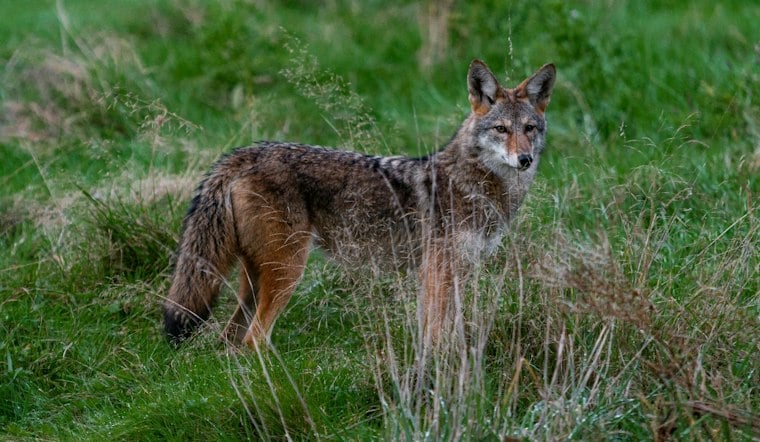
A 16-month-old child was injured during an encounter with a coyote in Atwater Village on Friday, prompting California wildlife officials to euthanize an animal found in the same area that night. The child was treated at a local hospital and released, and officers are now awaiting DNA results to confirm whether the coyote they killed was actually the one responsible.
The California Department of Fish and Wildlife responded to the 3300 block of Glenhurst Avenue, according to CBS News, which reported that officers located a coyote in the same neighborhood on Friday night and euthanized it. Officials have not specified the details of how the child was hurt. DNA samples were collected from both the child and the coyote for laboratory analysis, and that testing will determine whether the animal killed was in fact the one that attacked the toddler — meaning, as of now, it remains unclear whether the right coyote was caught.
A Habituated Coyote Named Wiley Had Worried Neighbors for Months
The uncertainty echoes concerns Atwater Village residents raised months earlier about a coyote they had nicknamed Wiley, which roamed the neighborhood in August and was sometimes seen chasing children, per the same CBS News report. Neighbors grew alarmed enough that they formed a dedicated group chat and started carrying air horns and baseball bats for protection, according to CBS News Los Angeles, which detailed how the animal was routinely seen sitting on front porches and staring at homeowners. Residents suspected someone in the area may have been feeding the coyote, a theory that would help explain why it had lost its natural wariness of people.
CDFW has said that feeding wildlife is illegal, and the agency is urging residents to secure their yards and remove anything that might attract coyotes, from pet food to fallen fruit. That warning lines up with state law: California Code of Regulations Title 14, Section 251.1 explicitly classifies feeding wildlife as illegal harassment, defined as any intentional act that disrupts an animal's natural behavioral patterns, according to a coyote management plan published by the City of Brea.
Why Wildlife Officers Can't Just Relocate a Problem Coyote
State regulations also explain why officers didn't simply trap and move the animal elsewhere. Under California Code of Regulations Title 14, Section 465.5, it is illegal to relocate trapped wild coyotes to other areas — they must either be released on-site or euthanized, per guidance from the City of Burbank. State wildlife policy notes that relocated coyotes often try to return to their original territory or end up killed navigating unfamiliar ground, which leaves euthanasia as the practical option once an animal is deemed a direct threat.
DNA testing has become a standard part of confirming these cases. In April, CDFW officers euthanized a coyote in Carson after DNA testing confirmed the animal had attacked a 4-year-old child in March and another child in February, according to SFGATE. During that investigation, officers also collected DNA from an adult victim bitten in nearby Gardena to figure out whether a single coyote was behind multiple attacks across the region — the same forensic approach now underway in Atwater Village.
Regional Pattern of Bolder Coyote Behavior
State wildlife officials note that human-coyote conflicts and aggressive encounters typically rise during coyote pupping season, which spans from spring through fall, as adult coyotes hunt more actively to feed their litters, SFGATE reported. The Atwater Village case also arrives amid a broader pattern of bold daytime coyote activity across Los Angeles. In July, West Los Angeles residents reported a surge in coyote pack activity, with home security cameras capturing coyotes attacking pets in broad daylight, according to CBS News. That same month, neighboring Glendale officials urged residents to report aggressive wildlife emergencies to 911 after coyote packs were seen roaming city streets near open mountain corridors, as Hoodline previously reported.
Researchers say the density of urban coyotes helps explain why these encounters keep piling up. A 2026 University of Washington study found that coyote density in major metropolitan areas can run up to nine times higher than in rural wilderness, largely because cities offer abundant food sources and no larger predators to keep populations in check, Hoodline reported in September. Atwater Village's location along the Los Angeles River corridor, where green space and urban development sit close together, fits that pattern of habitat overlap that has driven coyote sightings across the region this year.
Landowners who experience verified coyote property damage or safety threats can apply for depredation permits through CDFW's Wildlife Incident Reporting system to request targeted, lethal removal, according to a coyote management policy summary. For now, the central question in Atwater Village remains unresolved: officials have not confirmed whether the coyote euthanized Friday night was Wiley, the animal neighbors had been bracing against for months, or a different coyote entirely. That answer awaits the results of the DNA analysis comparing samples from the child and the euthanized animal.





