

























































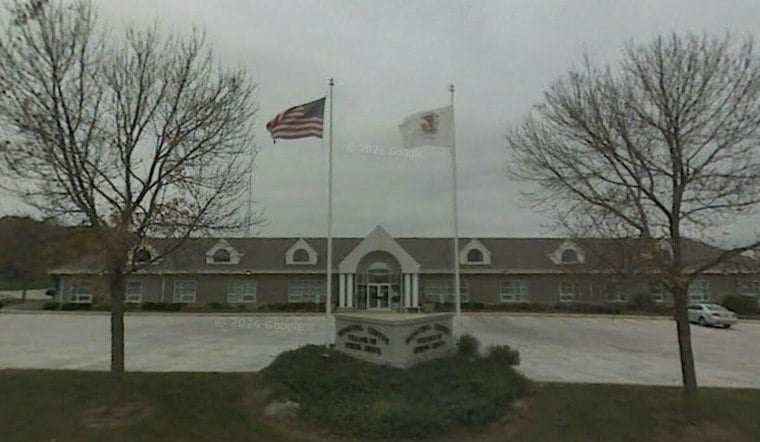
Associate Judge Cynthia Lamb ordered Austin R. Rogers held in custody as his McHenry County case proceeds, granting prosecutors’ request for pretrial detention, the Lake and McHenry County Scanner reported. At Wednesday’s initial hearing, Assistant State’s Attorney Henry Sugden argued Rogers posed a threat to others and that release conditions would not adequately address it. Rogers was appointed a public defender and was scheduled to return Thursday to set a date for a preliminary hearing.
As general Illinois legal context, the Office of the State Appellate Defender says a detention order must explain why less restrictive conditions would not avoid a real and present threat to safety. That statewide requirement does not independently establish the judge’s findings or reasoning in Rogers’ case.
What the complaint alleges—and what the forensic claims mean
The Scanner’s account of the complaint places the alleged incident in McHenry at about 1:56 a.m. on July 15. It accuses Rogers, 41, of Spring Grove, of sexual contact with a 15-year-old girl and alleges he threatened harm to her family if she disclosed what happened. The complaint reportedly describes bruising investigators associated with a bite and testing that detected saliva and DNA on the suspected bite-mark evidence. These are allegations and reported investigative claims; the account does not establish what a court will ultimately find.
The National Institute of Standards and Technology found in a draft scientific review that forensic bitemark analysis lacked sufficient scientific foundation. That review concerns comparing marks on skin with a suspected biter’s dental patterns; it does not determine what saliva or DNA testing establishes in Rogers’ case.
Rogers was arrested by Spring Grove police on a warrant Tuesday afternoon and taken to the McHenry County Jail, according to the Scanner. He faces one count each of aggravated criminal sexual abuse, a Class 2 felony; intimidation, a Class 3 felony; and battery, a Class A misdemeanor. The reported charges are not findings of guilt.
How child-advocacy teams fit into the broader process
The McHenry County Children’s Advocacy Center says its multidisciplinary teams can include prosecutors, law enforcement, DCFS investigators, forensic interviewers, victim advocates, medical professionals and mental-health therapists. The Northeast Regional Children’s Advocacy Center says forensic interviews are coordinated with such teams to avoid duplicative interviews and minimize trauma. These descriptions explain general practices; they do not establish which services or procedures were used in Rogers’ case.



