

























































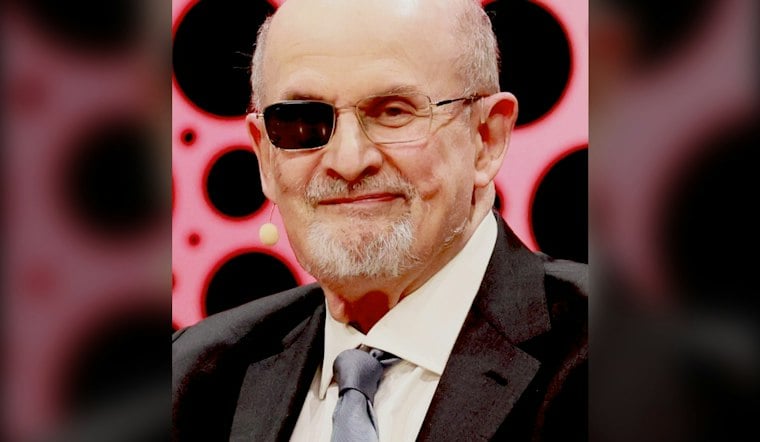
A documentary chronicling the 2022 stabbing attack on author Salman Rushdie and his long physical recovery is coming to Austin, with a screening listed for Friday, November 20, at 7:30 p.m. The film, titled Knife: The Attempted Murder of Salman Rushdie, is directed by Alex Gibney and draws on Rushdie's own memoir and previously unseen footage shot by his wife in the aftermath of the attack.
According to CultureMap Austin, the screening is presented by the State Theatre alongside Torch Literary Arts and the Texas Book Festival. The documentary is directed by Gibney, a filmmaker whose credits are described on the movie's own site, knifethefilm.com, which calls it “Alex Gibney's documentary.”
Rushdie was attacked on a stage in Chautauqua by a young man wielding a knife, according to the original reporting. He had traveled there to speak about the United States as a sanctuary for exiled writers and artists. The attack came decades after Ayatollah Khomeini issued a fatwa calling for Rushdie's death over the publication of The Satanic Verses in the late 1980s.
A Recovery Captured From the Inside
The film traces Rushdie's physical and spiritual recovery following the attack, which left him blind in one eye and with reduced use of one hand, per the facts behind the original reporting. Those same injuries are described on the film's own site, which notes the documentary follows Rushdie's journey “from losing an eye to the reduced use of one hand,” according to knifethefilm.com.
Much of that recovery is shown through footage shot by Rushdie's wife, Rachel Eliza Griffiths, who filmed him in the days and weeks after the attack. As reported by barbican.org.uk, the film includes never-before-seen footage shot by Rushdie's wife. Griffiths is credited with two roles on the project, serving as both cinematographer and executive producer, according to theguardian.com.
The Guardian's reporting also notes that the filmmakers draw heavily on Rushdie's writing itself, using enormous portions of his memoir, Knife: Meditations After an Attempted Murder, as narration for the film. Barbican's event listing describes the documentary as being inspired by that same bestselling memoir.
Blending Fact and Imagined Dialogue
The documentary does not rely solely on archival footage and interviews. It also blends reportage with fictionalized dialogue to explore the mindset of the attacker, according to knifethefilm.com. Sundance's writeup describes the film as using previously unseen footage captured by Rushdie's wife to present an intimate account of survival, calling it an unflinching portrait, as noted by sundance.org.
Variety's early coverage of the project described a structure that moves between Griffiths' raw, intimate footage, movie clips, excerpts from Rushdie's books, new interviews, and archival images, according to variety.com. Vanity Fair's reporting adds that the structure is deliberately nonlinear, moving backwards and forwards in time rather than following the attack in strict chronological order, per vanityfair.com. Andy Grieve edited the film and Will Bates composed its score, according to knifethefilm.com.
Hope Alongside the Horror
Despite its unflinching subject matter, the film is framed around recovery and the future rather than the violence alone. Barbican's listing describes it as a deeply intimate account of Rushdie's remarkable recovery and optimism for the future, rather than a film centered purely on the trauma itself.
Details of the Austin screening, including the venue's exact ticketing information, were included in the original CultureMap Austin event listing. Organizers noted the event is subject to change due to weather or other concerns, according to that same report.





