

























































Thousands of families are expected to descend on UCSF's Mission Bay campus Saturday for the 13th annual Bay Area Science Festival, a free celebration packed with robot zoos, air rockets, live leopard sharks and STEM magic shows. The catch: it runs the same hours as Game 1 of the WNBA Finals just one block away at Chase Center, where parking will be tight in some places.
The festival runs from 11 a.m. to 4 p.m. Saturday at Koret Quad on the UCSF Mission Bay campus, with free admission and 125 events, demonstrations and attractions, according to The Mercury News. Billed as the largest free science celebration in Northern California, the event is open to the public with a particular focus on families and kids. Co-founder Katherine Nielsen told the outlet it ranks among the largest science festivals in the country, bringing people from across the Bay Area to showcase their science alongside UCSF's own research.
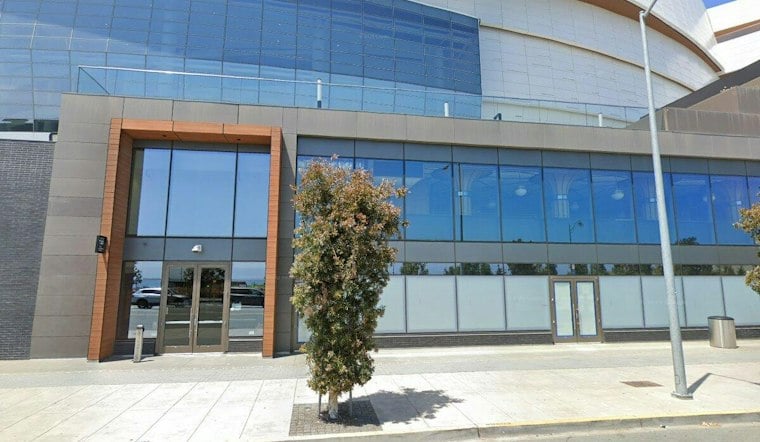
Timing is the wrinkle this year. The Golden State Valkyries host the Atlanta Dream at 12:30 p.m. Saturday in Game 1 of the WNBA Finals at Chase Center, located just one block from the UCSF Mission Bay campus where the festival unfolds, according to Chase Center. Both venues sit along the same Third Street transit corridor and are urging visitors to leave their cars behind.
Getting There Without a Car
Nielsen said UCSF garages will be reserved for festival-goers, per the Mercury News report, which also says parking will be tight in some places. The Mercury News report notes the festival previously timed its old stadium finale for November specifically to dodge potential Giants playoff games, a scheduling headache that has resurfaced in a different form with this year's Valkyries matchup.
Public transit routes serving the campus include the T-Third Street line, 22-Fillmore, 15-Bayview Express and 55-Dogpatch. The T-Third stops directly at the UCSF/Chase Center station on Third Street, according to SFMTA. That T-Third line was extended through the Central Subway project, linking Mission Bay directly to Downtown San Francisco and Chinatown.
From Stadium Spectacle to Campus Expo
The festival's move to an active research campus marks a real shift from its earlier stadium-scale days. In 2018, more than 40,000 people were expected across Discovery Days in Santa Rosa, Concord and at AT&T Park on separate dates, according to Tri-City Voice.
By comparison, last year's campus-based gathering at UCSF Mission Bay drew roughly 10,000 people, per the Mercury News account. Nielsen said holding the festival on campus is more cost-effective than renting an entire baseball stadium, and that the Mission Bay setting lets attendees visit a place where science happens every day, with access to more stages and lab tours than a stadium could offer. She added that last year's relocated festival received very positive feedback.
Decades of Science Outreach Behind the Scenes
The festival was founded in 2011 and is led by UCSF's Science & Health Education Partnership, per research published through ERIC. It is organized by UCSF's Science & Health Education Partnership, a program co-founded in 1987 by UCSF biochemist Bruce Alberts, who later became president of the National Academy of Sciences, to pair UCSF researchers directly with San Francisco public school classrooms, according to the partnership's own history published by UCSF Science & Health Education Partnership.
The pandemic forced the festival virtual in 2020, and it was canceled outright in 2021, per the Mercury News timeline. It returned in 2022, then went dark again in both 2023 and 2024 before coming back to UCSF Mission Bay last year. A small UCSF team of eight people organizes and runs the entire festival annually, the outlet reports. A 2021 account of the festival's virtual 2020 programming described its format and audience response.
What Families Will Find on Koret Quad
This year's lineup includes a robot zoo, air rockets, live leopard sharks and STEM magic shows, spread across the 57-acre UCSF Mission Bay campus situated along 16th and Third streets, which includes medical centers, research laboratories and student housing. Regular festival exhibitors over the years have included the Lawrence Hall of Science, UC Berkeley, the California Academy of Sciences, the Marine Mammal Center and The Tech Interactive, per the Mercury News rundown.
The live marine life on display has a past example at the 2012 AT&T Park event, where the Marine Science Institute featured a mobile aquarium with leopard sharks and a starry flounder, according to the Marine Science Institute.
For Bay Area families weighing a Saturday outing, the message from organizers is straightforward: come enjoy free science, but plan for a busy afternoon. With Chase Center and UCSF Mission Bay sharing a transit corridor on the same afternoon, public transit may be the simplest path to either event.





