

























































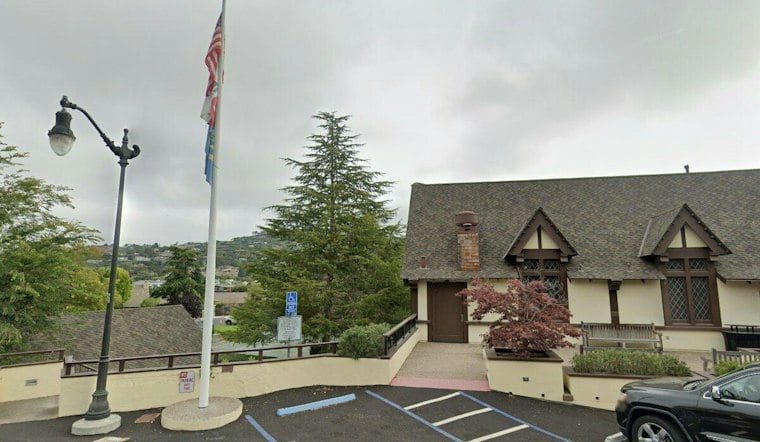
Belvedere has pulled the plug, at least for now, on a set of rules meant to govern commercial drone deliveries on its two islands, after weeks of resident pushback and a council vote that never happened. Mayor Sally Wilkinson withdrew the ordinance's second reading at the start of the Belvedere City Council's Oct. 12 meeting, and the council neither discussed nor voted on the measure that night, taking public comment instead.
According to The Ark, Belvedere residents had opposed the proposed commercial drone delivery rules for weeks, with some calling for an outright ban rather than regulation. Wilkinson said the ordinance would return at some point, though the city has not set a date for its reconsideration. In the meantime, Belvedere plans to work out a regional approach with other Marin towns and cities rather than go it alone.
The retreat caps a bumpy, three-month legislative path. The city council first reviewed a draft of the ordinance on July 13, and according to North Bay Tribune, staff had hoped the council would adopt it that same evening, but councilmembers rejected the initial language as overly vague and worried delivery companies could exploit its flexibility. The revised draft came back and squeaked through on first reading Sept. 14 by a 3-2 vote, with Councilmembers Jane Cooper and Pat Carapiet dissenting over concerns about delivery hours.
What the Shelved Rules Would Have Required
The draft ordinance, which would have created Chapter 8.34 of Belvedere's municipal code, defined a commercial drone facility as any site set up to handle 20 or more drone deliveries per month, with medical deliveries not counted toward that threshold, according to DroneXL. Such facilities would have been permitted only in mixed-use zones with a conditional use permit. The rules also would have required companies to get explicit prior consent from residents before dropping a package on private property, and they would have barred drone activity in public access areas unless the city authorized it, the outlet reports.
The proposed hours of operation became one of the clearest flashpoints. The draft aligned allowable delivery windows with Belvedere's general noise ordinance — 7 a.m. to 9 p.m. Sunday through Thursday and until 11 p.m. on weekends — but dissenting councilmembers pushed for a tighter 8 a.m. to 5 p.m. window, the same report notes. That disagreement over noise impacts was central to the narrow first-reading vote weeks before the ordinance was ultimately pulled.
Why Belvedere Moved to Regulate in the First Place
City Manager Robert Zadnik has pointed to Belvedere's unusual geography as the reason officials wanted ground rules in place before drone operators arrived in force. The city sits across two islands in Richardson Bay, population 2,126, with narrow, steep streets and emergency access routes that leave little room for error, per DroneXL's reporting on the matter.
The push for local rules followed Alphabet subsidiary Wing's announcement in March 2026 that it planned to scale residential drone deliveries into the San Francisco Bay Area, a plan the company expanded in June alongside Walmart with a nationwide goal of serving 40 million residents by 2027, according to the Los Angeles Times. Wing traces its roots back to 2012, when it was founded inside Google's X moonshot lab. By May 2026, Walmart had already crossed 1 million commercial drone deliveries nationwide with partner Wing, with plans to expand to more than 270 locations across nearly 20 metro markets by 2027, according to Veridian. The economics help explain the rush: industry analysis this year pegs drone delivery costs at roughly $2 per package, compared with $8 to $12 for a traditional delivery van, the same analysis found.
Why Belvedere's Hands Are Largely Tied
Much of the council's caution traces back to a legal reality that predates the current drone boom. In the 2017 case Singer v. City of Newton, a Massachusetts federal court rejected field preemption and invalidated specific provisions of Newton's drone ordinance on conflict-preemption grounds, according to the Harvard Law Review. The federal government had not claimed exclusive regulatory authority over drones, the court found, and the remainder of Newton's ordinance remained valid. The Harvard Law Review article's author argued that states should regulate drones' purpose and function.
Wilkinson addressed that limitation directly in a statement published in the city's Oct. 16 Belvedere Breeze newsletter. She said the city's authority is largely confined to ground operations and that Belvedere does not want to promise residents protections it cannot legally deliver. She added that the city is exploring a regional approach with other Marin communities and looks forward to continuing conversations with residents as it learns more about the emerging industry.
Belvedere's proposal would have marked Marin County's first ordinance specifically targeting commercial doorstep deliveries, while neighboring communities like Tiburon and Sausalito had previously passed general unmanned aircraft rules, per the North Bay Tribune's reporting. For now, the question of how — or whether — Belvedere regulates drone traffic over its hillsides remains unresolved, with city officials signaling the next move will likely come from a broader Marin-wide conversation rather than Belvedere acting alone.





