

























































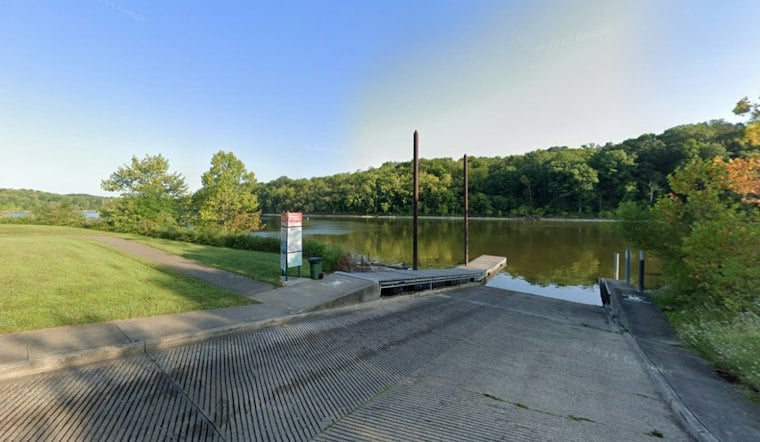
Local and state officials gathered near Bethel on Tuesday morning for a ceremonial groundbreaking that marks the beginning of the end for an aging concrete dam that has sat along Cloverlick Creek for more than 80 years. The Cloverlick Creek Dam Removal and Stream Restoration Project will tear out the low-head dam and an adjoining pumphouse, structures officials say have long posed both a safety hazard and an obstacle to the creek's natural flow.
The gathering, reported by WCPO, brought together representatives from the agencies steering the project, which the station describes as a collaboration between the Ohio Department of Natural Resources' H2Ohio-Rivers program, the Clermont County Soil and Water Conservation District and the Village of Bethel. The Village of Bethel currently owns, operates and maintains the dam, according to a project criteria document posted by the Clermont County Soil and Water Conservation District. That same document places the structure roughly two miles northeast of the village, along a stretch of the creek it identifies as river mile 3.9, and says the dam was built in 1941.
A Decades-Old Hazard Comes Down
WCPO's report frames the project around four goals: removing a public safety hazard, reconnecting aquatic habitat, restoring natural stream processes, and building for long-term recovery. Low-head dams, despite their modest size, have a reputation among safety officials for creating dangerous hydraulics. The Ohio Department of Natural Resources warns that water flowing over such a drop can form a hole, or hydraulic, at the base capable of trapping anything that washes over it, along with a backwash current below the dam.
Exactly how large the Cloverlick structure is depends on which account you read. WVXU describes the dam as a 200-foot barrier, while the Clermont County Soil and Water Conservation District's own design documents describe it as 235 feet long. The project addresses the dam's safety hazards and environmental effects.
Reopening the Creek to Fish and Wildlife
Beyond safety, officials are framing the removal as an ecological fix. Per WCPO's reporting, one official involved in dam-removal efforts in the region said agencies look to remove unnecessary dams for ecosystem purposes, to support aquatic species and for cleaner water. The outlet also reported officials' hope that removing the Cloverlick dam will lead to reduced water temperatures, restored oxygen levels, and reconnected stretches of the creek that have been cut off for generations.
Nationally, the science backs at least part of that hope, though with caveats. A U.S. Geological Survey review found that dam removal reduced summer warming behind the former impoundment at 7 of 10 studied removal sites, and reduced downstream warming at 5 of 10 sites, with the improvements typically showing up within five years. The Cloverlick project itself is designed to remove the dam, pumphouse and remaining water-supply infrastructure altogether, according to the Clermont County Soil and Water Conservation District's criteria document.
Funding and Regional Context
Funding and Regional Context Paying for the work has drawn on several funding streams. Funding for the project includes H2Ohio support and a federal grant through the America the Beautiful Challenge.
The Bethel project is not an isolated effort. The Statehouse News Bureau has reported that communities across southwest Ohio are removing low-head dams to restore stream flow and habitat while making waterways safer for recreation, citing a separate project on Paint Creek as part of that broader trend. Just across the Ohio River, a similar effort played out on Long Lick Creek in Clermont, Kentucky, where Bernheim Forest and Arboretum says a failing low-head dam was removed to restore natural stream flow, improve fish passage, and enhance water quality.
For now, the Cloverlick project remains in its earliest visible stage, with Tuesday's groundbreaking marking the formal start of work that officials and project partners have been planning for months. The scope of what comes next, and exactly how the finished creek will look once the dam and pumphouse are gone, will likely come into sharper focus as construction proceeds.



