

























































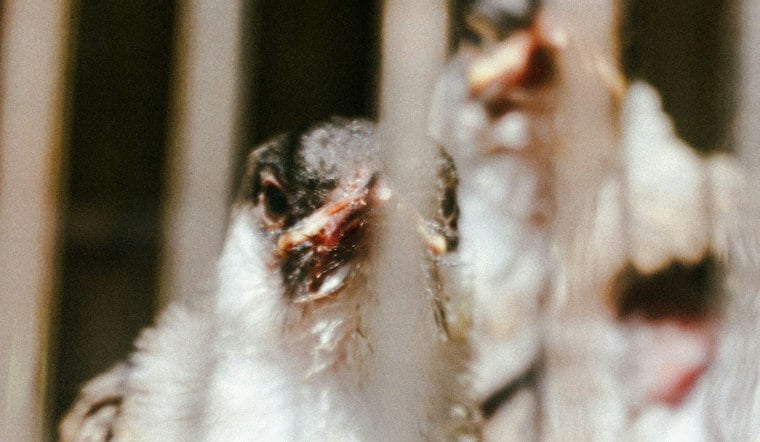
Iowa's first commercial bird flu outbreak in nearly a year has landed in Sac County, where officials confirmed H5N1 highly pathogenic avian influenza in a turkey flock numbering in the tens of thousands of birds. The detection, announced Wednesday, immediately triggered a state disaster declaration and renewed warnings about biosecurity as fall bird migration ramps up across the region.
State officials confirmed the case in a commercial turkey flock in Sac County on October 28, according to Iowa Agribusiness Radio Network. The flock's size is reported differently depending on the outlet: the The Des Moines Register put the number at approximately 44,000 birds, while the Iowa Department of Agriculture and Land Stewardship told Iowa Capital Dispatch the flock held approximately 44,400 birds. Either way, it marks Iowa's eighth confirmed HPAI detection of 2026 and its first in a commercial operation since December 2025.
Gov. Kim Reynolds responded by authorizing a disaster proclamation for Sac County, effective immediately through November 27, according to the Office of Gov. Kim Reynolds. The proclamation allows state and department resources to be deployed more easily to help contain and monitor the outbreak, the state capital newsroom reported. Outbreak response typically requires dispatching the affected flock and disposing of the dead birds, the same report notes.
A Quiet Year Interrupted
Before Wednesday, Iowa had reported seven 2026 outbreaks in backyard, mixed-species or game-bird flocks, according to Iowa Capital Dispatch. There had been no commercial-scale case since late last year. The last large Iowa outbreak hit in January, when a Kossuth County hatchery with roughly 25,000 pheasants, quail and chukar partridges was struck, a case also documented by the same capital newsroom.
Wild birds can carry H5N1 without showing symptoms, making them an easy vector into domestic flocks, the agribusiness radio network reports. With fall migration underway, officials say biosecurity has become especially important for Iowa producers trying to keep the virus away from their barns.
Iowa's Outsized Toll
Iowa has had more total birds affected by bird flu than any other state since the nationwide outbreak began, according to USDA APHIS data cited by the state newsroom. The Register puts that cumulative toll at 30.8 million chickens, turkeys and other birds lost in Iowa alone, part of a national total of 210.2 million birds lost to the virus according to USDA figures. The broader outbreak has been running since February 2022 and typically intensifies each spring and fall as wild birds migrate.
Iowa is far from alone this fall. APHIS has confirmed HPAI in commercial poultry and gamebird operations across five other states — Illinois, South Dakota, North Dakota, Wisconsin and Kansas — according to WATTPoultry. That included a massive flock of 934,600 egg-laying hens in Clinton County, Illinois, confirmed October 19, and a flock of 60,600 commercial meat turkeys in Dickey County, North Dakota, confirmed two days later. South Dakota alone has logged 17 affected commercial flocks so far in 2026, while a Wisconsin turkey operation of 41,400 birds and a Kansas gamebird operation of 29,000 birds rounded out the week's confirmations.
What Officials Are Telling Producers and Consumers
Poultry producers who suspect their birds have the virus are urged to contact a veterinarian immediately and report suspected cases to the Iowa Department of Agriculture and Land Stewardship, according to the agribusiness radio network. Warning signs include sudden deaths, reduced egg production, lack of energy or appetite, respiratory problems, and swelling or discoloration around the head and legs. State officials have encouraged producers and backyard flock owners alike to keep strengthening their biosecurity measures.
For consumers, officials stress that poultry and egg products remain safe to eat when properly handled and cooked to an internal temperature of 165 degrees Fahrenheit. The Centers for Disease Control and Prevention continues to assess the risk to the general public as low, and the virus is not currently known to spread between humans, according to Iowa Capital Dispatch's earlier reporting on a separate Kossuth County case. The CDC's own guidance notes that when exposure to sick or dead animals cannot be avoided, protective equipment should be worn during direct or close contact with carcasses, feces, litter or other potentially contaminated materials.





