

























































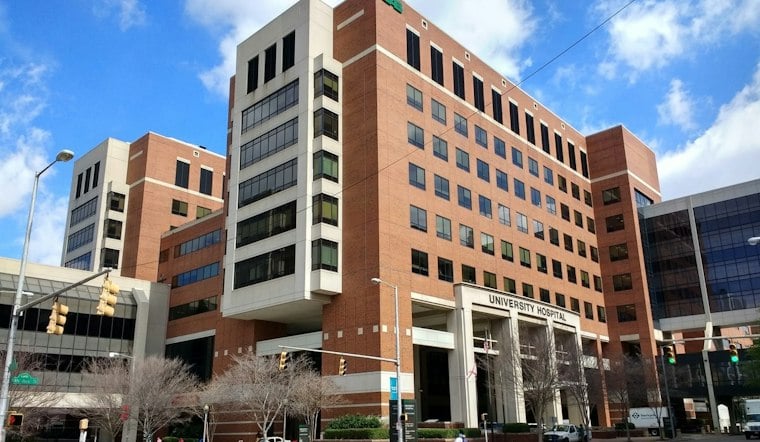
A 23-year-old Birmingham man who nearly died from a brain bleed this summer is headed to Houston for specialized rehabilitation after his insurer abruptly reversed course on a coverage denial that had put his recovery in jeopardy. Elijah Briggs suffered a traumatic brain injury on July 1 when an undiagnosed arteriovenous malformation ruptured, triggering a seizure and fall before he was airlifted to UAB Hospital for emergency brain surgery, according to his family’s GoFundMe page. He went into a coma, underwent multiple surgeries, and has since shown signs of improvement.
Blue Cross Blue Shield of Alabama had initially denied coverage for Briggs’ treatment at TIRR Memorial Hermann in Houston, calling it investigational, according to AL.com. The insurer defines investigational treatments as those lacking sufficient evidence of effectiveness, safety, and improved health outcomes, the outlet reported. Briggs’ doctors at UAB said the specialized rehabilitation was both medically necessary and time sensitive, and that the Houston program — ranked No. 4 in the country and No. 1 in Texas by U.S. News & World Report for 2026–2027, according to Memorial Hermann — gave him his best chance at recovery.
Facing those costs, the Briggs family launched a GoFundMe campaign and appealed the denial on September 22, per AL.com’s reporting. They still face out-of-pocket travel and lodging expenses in Houston for a month or longer, since the rehab program requires all adult household members to take part in family education and Briggs’ full caregiving team will be in Texas throughout his treatment.
Reversal Follows Scrutiny of Insurer's Market Power
Blue Cross Blue Shield of Alabama sent the family a letter authorizing the treatment on September 28 — just hours after AL.com published an investigative story examining Briggs’ denial and the insurer’s market dominance, according to a Reddit thread tracking the case. The approval came six days after the family’s formal appeal, per that same discussion.
Neurosurgeon Richard Menger, who practices in Alabama, has criticized the insurer’s market dominance. TIME has also reported concerns about low payment rates and harm to rural hospitals.
Blue Cross’s Large-Group Market Share
KFF data published in 2025 found the insurer controlled 94% of the state’s large-group commercial health insurance market, according to TIME.
That concentration has drawn scrutiny well beyond Briggs’ case. A 2025 Kaiser Family Foundation analysis found Blue Cross Blue Shield of Alabama rejected 35% of in-network claims on the 2023 ACA individual marketplace, the highest denial rate among high-volume insurers nationwide, compared with a 19% national average. The same research found consumers appealed about 1% of denied in-network claims on HealthCare.gov plans, and insurers upheld 56% of appealed denials — a gap suggesting most denied claims are not appealed.
For now, though, the family is focused on getting Elijah to Houston, where his caregiving team will join him during rehabilitation that insurance once stood in the way of.





