

























































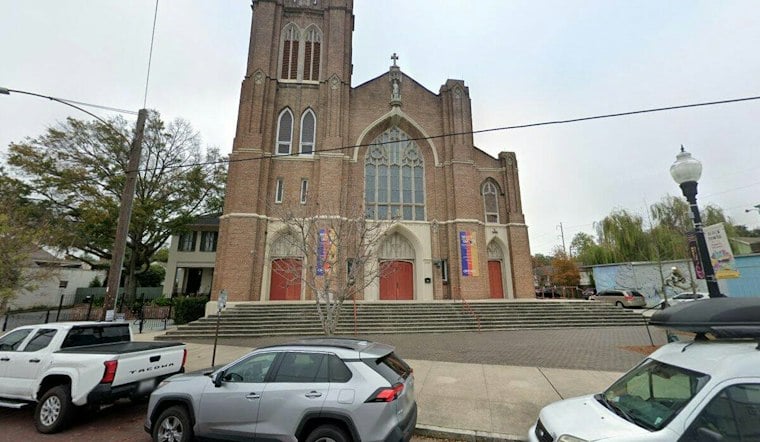
The André Cailloux Center for Performing Arts and Cultural Justice has acquired the former St. Rose de Lima Church campus at 2541 Bayou Road in New Orleans for $1.9 million, according to WGNO. The purchase locks in permanent Black-led ownership of a campus with deep roots in the city's Black history, sitting in the Seventh Ward neighborhood just off Bayou Road.
The deal, first detailed by Emerge Group, secured what organizers describe as permanent Black-led ownership of the historic campus. The Emerge Group says it led the acquisition and capital strategy in partnership with founder Lauren Turner Hines and the André Cailloux Center team, with acquisition partners including Hope Credit Union, Kataly Foundation and Distracted Globe Foundation.
A Site Tied to a Civil War Hero
The church campus carries historic weight well beyond its real estate value. In 1863, St. Rose de Lima played a role in organizing the funeral procession of Captain André Cailloux, the center's namesake, per the same account from Emerge Group. According to the Black Catholic Messenger, Cailloux was elevated to captain for the Union Army in 1862, making him one of the first Black officers in U.S. military history, and his funeral was held at St. Rose of Lima Catholic Church in 1863.
That history is now central to the center's identity. The André Cailloux Center is described as a Black-led, BIPOC community-serving, multi-tenant performance art and cultural justice venue, according to WWOZ. Founder Lauren Turner Hines is a cultural strategist, theater director, producer and administrator, per the center's own site, accneworleans.com, which envisions the space as both a performing arts venue and an economic-development incubator for Black-led performing arts organizations.
Plans for Seven Resident Organizations
Organizers have outlined ambitious plans for who will use the space once it's running. The center plans to house seven organizations, each conducting performances during its designated season, the Black Catholic Messenger reports. Junebug Productions is planned to serve as the center's first Legacy Partner, according to the same report. The center had previously been slated to open in early 2023, per that outlet's reporting, though the evidence reviewed does not confirm whether that timeline was met or what the center's current operating status is.
Looking ahead, the André Cailloux Center plans to establish a Cailloux Community Equity Fund to explore community-ownership opportunities for Seventh Ward and Tremé residents and artists, according to Emerge Group. The center describes itself as a justice-centered cultural institution with local impact in New Orleans and national significance, per its founder's page on accneworleans.com.
A Complicated Ownership Picture
Exactly who holds title to the broader campus is less clear-cut. The Black Catholic Messenger reports that the Rose Collaborative owns the shuttered church, rectory and a nearby school building, while separate reporting from Alembic Community Development states that the Rose CDC and Alembic purchased the St. Rose campus from the Archdiocese of New Orleans in summer 2016. The available evidence does not reconcile these ownership descriptions.
The redevelopment's price tag is similarly muddled across sources. NOLA.com describes the campus transformation as an $11.7-million project turning the site into a 1.5-acre hub for arts, education and entrepreneurship. Alembic Community Development, meanwhile, puts total development costs at $11.8 million, and a National Park Service case study lists a total project cost of $12,126,912 — figures the available reporting does not reconcile.
Restoration Backed by Historic Tax Credits
The physical restoration drew on a specific set of preservation financing tools. According to Saving Places, the three campus buildings were restored and updated by Alembic Community Development and Rose Collaborative Community Development Corporation with support from NTCIC funds and New Market and Historic Tax Credits. That same program has helped save 20 historic theaters nationwide and invested more than $150 million since 2000, per Saving Places.
The project fits into a broader pattern of former Catholic churches finding new life across the city. Other examples include The Josephine, a converted former Lady of Lourdes church on Napoleon Avenue now used for weddings and fundraisers, and the former Holy Trinity Church, which was turned into a wedding venue. Unlike those event spaces, the André Cailloux Center is framed by its founders and partners as a cultural and economic engine rooted specifically in Black ownership and the Seventh Ward's history.





