

























































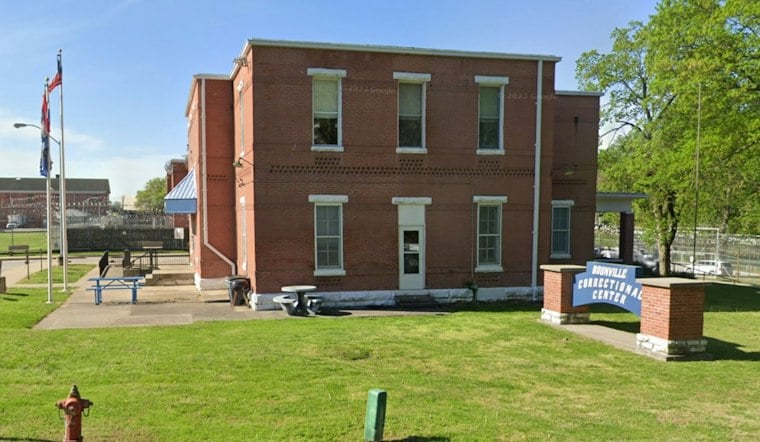
Death certificates identified by researchers document 25 boys who died at the former Missouri Training School for Boys in Boonville between 1909 and 1945. Researchers say the boys appear to have been buried at the site, and that their families may never have been told of their deaths. A Missouri search is now working to identify the boys’ relatives and connect them with what records remain.
The Missouri search is part of the Forgotten Children Initiative, a national research project examining children who died in youth institutions from the late 1800s through the mid-1900s, as reported by the Kansas City Star. Boonville is roughly 100 miles east of Kansas City. The facility operated for nearly a century under several names, including the Missouri Reformatory for Boys, and served young people who came into contact with the state’s juvenile justice system. The Star reports that preliminary information suggests more boys may be buried at the site than the 25 identified through death certificates.
Volunteer Rebba Omer, who is helping lead the Missouri search, told the Star that researchers have records on two additional boys beyond those identified through death certificates. The newspaper also reports that families were often not notified when a child died in the institution, leaving researchers to piece together these deaths from records and other documents.
What the Surviving Records Show
The documents researchers have found offer fragments of the boys’ lives and deaths. A newspaper clipping cited in the research says Charles Grimes, an 18-year-old at the training school, died on August 14, 1909, after falling while in line of march. He was buried in the training school cemetery that year.
A clipping and death certificate document a different path to Boonville for Reginald Blackstone, also 18: he had been sent from Chicago as a federal prisoner. He was found dead in a corn field in January 1923. The clipping says he was believed to have died of exposure after escaping. Causes of death among the boys documented so far have included measles, tuberculosis, accidents and drowning.
A National Search With Roots in Maryland
The Forgotten Children Initiative began in Maryland, where researchers and genealogists have already found relatives of boys buried there, and has since expanded to a handful of states, including Missouri, actively engaged in the work. Nationwide, the initiative has identified burial sites or cemeteries associated with 40 correctional institutions across 29 states and more than 1,000 children buried at or near the institutions where they were held, according to the Georgetown University Center for Youth Justice. The initiative is led by Marc Schindler, a research professor of the practice and senior fellow at the center.
The center's research has found that children were buried as recently as the 1950s at sites tied to youth institutions, and that Black children and impoverished children are frequently represented among them, according to the Hoya's reporting on the initiative. Researchers build family trees by analyzing death certificates, marriage licenses and other documents, a method Georgetown University describes as central to connecting deceased institutionalized children to living descendants.
In Maryland, that method has already produced results. Georgetown found family members for 28 identified boys and has stayed in regular communication with families of 16 of them, and the team hosted roughly 30 relatives of six boys at the burial site after the existence of that burial ground was publicly announced on July 17, 2025, per Georgetown University.
What's Next for the Boonville Site
In Missouri, volunteers have identified one living family member of a boy buried in Boonville, Omer told the Star. They hope to locate more relatives and eventually facilitate a gathering to discuss next steps.
From Boys’ Training School to Adult Prison
The Missouri Department of Corrections says the facility was originally built in January 1883 as a training school for boys. It later operated under several names, including the Missouri Reformatory for Boys; the site is now occupied by Boonville Correctional Center, a minimum-security prison that houses about 800 men, according to the Missouri Department of Corrections.
Missouri partners are seeking help from historians, genealogists, archivists and community organizations and members who may be able to help identify more families. Anyone interested in helping can email [email protected].





