

























































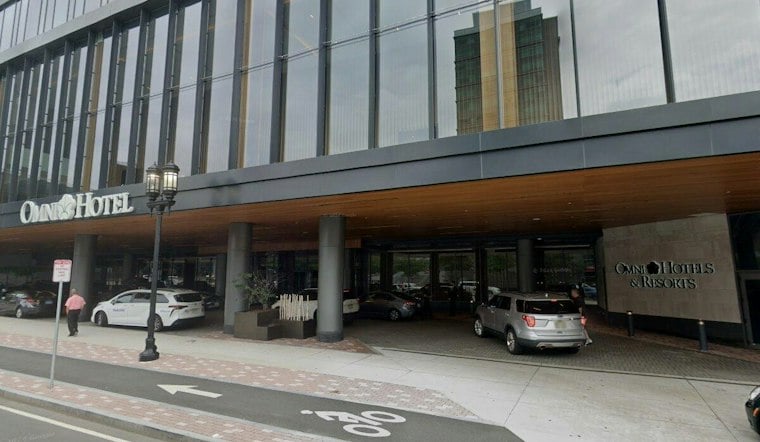
A website advertising a glossy two-day biotech conference at the Omni Boston Hotel at the Seaport has turned out to be something else entirely: a front built to spread malicious software to anyone who signed up. The site, branded BIOTOLD, dangled big names in genetics and biotech research to make itself look legitimate, but researchers say the whole thing was a trap.
A Conference That Never Was
According to the Boston Business Journal, the BIOTOLD website is a front for a criminal malware group, built to look like a real scientific gathering while actually exposing visitors who signed up to malicious software. The outlet reported that cybersecurity firm Proofpoint identified the BIOTOLD conference website as fake. The site promised two full days of biotech programming and networking, scheduled at the Omni Boston Hotel at the Seaport, complete with the kind of agenda that might convince a busy researcher to register without a second thought.
Part of what made the ruse convincing, per the same report, was its use of recognizable names in the biotech world. The site promoted a fake conference supposedly involving George Church, Thermo Fisher and Broad Institute leaders, lending it an air of scientific credibility. It also falsely listed Nobel laureates as advisers, according to the Boston Business Journal's reporting.
The Names Being Borrowed
George Church is a real and well-known figure in the genetics field. He is a professor at Harvard Medical School and is affiliated with the Wyss Institute for Biologically Inspired Engineering.
The venue named in the listings is a real one too. The Omni Boston Hotel at the Seaport sits at 450 Summer Street in Boston's Seaport District, according to Omni Hotels, which advertises more than 100,000 square feet of meeting and event space at the property — the kind of setup that would plausibly host a legitimate biotech gathering.
The Fake Event's Listed Dates
The BIOTOLD website listed the conference for November 5-6, 2026.
A Familiar Playbook in Science
Fake academic and scientific conferences aren't a new con. An investigation by the International Consortium of Investigative Journalists analyzed 175,000 scientific articles and found that hundreds of thousands of scientists worldwide had published in self-described journals lacking traditional accuracy and quality checks. That same investigation detailed how the World Academy of Science, Engineering and Technology, known as Waset, held hundreds of fake scientific conferences every year.
More recent warnings point toward the same tactic being used for cyber intrusions rather than just fee collection. Proofpoint has separately described an operation involving fake conference invitations as part of a broader espionage effort. A low-confidence search snippet also referenced Google tracking Russia-linked espionage clusters that used legitimate authentication tools to target researchers, diplomats and defense staff. Neither account specifically ties those operations to BIOTOLD, but they illustrate why a fake biotech summit could be an attractive lure for threat actors.
For now, the episode stands as a reminder that even a professional-looking conference page, with a real hotel address and recognizable scientific names attached, deserves a second look before anyone hits register.





