

























































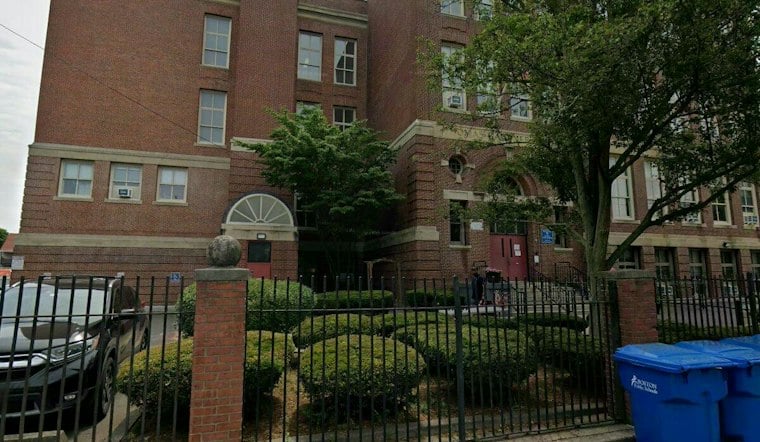
A Boston mother told city councilors that her child was forcefully raped by a Boston Public Schools staff member during school hours, and that the district never called police, filed a 51A report, or notified her as a parent, according to her testimony at a city council hearing Tuesday. Her account was one of several delivered during an Education Committee hearing examining how BPS tracks, reports and responds to sexual misconduct, bullying and sexual assault involving students.
The hearing, covered by the Boston Herald, drew city councilors and parents who accused BPS of concealing thousands of sexual assault, misconduct and bullying cases involving student-on-student abuse and at least one staff member. The mother, Monica Murchison, testified that she did not learn of the incident involving her child and continued sending her to school until the child had a meltdown. She said BPS retaliated after she sought more information about her daughter's reported assault, that she was later trespassed from the school, and that 51A reports were filed against her. Murchison told councilors she ultimately withdrew her daughter from BPS and left her catering job to homeschool her.
A Six-Year Paper Trail of Reports
The hearing followed reporting that put numbers behind years of parent complaints. Records obtained by journalist Colman M. Herman after a three-year court battle against the city and BPS detailed more than 2,000 student-on-student sexual misconduct cases across six school years, from 2018-19 through 2023-24, according to Contrarian Boston reporting cited in the Herald's coverage. A review of those records found 2,015 reports of student-on-student sexual misconduct over that span, according to a Scott Van Voorhis newsletter analysis, which noted the files contained full verbatim descriptions of the sexual incidents, the years they occurred, and one- or two-word descriptions of the discipline imposed, ranging from counseling and detention to classroom lessons and suspension. BPS records covered K-12 students and incidents occurring in schools and on school property, including buses.
Reports of student-on-student sexual misconduct in BPS rose from 371 in 2018 to 759 in 2022, according to the Boston Globe. The newsletter analysis noted that the pandemic disrupted the count after BPS ceased in-school classes for about a year. The Globe reported that Councilor Erin Murphy characterized the figure of 744 for the 2021-22 school year as reported sexual assaults, a characterization disputed by the district; the number of incidents that could be considered assault is unclear, and BPS does not disaggregate such incidents from its overall sexual-misconduct reports. That year, seven students were disciplined for what the state classifies as sexual assault and 59 for sexual harassment, per the same Globe report.
Missing Forms and Underreporting
Gaps in the paperwork have been a recurring theme. District officials acknowledged that summary forms for 32 percent of sexual misconduct incidents in 2021-22, and 25 percent in 2022-23, were never counted, according to CommonWealth Beacon. The outlet also reported that BPS logged 1,633 substantiated cases of sexual misconduct, bullying and bias-based incidents over two school years, with another 1,871 cases investigated but unable to be substantiated. Among student-on-student cases specifically, BPS reported 738 substantiated instances over 2021-22 and 2022-23, a 34 percent jump between the two years, the outlet found, while 11 substantiated cases of employee-on-student sexual misconduct were logged over the same period — nine in 2021-22 and two in 2022-23.
The newsletter analysis stated plainly that incidents of sexual misconduct are greatly underreported for a multitude of reasons. That pattern surfaced again at Gardner Pilot Academy, where BPS ousted the principal and assistant principal after an investigation found school leaders had failed to adequately address bullying and alleged sexual misconduct among students, Boston.com reported. Investigators there found unreported and unaddressed violations, including alleged groping, choking, and sexually explicit and derogatory language among students, according to the outlet.
Councilors Push for Transparency
At the hearing, Councilor Ed Flynn called for the public release of student sex records and for a community-led task force to address sexual misconduct between students, saying that hiding data allows misconduct to continue. Councilor Erin Murphy said BPS cannot use student privacy as a shield to avoid accountability. Councilor John FitzGerald said the public perception is that problems at BPS are swept under the rug. Councilor Julia Mejia cited a survey finding that 18 percent of student respondents found it quite or extremely difficult to get adult help when bullied during the past school year.
A second parent, Tia Washington, testified that her 8-year-old daughter was physically assaulted and bullied on numerous occasions, and that sexual misconduct occurred on her daughter's school bus two years in a row. The hearing order itself calls for a review of BPS prevention and response to bullying, sexual harassment, sexual assault and sexual misconduct, according to city council hearing documents.
District Response
BPS Senior Deputy Superintendent of Operations Sam DePina apologized for district failures and said policies and procedures had been ineffective in some situations, telling councilors the district is trying to do better for students affected by sexual harassment, bullying and sexual misconduct. He said the district's response has grown stronger through collaboration with families and parents. BPS administrators committed to improving reporting mechanisms and response while protecting student and family data, and officials said the district is updating its code of conduct, which is reviewed every three years.
The scrutiny of BPS comes amid a broader statewide conversation about how schools track bullying and misconduct. Massachusetts public schools reported 8,421 bullying allegations during the 2023-24 school year, while 91 of 396 districts, charter schools and vocational schools reported zero bullying incidents at all, according to the Boston Herald. Statewide, 15.9 percent of students reported being bullied in 2023, the same report found.





