

























































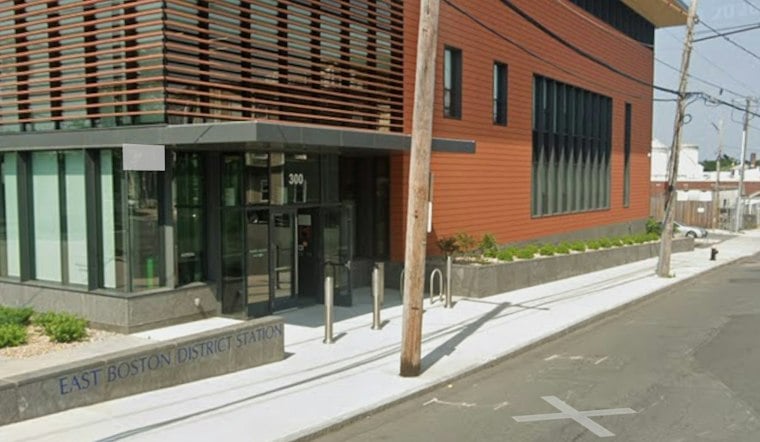
Boston Police Department has more overdue open internal affairs investigations than any other law enforcement agency in Massachusetts, according to new real-time data published by the state's police licensing authority. The department currently has 36 open internal investigations that have exceeded the state's 90-day deadline, plus nine completed investigations where discipline has sat undecided for more than 60 days.
The figures come from newly launched dashboards at the Massachusetts Peace Officer Standards and Training Commission, which as reported by WCVB Boston now update daily instead of relying on periodic public records releases. One tool, the Officer At A Glance dashboard, combines an officer's certification status and disciplinary history in a single, continuously updated page. A second tool, the Agency Open Internal Investigations dashboard, flags departments with investigations that have run past the 90-day completion window, while a third tracks agencies where discipline remains undecided more than 60 days after a probe wraps up.
POST Commission Executive Director Enrique Zuniga framed the shift as central to the commission's mission. Per WCVB's report, Zuniga said transparency is very important and that making information available to the public, agencies and stakeholders is an important part of the commission's work. He also said delayed discipline can erode public trust, a warning that lands squarely on Boston given its current standing atop the new overdue-investigation dashboard.
How Boston's Numbers Stack Up
The reporting standard behind the dashboards traces back to state administrative regulations, which require Massachusetts police agencies to open internal affairs investigations within 14 days of a credible complaint and make every effort to finish within 90 days, according to PowerDMS. That 90-day clock is what now defines an investigation as overdue on POST's new public tracker.
Boston's position near the top of the state's disciplinary rolls is not entirely new. When POST released its first major public disciplinary database in August 2023, Boston Police Department logged the third-highest total number of sustained disciplinary records in the state, trailing only the Massachusetts State Police and the Springfield Police Department, per Police1. That earlier release covered 3,413 sustained records across more than 2,100 officers and 273 agencies statewide, establishing the baseline transparency milestone POST has now built on with daily dashboards.
Department Points to Recent Progress
Boston Police Department, which operates under Commissioner Michael Cox's leadership, says it has made progress reducing its backlog and moving disciplinary matters forward, addressing what it describes as a longstanding backlog of older internal affairs division investigations and disciplinary matters. The department has cut in half the number of cases with discipline pending in just one month, according to the same WCVB report. A department spokesperson said BPD recognizes the importance of promptly completing internal affairs investigations and resulting discipline.
The department is also reviewing how it handles discipline involving officers who are not on full-duty status, according to WCVB's reporting, noting that discipline for such officers has historically remained pending longer than for others. Boston Police says it plans to streamline its investigative and review process and move to a paperless electronic case-management system, which the department says will improve efficiency and help track the status and age of pending cases.
State Oversight Operates Above Local Discipline
The dashboards sit atop a broader oversight structure created by the 2020 Police Reform Law, Chapter 253 of the Acts of 2020, which then-Governor Charlie Baker signed on December 31, 2020, establishing mandatory statewide officer certification and decertification authority. Under that law's Chapter 6E, the POST Commission can independently suspend or revoke an officer's state certification regardless of what a local department decides on its own, giving Massachusetts a dual-layer system of police accountability. POST now oversees certification, training and discipline standards for more than 23,000 active officers across roughly 440 agencies statewide, spanning municipal departments, state police, MBTA transit police, campus police and deputy sheriffs.
That state authority gets used with some frequency. POST Commission records show the commission issued pre-decision administrative suspensions for 45 officers in 2025 alone, including 28 suspended over evidence of potential criminal conduct. Hoodline has previously covered a Boston officer benched after the state suspended his certification following sustained internal findings, part of a pattern of POST intervention that runs alongside, not instead of, local department discipline.
Local Oversight Has Clashed With BPD Before
Boston's internal affairs process also answers to a municipal layer of oversight. The city established the Office of Police Accountability and Transparency in January 2021 under an ordinance signed by former Mayor Martin J. Walsh, giving the agency a mandate to independently review BPD internal affairs cases and submit discipline recommendations, according to LawCommentary. That oversight structure has not always run smoothly: in late 2024, Boston's Civilian Review Board sent a formal letter criticizing Commissioner Cox for routinely ignoring civilian oversight guidance, revealing that Cox had fully implemented OPAT's discipline recommendations in only one case since the agency launched.
The stakes of delayed discipline extend beyond internal bureaucracy. An August 2025 Massachusetts Attorney General policy now requires state prosecutors to review POST Commission records and internal affairs portals for potential witness impeachment material before putting officers on the stand, meaning unresolved internal affairs backlogs can directly complicate criminal prosecutions. With POST's dashboards now updating daily and publicly naming Boston as the state's leader in overdue cases, the pressure on department leadership to close that gap is no longer confined to annual reports or closed-door reviews.




