

























































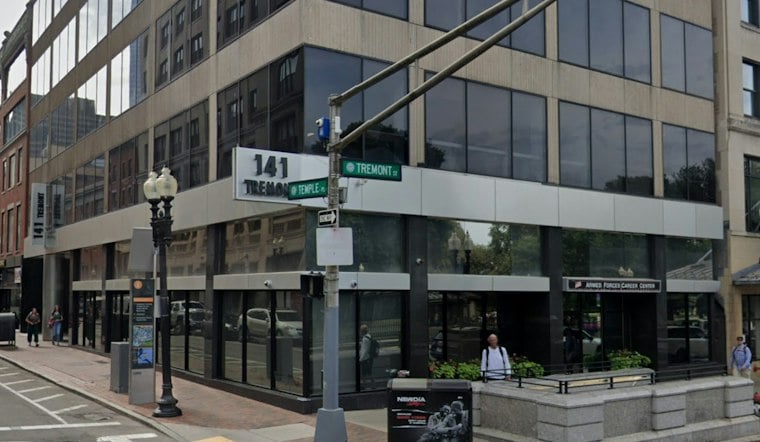
A second-floor office space across from Boston Common is now home to the city's first free, all-in-one support center for immigrant entrepreneurs, women, people of color and low-income business owners. Lawyers for Civil Rights opened BizGrow Central at 141 Tremont Street, offering legal services, business advising, mentorship, workshops and workspace under one roof at no cost to eligible participants. The group says it is the first center of its kind in Greater Boston.
The launch comes after elplaneta.com reported that Lawyers for Civil Rights has spent more than 25 years supporting entrepreneurs through its BizGrow program, relying in part on pro bono attorneys. That track record now has a new Boston space, according to The Business Journals. BizGrow Central is located at 141 Tremont Street. BizGrow Central marks the first physical location the program has ever had, per The Boston Globe.
What's Inside the Free Center
Members can get time with experienced consultants to develop their business models, legal assistance with drafting contracts, and access to modern working space, the Globe's report notes. Businesses at any stage of development, from a bare idea to an expansion push, are eligible to apply for membership, according to elplaneta.com. The BizGrow program already serves more than 2,000 entrepreneurs a year, the outlet reports, and has supported businesses in industries ranging from tech to food to entertainment since it was founded in 2001, per the Globe's reporting.
Demand for a spot appears to have outpaced expectations well before the doors opened. Elplaneta.com reported that the center had already received more than 200 applications before its launch. The Globe, however, reported that about 100 businesses had applied for membership ahead of the Oct. 19 ribbon-cutting. The discrepancy between the two figures has not been explained.
Funding and Leadership Behind the Launch
BizGrow Central is operating on a first-year budget of $1 million, with funding from Bain Capital, Eastern Bank, The Boston Foundation and Barr Foundation, according to elplaneta.com's report. The center has also created an entrepreneur-in-residence post carrying a $25,000 stipend, and named Tracy Skelly of Little Cocoa Bean as the first person to hold it.
Why Boston's Immigrant-Owned Businesses Matter
The center opens into an economy where immigrant entrepreneurs already carry outsized weight. Immigrants contribute roughly $103 billion annually to Greater Boston's economy, about 21 percent of regional GDP, according to a report from The Boston Foundation. They make up 21 percent of the region's population but 25 percent of its labor market and 28 percent of its business owners, per WBUR. That same reporting found immigrants own 40 percent of Greater Boston's Main Street businesses, including more than half of all restaurants, and that the region's immigrant population has grown more diverse over time, with no European country ranking among the top 10 countries of origin by 2021.
Statewide, the pattern holds. Immigrants make up 9 percent of New England's population but account for 13.72 percent of all businesses, while in Massachusetts specifically they represent 14.2 percent of the population and own 15.59 percent of businesses, according to a Pioneer Institute study. Yet access to capital remains a persistent hurdle: a 2025 MassINC Polling Group survey cited by the Globe found that 68 percent of Black business owners and 70 percent of Latino business owners considered access to capital a high priority.
BizGrow Central is betting that pairing legal muscle with mentorship and workspace can chip away at those gaps for the entrepreneurs who walk through its doors on Tremont Street. With a membership pipeline already building before the ribbon was even cut, the center's first real test will be whether it can keep pace with the demand it has already drawn.




