

























































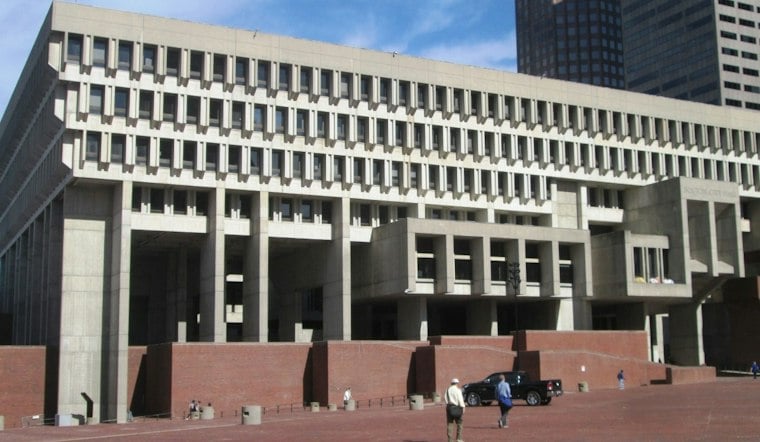
Boston City Council is exploring a plan that could pay street performers to play in public spaces across the city, with councilors pointing to a wave of shuttered music venues and rehearsal studios as the reason buskers need new support. The proposal, backed by three councilors, would also look at opening up more performance locations beyond the city's best-known tourist strips.
District 8 Councilor Sharon Durkan, Councilor-at-Large Ruthzee Louijeune, and District 4 Councilor Brian Worrell are behind the push, which calls for the city to reexamine its busking regulations and find better ways to support local musicians, according to WBZ NewsRadio. Boston has operated under a permit-free sidewalk busking model for roughly two decades, a policy that traces back to a December 2004 federal court ruling and an April 2006 legal agreement that struck down the city's old licensing requirement as unconstitutional, according to BuskersAdvocates.org. That settlement established the permit-free approach.
Under the rules now in place, performers can set up almost anywhere in the city without a permit, so long as they keep noise under 70 decibels during the day and 50 decibels overnight between 11 p.m. and 7 a.m., and avoid blocking walkways or emergency exits, per guidelines from Boston.gov. Police and park rangers can break up crowds that are obstructing foot traffic, but they cannot remove a performer unless there's a safety issue.
A Pointed Example From the Council Floor
During her presentation to the council, Durkan criticized the idea of a music-industry 'nepo-baby,' invoking Stella Lefty, the author of a Noah Kahan-influenced Boston song and the daughter of billionaire Groupon co-founder Eric Lefkofsky. Durkan said artists should not have to be a 'nepo-baby' to become famous, according to Universal Hub. She also told the council that live music performances bring people together and add vibrancy to Boston's streets, per WBZ NewsRadio.
Durkan also emphasized that the proposal isn't just about the city's most visible busking corners. She said it concerns main streets and neighborhoods throughout Boston, not only Newbury Street and Faneuil Hall, speaking at a council meeting at Boston City Hall, per WBZ NewsRadio's report.
Venue Losses Driving the Push
The proposal is intended to help musicians deal with recent closures and consolidations of independent live music venues and rehearsal studios across Boston, according to Universal Hub. That squeeze has drawn attention to public busking as a source of income for musicians.
That reality plays out on Boston sidewalks already. A street performer named Pablo told WBZ NewsRadio that busking provides his biggest source of money, while a woman named Leena said street performers give passersby a welcome break during their day, per the same report.
Looking to Other Cities for a Model
Durkan has called for the city to install electrical outlets, signage, and other infrastructure to create more opportunities for buskers around Boston, according to WBZ NewsRadio. Other U.S. cities have already tried paying street performers directly. Austin, Texas launched a busking pilot in 2018 under its ATX Musicians Compensation Initiative, with developer Trammel Crow providing $150,000 for living-wage stipends for performances in high-traffic commercial zones, according to Culture on Every Corner.
Denver has taken a similar approach through its 16th Street Performers Network, a partnership between the city's arts division and the Downtown Denver Partnership that hires and directly pays vetted performers to activate downtown business corridors, according to Denver Arts & Venues. Network artists remain on the roster for two years, while the Downtown Denver Partnership selects roster artists for planned commercial activations.
Different Rules Apply Underground and at Faneuil Hall
Not every corner of Boston follows the city's hands-off sidewalk approach. Musicians who want to perform inside MBTA subway stations must obtain a $25 transit performer permit, pass a background check, and wear an official badge while sticking to marked designated zones, a program administered by a third-party real estate advisory group, according to MBTA Realty.
Faneuil Hall Marketplace runs its own separate system for performers, including auditions. Nearby Cambridge takes yet another approach, offering free busking permits through the Cambridge Arts Council for performers wanting to play spots like Harvard Square, while allowing amplification up to 80 decibels from 25 feet away, according to CBS News.
Next Stop: City Council Committee
The busking proposal, filed as Docket #1845, was assigned by Council President Liz Breadon to the Committee on Arts, Culture, Entertainment, Tourism and Special Events, which is chaired by co-sponsor Ruthzee Louijeune, according to Universal Hub's reporting. WBZ NewsRadio reports the proposal will be taken up by the city's arts and culture committee, where councilors are expected to dig into questions of funding, infrastructure upgrades, and whether a stipend program for street artists could take shape across Boston's neighborhoods.





