

























































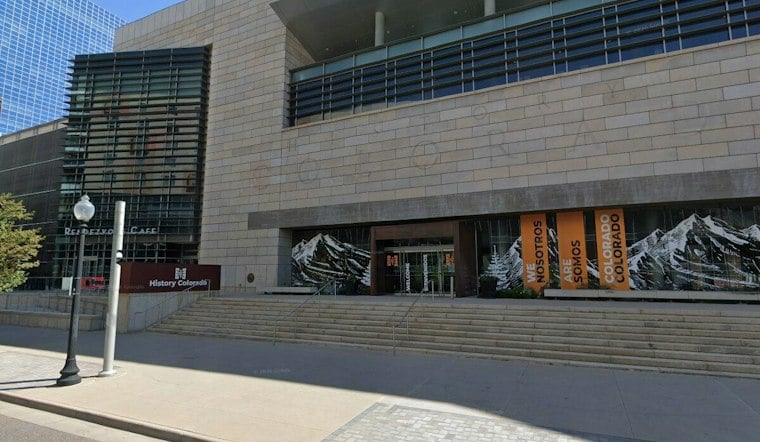
A bronze statue of Cheyenne Chief Black Kettle was unveiled at the History Colorado Center on Indigenous Peoples' Day, marking the first completed piece of a new memorial that will eventually stand on the Colorado State Capitol grounds in place of a Civil War statue toppled during the 2020 racial justice protests. The statue is part of a larger work called the Peacekeepers, a memorial led by Cheyenne and Arapaho descendants and honoring victims of the Sand Creek Massacre.
According to Denverite, the Peacekeepers will ultimately be placed on the Capitol grounds in front of the west steps, replacing the Union soldier statue that stood there for more than a century before being pulled down in 2020. That earlier statue, known as On Guard and erected in 1909, is now housed at the History Colorado Center. A plaque on its pedestal listed Sand Creek as a Civil War battle, a framing that cast the attack as a military victory rather than the massacre of peaceful people, according to Colorado Politics.
A Decades-Long Push for Recognition
Colorado lawmakers added a clarifying plaque to the old monument's pedestal in 2002, stating that Sand Creek was an unprovoked massacre rather than a battle, per CBS News. In 1865, Congress and the U.S. Army recognized the attack as a crime, the Sand Creek Massacre Foundation notes. Chivington and forces including the First Colorado Cavalry attacked Black Kettle's people at Sand Creek on November 29, 1864, killing more than 230 Cheyenne and Arapaho people, per the Denverite report. Black Kettle survived the attack, while Southern Arapaho Chief Left Hand was mortally wounded.
The people at Sand Creek were in a peaceful encampment amid broken treaty negotiations. In November 2025, state workers removed the vacant, boarded-up concrete pedestal that had held the toppled statue on the west steps, transferring it to the Colorado Department of Military and Veterans Affairs, according to Colorado Politics — clearing the final physical footprint of the old monument.
Tribally Led Design, No Pedestal by Design
Dawn DiPrince, president and CEO of History Colorado, said the project is tribally led and that her institution serves as a partner to the tribes. She said the memorial is Colorado and American history and should be carried forward together, and called it a step toward collective healing for descendants of survivors and for Coloradans broadly, per Denverite's reporting.
The Black Kettle statue is cast in bronze. Two additional figures are part of the full Peace Keepers monument: Chief Left Hand and a woman-and-child figure. A placement date for the monument had not yet been set.
The Sand Creek Massacre Memorial Committee overseeing the project is led by Cheyenne and Arapaho descendants, according to the Sand Creek Massacre Foundation. The foundation's materials indicate the committee commissioned sculptor Gerald Anthony Shippen in 2024 to collaborate with tribal cultural consultants and massacre descendants in designing and creating the bronze figures.
State Approval and a Broader Reckoning
In 2025, the memorial's design and placement on the Capitol grounds were approved. The approval followed a 2020 proposal by the Capitol Building Advisory Committee. That approval built on earlier state action: on August 17, 2021, Polis signed an order rescinding a 1864 proclamation issued by Territorial Governor John Evans that had urged citizens to kill Native Americans and seize their property, according to KUNC.
The reckoning has extended beyond the Capitol. History Colorado also features an exhibition about the Sand Creek Massacre.
Looking ahead, the Sand Creek Spiritual Healing Run — a journey from the massacre site to Denver that descendants have organized since 1999 — will take place November 25 through 29, 2026, concluding at the Capitol. A placement date for the Peace Keepers monument at the Capitol had not yet been set.





