

























































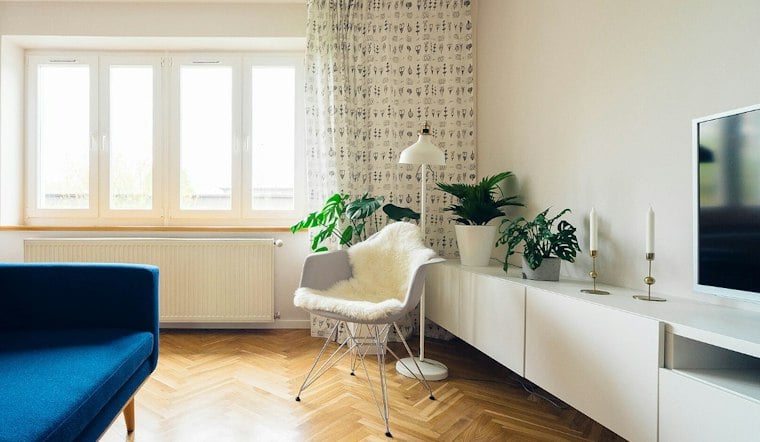
A Coolidge Corner homeowner spent roughly $700,000 digging out and rebuilding the basement of her 1895 Victorian, transforming it into a 1,200-square-foot, two-bedroom apartment that now rents for $4,500 a month. The family found tenants within days of listing the furnished unit, and a potential renter reportedly told the homeowner it did not feel like a basement at all.
The project, detailed by Carey Goldberg — a contributing writer for Globe Ideas who previously served as Boston bureau chief for The New York Times and Bloomberg News — in a piece for The Boston Globe, involved excavating a couple of feet deeper into the ground and adding new foundation-supporting walls. Marcos Coelho served as general contractor on the renovation, which replaced old brick pillars with steel beams and ran hundreds of feet of new plumbing pipe through both the basement and the main house above it. Nineteenth-century builders never intended these below-grade spaces to be used as living quarters, which is part of why the retrofit proved so labor-intensive.
A Year-Long Dig Beneath a 130-Year-Old House
The renovation took more than a year to complete and included five south-facing skylights and a roughly 60-square-foot sideyard light-well area designed to pull natural light into what had been a dark, unfinished cellar. Jeff Snow, whose comments appear in the Globe's account, said renovating an old structure like this is roughly 20 times harder than building new construction from scratch. Michael Kim, whose firm designed the conversion, said the value of the new living space now vastly exceeds what it cost to build, and he believes the same kind of project could likely be replicated by the hundreds across Brookline.
Kim's optimism reflects a broader shift underway in Massachusetts housing policy. Under the state's Affordable Homes Act, accessory dwelling units under 900 square feet became legal by right in single-family residential zoning districts statewide starting in February 2025, according to the Massachusetts Executive Office of Housing and Livable Communities. The agency has estimated the by-right policy will produce somewhere between 8,000 and 10,000 new accessory dwelling units statewide over five years.
Brookline's Earlier ADU Push Fell Flat
Brookline actually voted to legalize accessory dwelling units back at a 2019 Town Meeting, but restrictive local conditions and burdensome permitting requirements meant zero new units were ever built under that original bylaw, according to a discussion on Reddit. That changed in Spring 2024, when Brookline Town Meeting updated its zoning rules to expand the maximum allowed unit size from 30 percent to 40 percent of a home's gross floor area, up to 900 square feet, and eliminated annual owner-occupancy certification requirements, per documents from the Town of Brookline.
State regulations implementing the ADU law also bar municipalities from requiring owner-occupancy for a single ADU or mandating off-street parking for units located within a half-mile of a transit station, according to an analysis from the law firm Nutter. That protection is notable in transit-rich areas like Coolidge Corner, where parking mandates have historically complicated small-scale housing projects.
The Costs of Going Underground
Turning a cellar into an apartment can be expensive, as the Coolidge Corner project illustrates: it required deep excavation and steel reinforcement.
Real estate broker Geoffrey Wells, quoted in the Globe piece, called it “the nicest basement I've ever seen in my life.” He also calculated the $700,000 renovation likely yielded $800,000 or more in added value, and said a smaller basement conversion could still generate an apartment renting for $2,000 or more a month.
What the Numbers Say About Brookline's Market
Centre Realty Group reported townwide Brookline real estate figures.
Rents across town reflect similar pressure. The average monthly rent for a two-bedroom apartment in Brookline reached $3,991 as of August, according to RentCafe, putting the $4,500 unit at the upper end of the local market but not wildly out of line with it. A separate market report from PH Realty Group found that Brookline tenants face average upfront move-in costs of $9,200, with two-thirds of local landlords requiring last month's rent paid in advance — a financial bar that favors renters with substantial cash on hand.
A Model for Density, or a Luxury Niche?
The basement renovation adds a rental apartment to an existing home.
The stakes extend beyond one Victorian in Coolidge Corner. The six-figure cost of projects like the Goldberg family's raises questions about whether basement conversions will mainly serve homeowners with deep pockets or eventually scale into a broader housing solution.
Goldberg's family, for its part, plans to eventually use the new basement apartment as an age-in-place option for themselves down the road. For now, though, it's generating rental income in one of Greater Boston's priciest inner suburbs — a small but telling data point in the state's broader experiment with loosening zoning rules to chip away at its housing crisis.




