

























































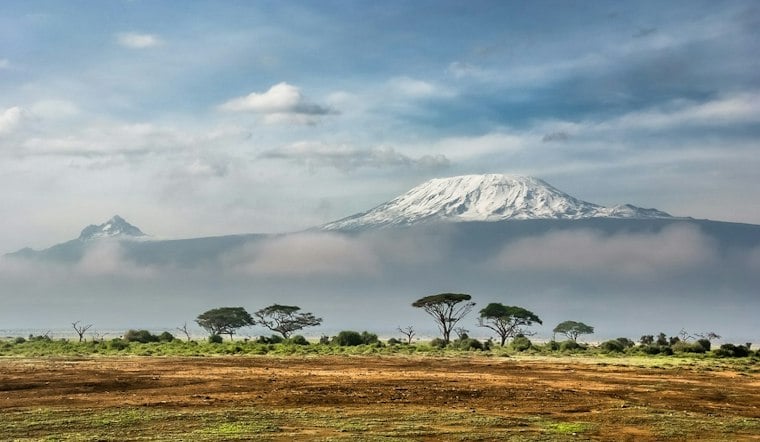
Mark Wensel spent years relearning how to walk steadily after a seizure left him with a fractured skull and a traumatic brain injury. This year, he stood on top of Africa’s tallest mountain with his daughter Jess by his side, the two of them completing a Mount Kilimanjaro summit in just one week.
The Brooklyn Park father-daughter duo’s climb, first reported by KARE 11, came as Jess’s choice of how to celebrate turning 25. Rather than a party or a trip to the coast, she picked a 5,895-meter volcano on the other side of the world, one of the planet’s seven summits and, by some accounts, considered the easiest of them to attempt. Still, as Jess put it, the climb would not be a simple stroll, and the mountain’s upper reaches carry far more danger than its reputation suggests.
Wensel, who has worked as a Brooklyn Park mail carrier for 13 years, according to hometownsource.com, suffered a grand mal seizure and traumatic brain injury in 2019 after falling backward and fracturing his skull on the floor of a Maple Grove Party City. The injury left him with occasional balance and memory difficulties that lingered well after the initial recovery. He received permission from his neurologist before attempting the Kilimanjaro climb, and during the ascent he relied on hiking poles and on Jess’s support to keep his footing.
From Hospital Bed to Disney’s Toughest Race
Jess encouraged her father to start running during his healing process, a pursuit that eventually improved his balance and gait. A former cross-country runner and captain of Champlin Park’s team, the same outlet notes, she effectively coached her father’s running success as the pair trained together and ran multiple races. In 2024, they completed Disney’s Dopey Challenge, a grueling four-day stretch of races that climbs in difficulty from a 5K to a 10K, then a half marathon, and finally a full marathon, per the hometownsource.com account of the mailman crossing that finish line five years after his seizure.
That progression from hospital recovery to endurance racing set the stage for an even bigger test. Jess has called the Kilimanjaro trek a life-goal accomplishment, and Wensel has said being invited by his adult daughter to share it was an honor. The pair hiked through conditions ranging from warm lower-elevation climates to freezing temperatures near the summit, preparation that the climb demands regardless of a hiker’s fitness level or history.
Why the Thin Air Matters More Than the Distance
Kilimanjaro’s summit is not dangerous because of technical climbing skill; it is dangerous because of what happens to the body at altitude. At the peak, barometric pressure falls roughly 50 percent compared to sea level, meaning climbers take in about half as many oxygen molecules per breath, according to The Conversation. Acute mountain sickness can begin developing above 2,400 meters, and between 4,000 and 6,000 meters the odds of developing it are close to a coin flip, the same source explains.
Guides generally recommend a slow, six- or seven-day ascent specifically to give the body time to acclimatize to the thinning air, reducing the risk of altitude illness along the way. Climbing-kilimanjaro.com notes that spending more time on the mountain generally improves a climber’s odds of reaching the top, with success rates varying widely by route: the outlet reports the six-day Machame route averaging 73 percent, the seven-day version exceeding 85 percent, and an eight-day Lemosho itinerary averaging around 90 percent.
Those numbers aren’t uniform across the industry, however. Climbing-kilimanjaro.com separately states that success rates across all tour operators run roughly 60 to 80 percent on average, while Global Summit Guide attributes a roughly 25 to 35 percent failure rate to the mountain — landing in a similar range but calculated differently. Global Summit Guide itself cautions that these percentages come from individual operators, selected programs, and incompatible datasets rather than one unified mountain-wide count, and warns that no summit rate should be read as an individual climber’s personal probability of success.
Not the First Family to Take On the Mountain
The Wensels aren’t the only Minnesota family to have tackled Kilimanjaro together. Last summer, 11-year-old Wyatt Guck of Perham climbed the mountain alongside his 70-year-old grandfather, Stewart Hofland, according to the Pioneer Press. The pair trained by hiking up to 10 miles a day while carrying roughly 20-pound packs, and their trek took them through five distinct biomes before a final overnight push that began with an 11 p.m. wake-up call, several hours of hiking to the peak, and a long descent back down.
Father-daughter Kilimanjaro treks have their own history, too. A writer for Condé Nast Traveler recalled reaching Uhuru Peak with her own father back in 1999, when she was 16, describing the moment of finally stepping onto the summit as a defining one in their relationship.
For the Wensels, the climb closes a loop that began with a hospital bed and a long road toward relearning basic movement. Jess has said the experience taught them to push and challenge each other, a bond forged first on Disney race courses and tested at last on the slopes of Africa’s highest mountain.





