

























































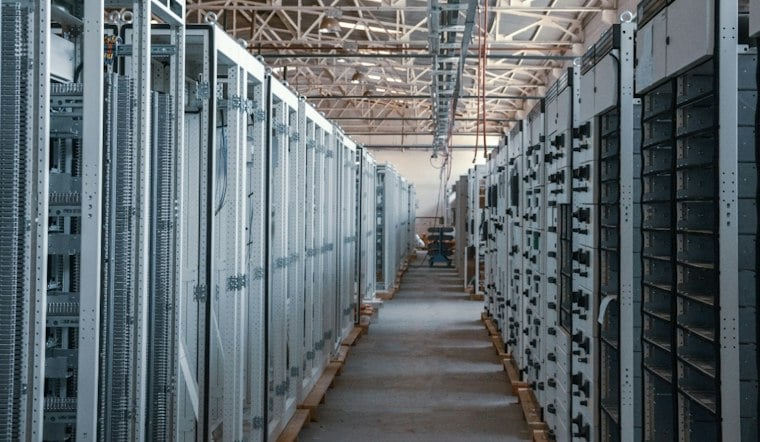
Broward County commissioners are set to discuss a proposal that would freeze new large-scale data center development in unincorporated parts of the county for a full year. Commissioner Lamar Fisher put the item on the agenda, asking the county to draft an ordinance creating a moratorium on large-scale data centers throughout unincorporated Broward County.
Fisher's proposal, as reported by Axios, would apply specifically to large-scale data centers in unincorporated Broward County. He has said he wants to understand the impacts of electricity and water use before deciding whether the county should act, and he has framed the pause as a way to protect residents in what is a primarily residential pocket of unincorporated land from having a massive facility built right next to their houses. The proposed moratorium would apply throughout unincorporated Broward County, not only to projects near homes. That unincorporated area, known as the Broward Municipal Services District, covers roughly 11.5 square miles, with about 2.5 square miles of residential and commercial development and a population under 15,000 spread across neighborhoods including Broadview Park, Boulevard Gardens, and Washington Park, according to Broward County Government. Those compact residential pockets are among the areas where proximity to single-family neighborhoods has become a central worry for commissioners.
Broward Joins a Lengthening List of Florida Counties
Broward would not be breaking new ground if it moves forward. Per the Axios report, Palm Beach, Leon, Martin, and Manatee counties have all temporarily banned large-scale data centers, and counties across Florida are researching data center impacts while drafting their own land regulations. Palm Beach County made its restriction official on September 24, approving a 12-month moratorium through September 2027 on new applications consuming 50 megawatts or more, according to The Real Deal. That came after county staff and developers presented sharply conflicting daily water-use estimates during the July rejection of Project Tango, a proposed million-square-foot data center project at the Central Park Commerce Center.
Manatee County moved even more recently, with its Board of Commissioners unanimously enacting Ordinance 26-42 on October 8 to impose its own 12-month pause on new data center applications in unincorporated areas, per the Manatee County Government. Commissioners there cited regional water shortages and grid capacity concerns as the key drivers behind the freeze, giving staff time to evaluate zoning definitions, water supply limits, and noise buffering rules. Florida counties including Citrus, Hernando, Pasco, Sarasota, and DeSoto have been part of the debate over data center regulations. Hoodline has reported that Orange County commissioners were set to consider a proposed pause amid the same statewide wave.
St. Petersburg Blocks Data Centers Outright
Some cities are skipping the moratorium step entirely. St. Petersburg planning officials issued a formal legal determination on October 9 confirming that standalone data centers are flatly prohibited under the city's current land development code, since the use is not explicitly permitted or eligible for a special exception, per the St. Pete Catalyst. That determination followed an August moratorium enacted by neighboring Pinellas Park. Broward currently has at least four active data centers, according to a map from Rice University's Baker Institute for Public Policy, and Florida is expected to have almost a dozen large data centers statewide by the end of this year, per the Axios report.
New State Law Sets the Backdrop
Broward's debate is unfolding under a new statewide legal framework. Governor Ron DeSantis signed Senate Bill 484, the Florida Hyperscale Data Center Act, into law on May 7, defining large-scale data centers as facilities with a peak electrical demand of at least 50 megawatts, requiring operators to cover the full cost of utility service, mandating reclaimed water use where feasible, and explicitly preserving local governments' authority to reject or regulate development, according to the Executive Office of Governor Ron DeSantis. DeSantis framed the law as a safeguard to keep residential utility customers from subsidizing power infrastructure built for tech companies.
That law also required public electric utilities to submit large-load tariffs by October 1. Those tariffs would govern electricity service for large-load customers.
Public Opinion and Politics Collide
Water, noise, and electricity concerns have fueled a nationwide backlash against data centers, and Florida polling shows that skepticism runs deep. A July statewide survey from the University of North Florida's Public Opinion Research Lab found that 68 percent of surveyed Florida voters opposed building an artificial intelligence data center in their local community, while just 28 percent supported it, with concerns centered on energy demand, rising utility bills, noise, and water consumption.
The issue has also become a flashpoint in Florida's 2026 governor's race. Democratic nominee David Jolly has pledged a statewide one-year moratorium on data centers, while Republican nominee Byron Donalds favors allowing local approvals as long as strict ratepayer and environmental protections are enforced, according to PolitiFact. Both candidates appeared at a WLRN summit in Fort Lauderdale, putting the debate squarely in Broward's backyard as the commission prepares to take up Fisher's proposal.





