

























































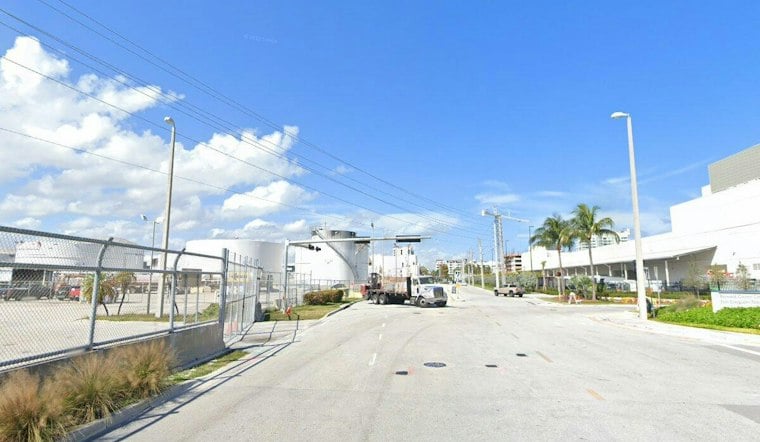
Broward County is grappling with an affordability crunch that officials say is squeezing its youngest workers even as the county pours new money into flood protection and chases a billion-dollar transit overhaul meant to knit together its airport, seaport and convention center. County leaders describe the moment bluntly: too many young people can't make ends meet, even as Broward tries to build its way out of the problem with more housing supply and better-paying jobs.
An Affordability Problem County Officials Admit Head-On
“We have an affordability problem. Too many young people are finding it hard to make ends meet,” the county said in its own accounting of the issue, according to Broward County. The county says its response involves trying to both increase the supply of housing with options for funding into the future along with recognizing the need to bring good jobs that pay well. Officials describe the approach as a multipronged one, with the commission combining housing fixes with workforce and job-growth efforts rather than treating affordability as a housing-only problem.
The affordability conversation was also central to a recent discussion convened by the South Florida Business Journal's Broward Forward roundtable, moderated by Jennifer Bales Drake, where county officials and business leaders laid out a broader competitiveness agenda. Broward County Administrator Monica Cepero, who has served in the role since March 2022 and functions as the county's chief executive officer according to NSU's Broward Center for Innovation, reportedly prioritized affordability, resilience, workforce development and transportation for the county's next five to 10 years, per the roundtable's reporting. JetBlue executive Marty St. George also identified housing and transportation as top priorities for the region, according to the same discussion.
Resilience Fund Moves From Plan to Money
Broward finished its county-wide Risk Assessment and Resilience Plan in March 2025, mapping out how sea-level rise, groundwater-level rise, storm surges and heavier rainfall threaten the county's infrastructure, according to Resilient Broward. Then, on April 28, 2026, the Broward County Commission unanimously voted to allocate $20 million to accelerate the priority projects the plan identified, the same source reports. The Resilient Broward Grant Program is designed to leverage that county money at a 5-to-1 ratio over 15 years, an approach officials estimate could generate roughly $1.5 billion in resilience infrastructure investment countywide.
The stakes behind that funding push are steep. Engineering firm Hazen and Sawyer, which worked on the plan, notes that without significant action, the number of vulnerable residents facing substantial flood damage could climb 41% by 2050, and average annual flood damage to property could top $5 billion a year by 2070. The firm's analysis, detailed by Hazen and Sawyer, estimates that the plan's adaptation investments could preserve $31 billion in residential property value, $20 billion in flood insurance coverage, and avoid $3.6 billion in average annual damages.
The plan blends seawalls and drainage upgrades with natural solutions like swales and green space, according to Florida TaxWatch, which also reports that the plan includes strategic planning checkpoints in 2032, 2040, 2048, 2056, 2064 and 2070 to revisit projections and adjust course. Broward's tourism-reliant economy has also seen a drop in international visitors and in foreign favorability toward U.S. companies and products, the county says, adding another layer of financial pressure to the resilience push.
A Billion-Dollar Rail Line to Link Airport, Port and Convention Center
Transportation has emerged as the other pillar of the county's growth strategy. Broward has long discussed three projects meant to ease congestion around its busiest hubs: an intermodal center, an automated airport people mover, and a light-rail system, according to a 2023 Sun-Sentinel report on the plans. Fort Lauderdale-Hollywood International Airport sits within roughly three miles of both Port Everglades and the Greater Fort Lauderdale/Broward County Convention Center, the kind of proximity county planners hope a connected transit system can finally capitalize on.
That vision moved a step closer to reality this week. Broward County Transit announced an upcoming procurement for a Project Development and Environmental study and preliminary engineering work on a light-rail rapid-transit system, according to Metro Magazine. The outlet reports the line is preliminarily estimated to cost just over $1 billion and would connect the airport, the seaport and the convention center. Broward County Transit CEO and General Manager Coree Cuff Lonergan described the project as part of the agency's broader $4.3 billion PREMO plan, the same report notes.
Health Care and Workforce Round Out the Picture
Beyond transit and flood control, Broward's broader competitiveness case rests on an economy spanning tourism, health care, aviation, logistics, financial services, education, technology, aerospace and defense, with roughly 80% of its businesses classified as small businesses. Officials and business leaders at the roundtable said the county needs stronger connections between those small businesses and major employers, development projects and emerging industries, along with deeper partnerships among employers, Nova Southeastern University, Broward College and other universities.
Health care was cited as a particular growth lane, with the industry offering careers spanning clinical professions, technology and research. Investment in that space has already begun showing up on the ground: Holy Cross Health opened a freestanding emergency department in Deerfield Beach on May 19, 2026, according to Holy Cross Health, though that detail comes from a low-confidence source and further specifics on project cost were not independently verified.
Robert Smith said at the roundtable that Broward can become a national leader in research and innovation, particularly in human health and ocean and coastal resilience, tying the county's health care ambitions directly to the same climate-adaptation work driving the resilience fund. Brian Hagan, another participant, put it more plainly: businesses come to Broward for the business climate, he said, rather than the beach and sun.





