

























































C2N Diagnostics, the St. Louis company behind a blood test for Alzheimer's disease, is set to triple the size of its hometown operations as the confirmed anchor tenant of a $100 million redevelopment taking shape in the Cortex Innovation District. The company plans to occupy 82,451 square feet across the first three floors of the project, known as Catalyst, housing both its corporate headquarters and an expanded research laboratory.
The nine-figure redevelopment now has its first confirmed tenant, according to Cortex Innovation District, which notes the space C2N will occupy is meant to house its headquarters and an expanded research lab. Catalyst itself involves renovating the seven-story former Goodwill Building at 4140 Forest Park Avenue and adding a four-story addition, per the same source. As St. Louis Magazine reports, Washington University acquired the former Goodwill Industries property and began redeveloping it as Catalyst, with C2N standing as the project's first anchor tenant.
C2N expects to begin the move to Catalyst in late 2026, according to a company newsletter, which states the relocation will allow C2N to triple the size of its operations in its hometown. The move involves relocating and expanding its federally regulated, CAP-accredited, CLIA-certified laboratory to the Forest Park Avenue address, the newsletter adds. C2N will keep its existing ISO 13485:2016-compliant lab facility running as well, turning it into a center dedicated to biopharmaceutical research services and advanced technology development, per the same source.
From a Sarah Street Lab to a Regional Anchor
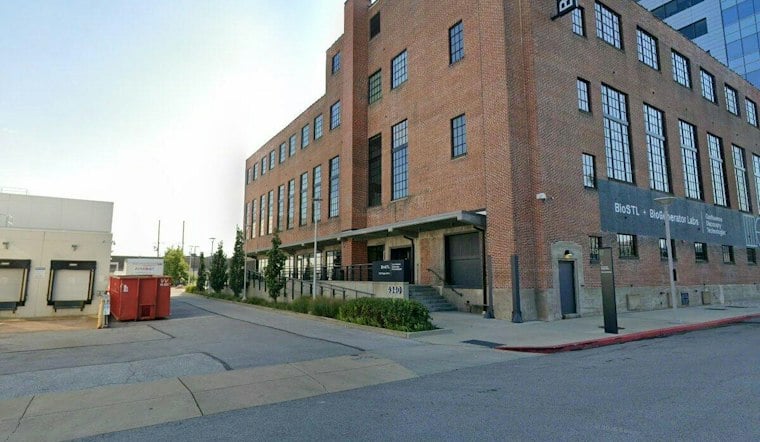
C2N's roots in the neighborhood run deep. According to St. Louis Magazine, C2N has operated from CIC Labs at 20 S. Sarah and the BioSTL building at 4340 Duncan. The outlet reports that C2N evaluated several properties and even considered moving its operations outside St. Louis before choosing to remain in Cortex, near where it began.
C2N worked with Washington University, developers, and equipment manufacturers to design the Catalyst facility, the magazine reports, and the company has close ties to WashU School of Medicine, whose researchers pioneered some of the technology behind its tests.
C2N was co-founded by Washington University researchers, per St. Louis Magazine. Braunstein told the magazine that building out sophisticated lab space takes specialized expertise, saying, “you need engineers and architects that know how to build sophisticated laboratories like ours.” He also credited the broader ecosystem, adding that local partners “have done an amazing job of building a culture and ecosystem that supports innovation.”
An Alzheimer's Test Cleared by the FDA
The expansion comes as C2N's core diagnostic business gains new federal validation. The FDA cleared C2N's PrecivityAD2 blood test on August 20, for adults age 40 and older with signs or symptoms of cognitive impairment undergoing evaluation for Alzheimer's disease or other cognitive decline, according to a C2N news release. The company stresses that the test is intended to aid diagnosis alongside clinical assessment and is not meant as a screening or stand-alone diagnostic test, per the same release.
Washington University describes C2N as a company developing, in collaboration with WashU Medicine, blood tests to help health-care professionals diagnose Alzheimer's disease. St. Louis Magazine adds that C2N develops diagnostics for Alzheimer's and other neurological conditions, using high-resolution mass spectrometry, and has an international reach. Spectrum News reports the company's planned pipeline expansion includes tau pathology, Parkinson's disease research and new technologies.
Jobs, Incentives and a Tight Labor Market
The Missouri Department of Economic Development says C2N's expansion includes preparing for significant hiring, part of a relocation that the state describes as tripling the size of the company's operations. C2N is set to benefit from the Missouri Works program, the department notes, and may also receive assistance from Missouri One Start for recruitment and training.
That hiring push lands amid a regional bioscience sector already straining for workers. BioSTL reports the St. Louis region supports more than 19,000 bioscience payroll jobs across roughly 800 firms, with average annual earnings above $116,000, and the organization projects about 1,400 annual job openings in the sector over the next decade. Forty-seven percent of current openings are for middle-skill positions, mostly in manufacturing and sales, according to BioSTL, which also points to talent shortages, a need for more STEM-educated workers and insufficient workforce diversity as ongoing challenges.
BioSTL has responded with new training investments, including a $6 million package of grants aimed at St. Louis-area workforce development in research, technology and manufacturing roles. The MO-STAR initiative aims to put 625 Missouri residents through pre-apprenticeship programs leading to skilled, higher-wage jobs.
Betting on Keeping Science Local
Washington University has framed Catalyst as more than a single-tenant deal. The university says the project is meant to ensure that groundbreaking research does not leave the region but instead grows locally and creates jobs here, and it envisions the building serving as a support hub for growth- and expansion-stage bioscience startups beyond C2N alone.
St. Louis Magazine reports that BioSTL and BioGenerator have each helped startups access laboratories, funding and business resources in the region, reflecting the broader infrastructure C2N has drawn on as it scaled up.



