

























































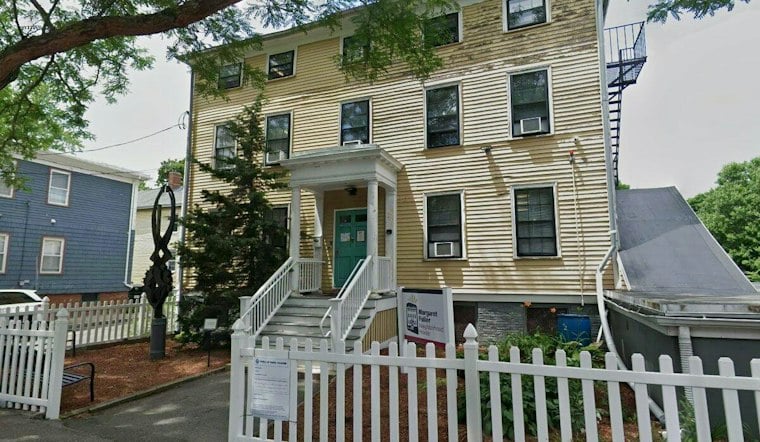
The Cambridge Redevelopment Authority has paid $3.5 million for a chunk of the Margaret Fuller Neighborhood House parking lot on Pine Street, a deal meant to fund an overhaul of the nonprofit's aging food pantry while clearing the way for new homeownership housing on a lot many Port residents have used for decades. The purchase has split opinion in the historically Black and working-class neighborhood, with some longtime residents welcoming the investment and others warning it will strain parking and erase a gathering space that predates the current debate over density.
According to Cambridge Day, the roughly 8,000-square-foot parcel at 42 Pine St. is expected to accommodate at least 10 condominiums, with at least two units designated affordable to meet the city's requirement that new residential projects set aside 20 percent of units as below-market. The Cambridge Redevelopment Authority has not yet determined the final number of units, building height, or design, and construction is not expected to begin before October 2028. Kyle Vangel, the agency's director of projects and planning, said the authority is still assessing which building type best fits the site, the outlet reported.
The total value of the arrangement actually runs closer to $4 million once a separate piece of the deal is factored in. According to the Cambridge | Somerville Independent, the Cambridge Redevelopment Authority is also forgiving a $250,000 line of credit it extended to the nonprofit back in 2019, on top of the $3.5 million cash purchase price. The Board of Zoning Appeal unanimously approved the housing project and parcel subdivision.
A Nonprofit's Long History on the Lot
For Selvin Chambers, the 63-year-old CEO of the Margaret Fuller Neighborhood House, the parking lot carries personal history that long predates the current real estate negotiations. Per Cambridge Day, Chambers attended a breakfast and homework program run by the Black Panthers at the neighborhood house in the 1970s, learned to box in its basement, and practiced with a neighborhood drill team in the very lot now slated for redevelopment.
The organization has existed for 124 years, and Chambers told the outlet he wants it to last another 124. He said new housing and institutional improvements could help counter displacement and strengthen the neighborhood, framing the sale as an investment in the nonprofit's future rather than a retreat from its roots.
Food Pantry Gets a New Home First
Sale proceeds will primarily fund a transformation of the food pantry into a larger, modern facility with more room for community programming, moving it out of what the Cambridge | Somerville Independent describes as an aged basement and into a modern pantry facility. Whether the existing pantry structure can be expanded or must be rebuilt entirely remains undetermined, pending a structural assessment, per Cambridge Day's reporting. Chambers said he hopes the proceeds will also help attract further funding to renovate the historic house itself.
That main building, at 71 Cherry St., was built in 1807 and served as Margaret Fuller's childhood home. The nonprofit itself traces back to 1902, when it was founded as a settlement house to assist working-class immigrant families, and it now runs a full-choice emergency food pantry serving more than 4,000 individuals and families a year, according to the Margaret Fuller Neighborhood House.
Neighbors Split Over Density and Parking
Not everyone in the Port is sold on the tradeoff. Daniel Jeffs, 46, has lived on Eaton Street since 2007 and told Cambridge Day that the neighborhood increasingly sees luxury housing and highly paid technology workers sharing blocks with lower-income, longtime residents. He argued that 10 to 12 new units would overwhelm the neighborhood and questioned whether reserving 20 percent of units as affordable justified losing the parking lot altogether. Jeffs, who has no off-street parking of his own and said he regularly parks two blocks away, is among those who circulated a petition in 2021 urging the city to acquire the property for a public park instead; the Board of Zoning Appeal chair estimated that petition had gathered approximately 135 signatures as of the June 2026 hearing.
Not all reaction has been negative. Nancy Ryan, 80, has lived in the Port for 46 years and told the outlet she is optimistic about the development. The Cambridge Redevelopment Authority has described the lot as underutilized surface parking and views the site as a rare opportunity to add housing without displacing existing residents, pointing to the city's broader scarcity of available land.
Parking Changes Ripple Beyond the Lot
The parking squeeze extends beyond the Margaret Fuller lot itself. Cambridge Health Alliance will reduce its parking allocation at the Windsor Street Care Center from 14 spaces to eight on November 15, and will end that allocation entirely on March 1, 2027, according to CHA spokesperson David Cecere. The health system is encouraging employees to instead use the First Street garage with shuttle transportation to the care center.
The Margaret Fuller Neighborhood House will retain staff parking under the new arrangement, and attorney James Rafferty, who represents the nonprofit, has said the subdivision includes a setback intended partly for deliveries. The organization plans to preserve delivery access to the renovated food pantry, and community gatherings — including its annual turkey food drive block party — will continue at the nonprofit's remaining property and through permitted street closures rather than in the parking lot.
Part of a Citywide Affordable Housing Push
The Board of Zoning Appeal unanimously approved the mixed-income housing project and the parcel subdivision at a June 2026 hearing, clearing key regulatory hurdles ahead of the land conveyance, per the Cambridge | Somerville Independent. The purchase also advances a public mandate by the Cambridge Redevelopment Authority to create at least 20,000 square feet of below-market homeownership housing citywide, aligned with its Central Square Demonstration Plan adopted in May 2026. The agency is pursuing similar mixed-income homeownership projects in North Cambridge, according to the Cambridge Redevelopment Authority.
Projects of this kind typically rely on Cambridge's 100% Affordable Housing Overlay, a zoning ordinance enacted in October 2020 and expanded in October 2023 to grant density bonuses and streamlined permitting for affordable housing developments, according to the City of Cambridge Community Development Department. The policy was designed to help affordable housing providers compete with commercial market developers on small urban lots. The stakes are steep: monthly median prices in 2024 ranged from about $941,000 to $1.21 million, and the Cambridge Housing Authority had 22,537 applicants in April 2023.
The CRA's relationship with the Margaret Fuller Neighborhood House didn't begin with this sale. The agency's formal partnership with the nonprofit dates back to 2015 through its Forward Fund capital grant program, expanding in 2018 to include additional assistance for rehabilitation planning. The Port's historically Black, working-class residents have voiced concerns about rising costs and displacement.




