

























































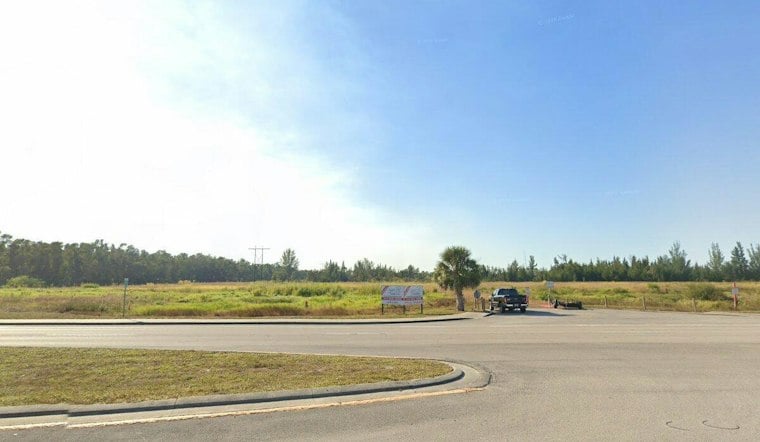
Cape Coral's City Council voted 7-1 on Wednesday to award a $32,910,150 contract to Douglas N. Higgins Inc. to build an irrigation water transmission facility tucked into a corner of Yellow Fever Creek Preserve, pushing forward a project that has drawn pushback from residents and environmental advocates for more than a year. The contract, which includes a 5% contingency, covers construction of the North 1 East Booster Station, a facility that will support the city's ongoing North 1 Utilities Extension Project.
According to Gulfshore Business, the booster station will sit on a 14.2-acre parcel in the northeast corner of the preserve and will include two 5 million-gallon irrigation water storage tanks, a metering station, a reclaimed water booster station, and underground utility piping. Councilmember Rachel Kaduk cast the lone dissenting vote, voicing concern about placing the facility inside a preserve rather than elsewhere in the city.
Kaduk's objection echoes a fight that has simmered since last year. The 14.2-acre site did not become available for utility use on its own — in August 2025, the council approved Ordinance 36-25 to rezone that acreage within Yellow Fever Creek Preserve from Single-Family Residential to Institutional specifically so public water storage, booster, and pumping facilities could be built there, according to city records filed with the City of Cape Coral. To accommodate that change, the council also amended the city's Comprehensive Plan, officially shrinking Yellow Fever Creek Park's designated size from 198.7 acres down to 184.5 acres.
Preserve Advocates Fought the Rezoning
The rezoning did not go unchallenged. Environmental advocates and nearby residents, including Cape Coral Friends of Wildlife and residents of The Villages of Entrada, opposed placing utility infrastructure in the preserve through public petitions and hearings, citing habitat destruction and potential flooding risks, as reported by the Cape Coral Breeze. That opposition sets up an unusual dynamic at the same site: the city is simultaneously spending more than $6 million in voter-approved GO Bond funds to build passive park amenities at Yellow Fever Creek Preserve, including campgrounds, disc golf, and 2,205 linear feet of boardwalks approved last month, per the Breeze's later coverage.
The storage project is also tied into a broader regional water-sharing arrangement. The booster station allows Cape Coral to fulfill an agreement with the Florida Governmental Utility Authority to accept up to 6 million gallons per day of reclaimed water, something the city previously lacked the bulk storage capacity to receive, according to Citizen Portal. City officials have said the expanded reclaimed water storage is meant to reduce reliance on the Mid-Hawthorn aquifer, where groundwater levels have been steadily declining.
State Grant Offsets Some Costs, But Homeowners Still Pay
Cape Coral received some outside help covering the broader reclaimed water buildout. In December 2025, the Florida Department of Environmental Protection and the Governor's Office awarded the city a $6.5 million grant to support the North 1 East UEP reclaimed water extension project, the city has said.
That state money won't spare individual property owners from the bill for hooking up to the new system. Property owners in the North 1 East UEP service area face utility assessment fees ranging between $32,000 and over $35,000 per standard lot for municipal water, sewer, and irrigation connections, typically amortized over 20 to 30 years, per city informational materials. Those assessments are part of a citywide push — aggressive utility extensions are meant to eliminate aging septic tanks and shallow groundwater wells that degrade local canals and aquifers.





