

























































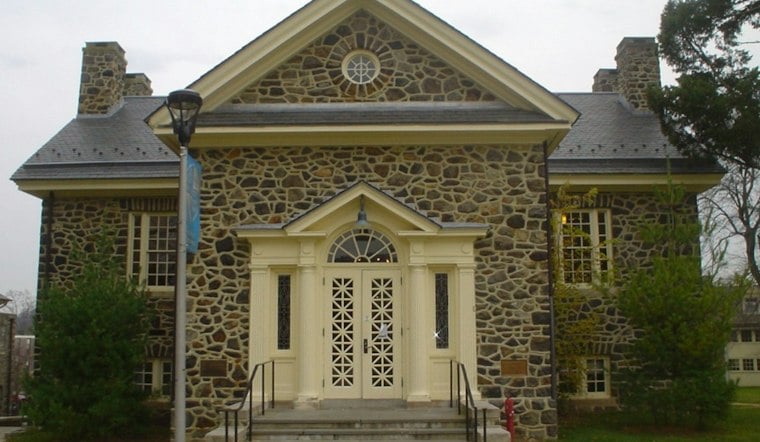
Cheyney University broke ground on a $36.5 million athletics complex in Thornbury, a project that will eventually replace the aging Cope Hall gymnasium with three basketball courts built for volleyball, a fitness center, locker rooms, multipurpose areas, athletics offices and recreation and concession spaces. The complex is slated for completion in 2028, with an outdoor phase bringing a new track and soccer field, along with related site and pedestrian improvements across campus, expected to wrap up in fall 2027.
A Milestone Years In The Making
According to the Delco Times, the project is part of a roughly $48 million capital investment funded through the Pennsylvania State System of Higher Education's capital project process, and it was originally planned simply as a replacement for Cope Hall before Cheyney and the Pennsylvania Department of General Services expanded it into a multiuse athletics and recreation complex. University president Aaron A. Walton called the groundbreaking an investment in students, the Cheyney experience and the future of the institution, per the same account.
Cope Hall has served generations of Cheyney students and student-athletes for more than six decades since it opened, and the school says it plans to carry forward elements of the building's history even as it comes down. That history runs deep: the gym hosted Cheyney's 1978 NCAA Division II men's national championship team and the 1981-82 women's squad coached by C. Vivian Stringer, which reached the inaugural NCAA Division I women's championship game, according to Sports Illustrated. Cheyney remains the only HBCU to ever reach an NCAA Division I women's Final Four, and Naismith Hall of Fame coaches Stringer and John Chaney coached simultaneously at the school during the 1970s and 1980s, the outlet notes.
That legacy got fresh national recognition in May 2024, when the Women's Basketball Hall of Fame awarded its Trailblazer Award to Cheyney's 1981-82 women's team for their 28-3 season and pioneering Final Four run, as reported by HBCU Sports.
New Spaces, Familiar Voices
Fred Reynolds, Cheyney's director of athletics, said the complex will help strengthen programs, recruit and develop student-athletes, and build community pride, the Delco Times reports. Clarence Williams, the university's chief advancement officer, said the project will give students spaces where they can compete, connect, develop leadership skills and build relationships. PZS Architects is serving as the project's designer, according to the same report.
The outdoor phase of the build includes an NCAA-compliant, eight-lane, 400-meter track with dedicated field areas for long jump, triple jump, discus, hammer throw, shot put, pole vault and javelin, according to HBCU Gameday. That detail lands against an unusual backdrop: Cheyney withdrew from NCAA Division II and the Pennsylvania State Athletic Conference in March 2018 after suspending its football program in 2017 to stabilize its finances, and the school's teams now compete independently in basketball, cross country, track and volleyball, per the same outlet. Cheyney has decided to seek re-entry into the NCAA, though which division it will pursue remains uncertain.
Procurement Details And Supplier Targets
Pennsylvania Department of General Services procurement documents reviewed by GovDash show the complex's Phase 4 construction bidding was split across four trade contracts: general construction estimated between $16 million and $17 million, plumbing between $4 million and $5 million, electrical between $3 million and $4 million, and HVAC between $2 million and $3 million. State contracts for the project include mandatory daily liquidated damages penalties for construction delays, per the documents. Separately, prime contractors bidding on the work had a 3% Veteran Business Enterprise participation target.
From Financial Crisis To Capital Investment
The groundbreaking caps a dramatic financial turnaround for the nation's first historically Black college or university, founded in Philadelphia in February 1837 as the African Institute — later renamed the Institute for Colored Youth — through a $10,000 bequest from Quaker silversmith Richard Humphreys to train Black teachers, according to Encyclopaedia Britannica. The school moved to its current 275-acre campus in Chester and Delaware counties in 1902.
Under a financial recovery plan approved in August 2017, the Pennsylvania State System agreed to forgive a $30 million loan to Cheyney if the university maintained a balanced budget for four consecutive fiscal years; the condition was later modified in 2019 to three consecutive fiscal years. In June 2024, the Middle States Commission on Higher Education officially reaffirmed Cheyney's accreditation, as reported by CBS News.
Cheyney says it has made campus improvements a central part of its broader transformation, and that it is strengthening the student experience through new facilities, academic opportunities and partnerships. The Thornbury groundbreaking stands as the most visible sign yet that an institution once fighting for its survival is now building for its future.




