

























































Cincinnati's Urban Native Collective kicks off its annual Indigenous Peoples' Day Convergence Friday, a four-day run of free events stretching from downtown galleries to a Northside park feast. The gathering arrives as the city marks a holiday it formally adopted years ago, and as organizers say the region's Indigenous community is doing far more than commemorating history — it's building a present-day cultural home.
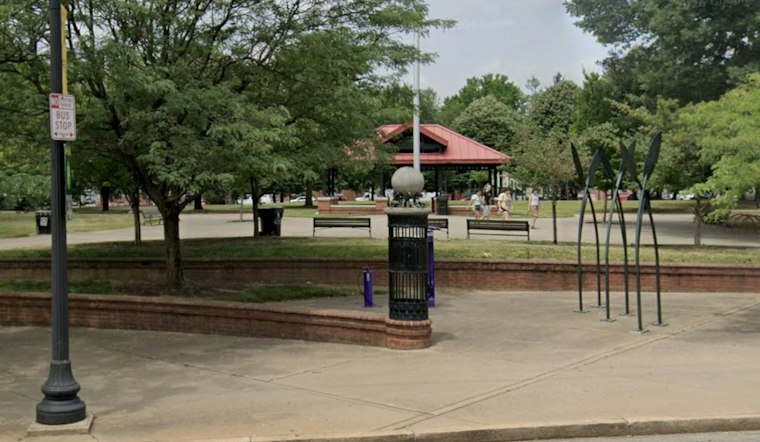
Cincinnati City Council passed a resolution on October 3, 2018 designating the second Monday in October as Indigenous Peoples' Day, according to the Cincinnati & Hamilton County Public Library. The Hamilton County Board of Commissioners followed in October 2021, passing its own resolution recognizing the day countywide, as reported by 91.7 WVXU. This year's convergence, running October 9 through October 12 and organized by the Urban Native Collective, includes an exhibition opening party at the Contemporary Arts Center, a speaker and film series at the Aronoff Center, a show at Heart of Northside, and a feast at Hoffner Park, according to Cincinnati Magazine. All four days are free, though organizers are encouraging attendees to register.
A Community Rooted in Many Nations
The Cincinnati region was historically home to the Shawnee, Delaware, Potawatomi, Miami, Wyandot, Seneca, Chippewa, Ottawa, and Wapakoneta peoples, per Cincinnati Magazine's reporting. Today, the area's Indigenous population numbers around 100,000 and is intertribal, made up of many nations and communities whose members largely live away from their home communities — a pattern organizers describe as part of a broader urban Native experience spanning what many Indigenous people call Turtle Island, referring to North and Central America.
That reality traces back to one of the region's harshest historical chapters. The last tribal nation remaining in Ohio, the Wyandot, was forcibly removed from the state on July 20, 1843. In October 2025, the University of Cincinnati History Lab partnered with the Oklahoma-headquartered Wyandotte Nation to place 13 historic markers across Ohio documenting the 150-mile forced migration from Upper Sandusky to Cincinnati, as detailed by WYSO. That same reporting notes that despite being the ancestral homeland of the Shawnee, Miami, Wyandot, Delaware, and Ottawa nations, Ohio today has no federally recognized tribes headquartered within its borders.
Erasure Above and Below Ground
The absence of recognized tribal land isn't the only erasure the region carries. Before European settlement, the land beneath present-day Cincinnati held extensive Indigenous earthworks, including a massive crescent-shaped mound near Washington Park that was destroyed during early city construction in the late 18th and early 19th centuries, the public library's history notes recount. Statewide, the friction over Indigenous representation persists in a very different arena: Ohio has the most Native American mascots of any state, according to data tracked by the National Congress of American Indians and reported by the Stateline Sports Network.
Against that backdrop, Urban Native Collective Executive Director Briana Mazzolini-Blanchard frames the organization's mission as forward-looking rather than defined by loss. Indigenous people, she has said, are not defined by historical trauma. Mazzolini-Blanchard, a CHamoru activist and artist, works with the tribal nations that formerly occupied the Cincinnati region, and she was inducted into the North American Indigenous Athletics Hall of Fame as its first rock climber, according to the organization's own staff biography.
From Coalition to Cultural Hub
The Urban Native Collective wasn't always known by that name. It originally operated as the Greater Cincinnati Native American Coalition before rebranding, expanding its community programming, opening a public center, and launching advocacy initiatives, Cincinnati Magazine reported. The organization's Native Sovereignty Center sits at 1710 Blue Rock Street in Northside, functioning as an event space, advocacy hub, and educational resource for the community.
Inside, the Indigenous Pages Lending Library holds more than 400 books, and its collection includes books by Native authors. The Collective also produces Life on the Margins: An Urban Native Experience, an ongoing podcast co-hosted by Mazzolini-Blanchard and Homer Shadowheart that examines social and political issues through an Indigenous lens, per the Urban Native Collective. Collective leaders say the organization includes traditions, languages, and celebrations from Indigenous peoples across Turtle Island, creating space for that diversity within Cincinnati and aiming to carry those values, traditions, and languages intact for future generations.



