

























































Three Clark County school superintendents are sounding the alarm that doing away with Ohio property taxes would be catastrophic for public education and the local services that depend on the same revenue stream. Brian Kuhn of Clark-Shawnee Local Schools, Darrin Knapke of Greenon Local Schools and Bob Hill of Springfield City Schools delivered that warning while speaking at a Springfield Rotary meeting last Monday.
According to the Springfield News-Sun, Kuhn said property taxes fund far more than classrooms, supporting local governments, police, fire departments, schools and libraries across Ohio. He warned that if property taxes disappeared, the state would need to replace billions of dollars in lost revenue, and he argued that families should not be taxed out of their homes in the process.
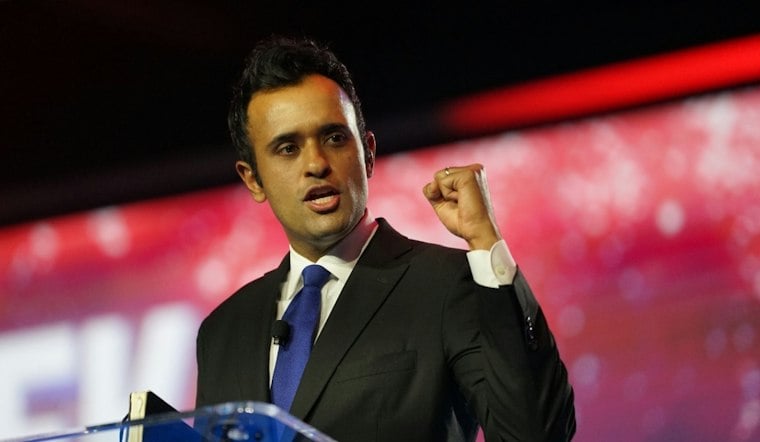
The warning lands as early voting is already underway for the Nov. 3 election, and as two of Ohio's gubernatorial candidates push dueling approaches to property-tax relief. Vivek Ramaswamy has promised to roll property taxes back to at least their pre-pandemic level and cap future growth, saying he would campaign on raising teacher starting salaries, rewarding high-performing educators and shifting more funding into classrooms. He has said economic growth stemming from property and income tax cuts would help make up the difference in revenue.
Competing Plans From Ramaswamy and Acton
Ramaswamy has also said he would call for increased state funding to replenish some, but not all, of the money lost to a rollback, according to Signal Ohio. The outlet reports that researchers at Innovation Ohio estimate rolling taxes back to 2021 levels would cut annual taxes by around $4 billion and strip a comparable amount from local governments. Separately, the Ohio Capital Journal cites the same group's projection that, by the time such a plan could take effect in 2027, the hit to school funding specifically would also total $4 billion. That outlet also notes a separate estimate putting potential cuts to local services including schools and public safety at $6.6 billion.
Amy Acton has taken a different approach, releasing a four-pronged plan for targeted property tax relief earlier this year that focuses on lowering costs for Ohioans while fully implementing the bipartisan Fair School Funding Plan. Per Signal Ohio, her proposals include raising the income limit for the senior homestead exemption from $41,000 to $50,000, a change she said would extend a tax cut to 55,000 more homeowners, along with rebates of up to $1,000 for eligible homeowners whose property taxes spike more than 4% in a year. Acton has also campaigned on more state funding for public K-12 schools, free breakfast and lunch for every student, and limiting school vouchers, and she has said she will push to fund districts above current levels in line with a bipartisan plan enacted earlier this decade. About 60% of Ohio property-tax revenue goes to local schools, the outlet reports.
Springfield City Schools Already Cutting and Deficit Spending
The stakes are already visible in Clark County's own budgets. Per the Springfield News-Sun, Springfield City Schools is currently deficit spending by $7.2 million and plans to cut $6.5 million next year, having already closed a building to reach a comparable amount in savings. Hill said that if fiscal year 2027 inputs were used to fund the state's formula as written, the district's deficit would not exist at all.
A 7-mill levy could raise about $6.5 million for the district, the paper reports, an amount Hill described as roughly equal to one month of Springfield City Schools' operations. The district still calculates its funding using a formula based on fiscal year 2022 data, and Kuhn noted that this is the first year in six that schools have been fully funded even while relying on that older formula. Clark-Shawnee's district treasurer has lived through eight different school funding formulas, according to the same report.
Greenon Faces Its Own Budget Pressure
Greenon Local Schools has faced potential deficit spending in each recent year and expects to begin deficit spending after bills pass in the year ahead, the Springfield News-Sun reports. The district could lose 55% of its revenue share if property taxes were eliminated, and the paper notes Greenon may need to return to the ballot at some point.
Ohio public school districts draw funding from a mix of local property and income taxes plus state revenue allocations tied to community wealth, which the state assesses using property tax value and income. Per the News-Sun, inflation-adjusted state school funding has risen just 0.3% over the past 22 years, even though funding has grown 6.6% in raw terms over two decades, according to figures Hill cited. Hill also said Ohio ranks 45th-lowest nationally in school funding, and the district's own legislative materials show the share of school funding paid by homeowners and farmers through property tax climbing from 48% in 1991 to 70% today.
Court Fights and Legislative Proposals in Play
The Ohio Supreme Court has issued rulings on school funding three times and has told the General Assembly that its overreliance on property taxes is unconstitutional, according to the Springfield News-Sun. More recently, an Ohio appellate court ruled unanimously earlier this month that the state's universal school voucher system violates the Ohio Constitution, though that ruling does not affect whether the voucher system can continue operating for now.
EdChoice provides taxpayer-funded vouchers for children attending private schools, with award values tied to family income. Families at or below 450% of the federal poverty level are eligible for a full voucher of about $6,200 annually for kindergarten through eighth grade students, while high schoolers can receive up to about $8,400 annually; families above that income threshold can still receive partial credits, with wealthier families receiving less. The program opened to any Ohio family with school-age children starting in fiscal year 2024, and per the News-Sun, Ohio's expanded voucher program cost about $1 billion in its first year, with voucher usage growing 313% as enrollment at participating schools grew 3.7%.
Recent state data adds further detail to that expansion. Per cleveland.com, EdChoice Expansion participation rose from about 22,600 full-time-equivalent students in fiscal 2023 to roughly 99,400 in fiscal 2025, while annual payments climbed from about $124 million to $493 million over the same stretch. Of the roughly 25,700 students receiving their first EdChoice Expansion voucher in fiscal 2025, about 24% had attended public school the year before, and about 40% were children entering kindergarten.
Two pieces of legislation are also in play. Senate Bill 93 would establish a school-funding system relying on a statewide property tax paired with increased sales taxes, while House Bill 884 seeks to update the Fair School Funding Plan using 2025 cost adjustments, according to the Springfield News-Sun.
Clark County Ballot Measures This November
Four Clark County school district tax issues are on the November ballot, two new measures and two renewals, according to the Springfield News-Sun. Clark-Shawnee Local Schools is proposing a five-year, 0.5% earned income tax for current expenses, including staffing and transportation, which would take effect in January 2027 if approved. The district has said rising costs and reduced state revenue made the additional request necessary, warning that programs and extracurriculars could be on the table if voters reject it again.
Southeastern Local School District is also seeking a five-year, 0.5% income tax for current expenses. Northwestern Local School District has two renewal measures before voters: a 1-mill property tax for permanent improvements and a 4.32-mill property tax for ongoing expenses. Tecumseh Local School District is asking voters to renew a 1.31-mill, five-year property tax levy supporting its current operating expenses, rounding out the four measures Clark County voters will decide by Nov. 3.





