

























































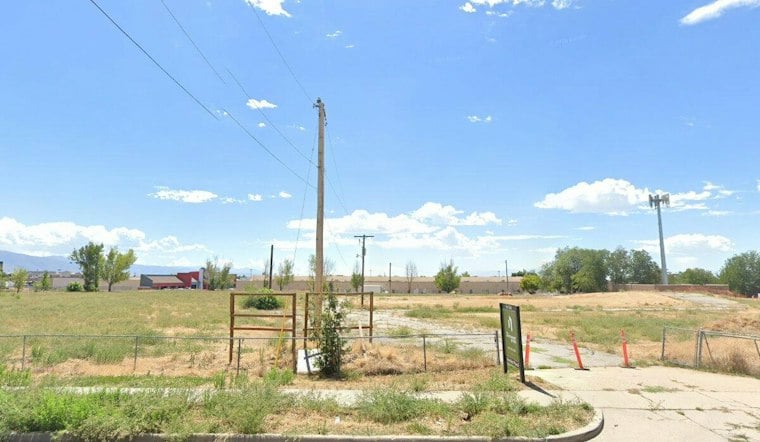
A proposed 60-unit supportive housing facility near three Clearfield schools is now headed to the city council for a final decision, after the city's planning commission approved the zoning map amendment earlier this month. Davis County wants to rezone 4.25 acres of a 5.26-acre commercial parcel at 1230 E. 1450 South, adding a supportive housing overlay so it can build year-round housing paired with case management for people recovering from homelessness, according to KSL.com.
The property is under contract to Davis County, which is working through a $4.7 million loan structure to finance its purchase and development, according to KSL News. The parcel had been listed on the market for $4.5 million, per the Bountiful-Farmington Record. One acre of the site would remain zoned for future commercial use, with the housing development confined to the remaining acreage under the city's new overlay rules.
Ryan Steinbeigle, Davis County's community services manager, has pushed back on the idea that the project is a shelter. He described the facility as a straightforward apartment complex, the station's report notes, intended for low-income residents earning under 30% of the area's median income. Tenants would have access to mental health services, drug and alcohol counseling, job training, and case management, and can be removed from the program for not following rules or participating in that case management, per the same account.
Why the Site Was Chosen
County planners selected the Clearfield parcel partly for its proximity to transit, according to KSL. That access matters because residents would need reliable transportation to reach employment centers and health clinics, including CommonSpirit Health's Holy Cross Hospital, Davis Behavioral Health, and the Department of Workforce Services, per the KSL report. Davis County has issued a request for qualifications and intends to lease the land to a development partner rather than operate the housing itself.
An elementary school, a junior high and a high school are near the parcel, according to KSL. That proximity has become the central flashpoint in the debate, with residents and business owners raising concerns about student safety, increased property damage, and a lack of community resources to support the new population, per the station's reporting. Some business owners argued the commercially zoned land should stay commercial, while some residents voiced support for the project as a way to help people recover and foster community growth.
State Mandate Looms Over Local Decision
The rezoning fight traces back to Utah House Bill 499, passed in 2023, which originally required second-class counties like Davis County to address winter overflow sheltering and operate Code Blue emergency warming shelters during extreme cold, according to a notice filed with Utah.gov. The law set that threshold at temperatures below 18 degrees Fahrenheit between October 15 and April 30. The Utah Legislature later amended HB 499 to exempt second-class counties from hosting emergency winter shelters if they instead provide a year-round homelessness solution, and Davis County says this project is meant to satisfy exactly that requirement, per KSL.
Clearfield already hosts the county's cold-weather response. In October 2025, Davis County purchased the former Talia Event Center at 22 E. 200 South using health department capital funds to serve as its permanent Code Blue warming center; the county's required bed count was 16 the previous year and 30 for the current year, according to the Davis Journal. The county also contracts with Open Doors for hotel and motel stays for families, and Open Doors conducts outreach.
Scale of the Need, and the City's Guardrails
Point-in-Time counts have reported 71 and 127 households in different years. County officials also estimate nearly 1,600 local students and youth experience housing insecurity or homelessness annually, according to the Davis Journal. That contrast between a single-night snapshot and the broader scope of instability has shaped how county officials frame the need for permanent housing rather than temporary shelter beds alone.
Clearfield City has moved to control how and where such housing could be built. Ordinance 2026-02 in January 2026 created the Supportive Housing Overlay Zone within C-1 commercial zones, capping density at 16 units per acre, limiting buildings to two stories, and capping any single project at 60 units — the exact figure Davis County's proposal would hit, per a filing with Utah.gov.
The local debate also lands amid a statewide push. Gov. Spencer Cox signed an executive order in September establishing the Recovery Utah Initiative, setting state goals to add 150,000 housing units by 2029 and expand inpatient mental health beds by 10%, as Hoodline previously reported. If the Clearfield City Council votes down the rezoning request, Davis County says it will be forced to search for another site elsewhere in the county to meet its state-aligned, year-round homelessness commitments, according to KSL.




